Small Figure of Kneeling, Aged Man as Amulet


1 of 2
Caption
Small Figure of Kneeling, Aged Man as Amulet, 30 B.C.E.–395 C.E.. Faience, 9/16 x 1 in. (1.5 x 2.6 cm). Brooklyn Museum, Gift of Evangeline Wilbour Blashfield, Theodora Wilbour, and Victor Wilbour honoring the wishes of their mother, Charlotte Beebe Wilbour, as a memorial to their father Charles Edwin Wilbour, 16.580.18. (Photo: Brooklyn Museum)
Gallery
Not on view
Gallery
Not on view
Title
Small Figure of Kneeling, Aged Man as Amulet
Date
30 B.C.E.–395 C.E.
Period
Roman Period
Medium
Faience
Classification
Dimensions
9/16 x 1 in. (1.5 x 2.6 cm)
Credit Line
Gift of Evangeline Wilbour Blashfield, Theodora Wilbour, and Victor Wilbour honoring the wishes of their mother, Charlotte Beebe Wilbour, as a memorial to their father Charles Edwin Wilbour
Accession Number
16.580.18
Frequent Art Questions
Were ithyphallic amulets significant symbols in death only or were they used generally in fashion/religion/etc.?
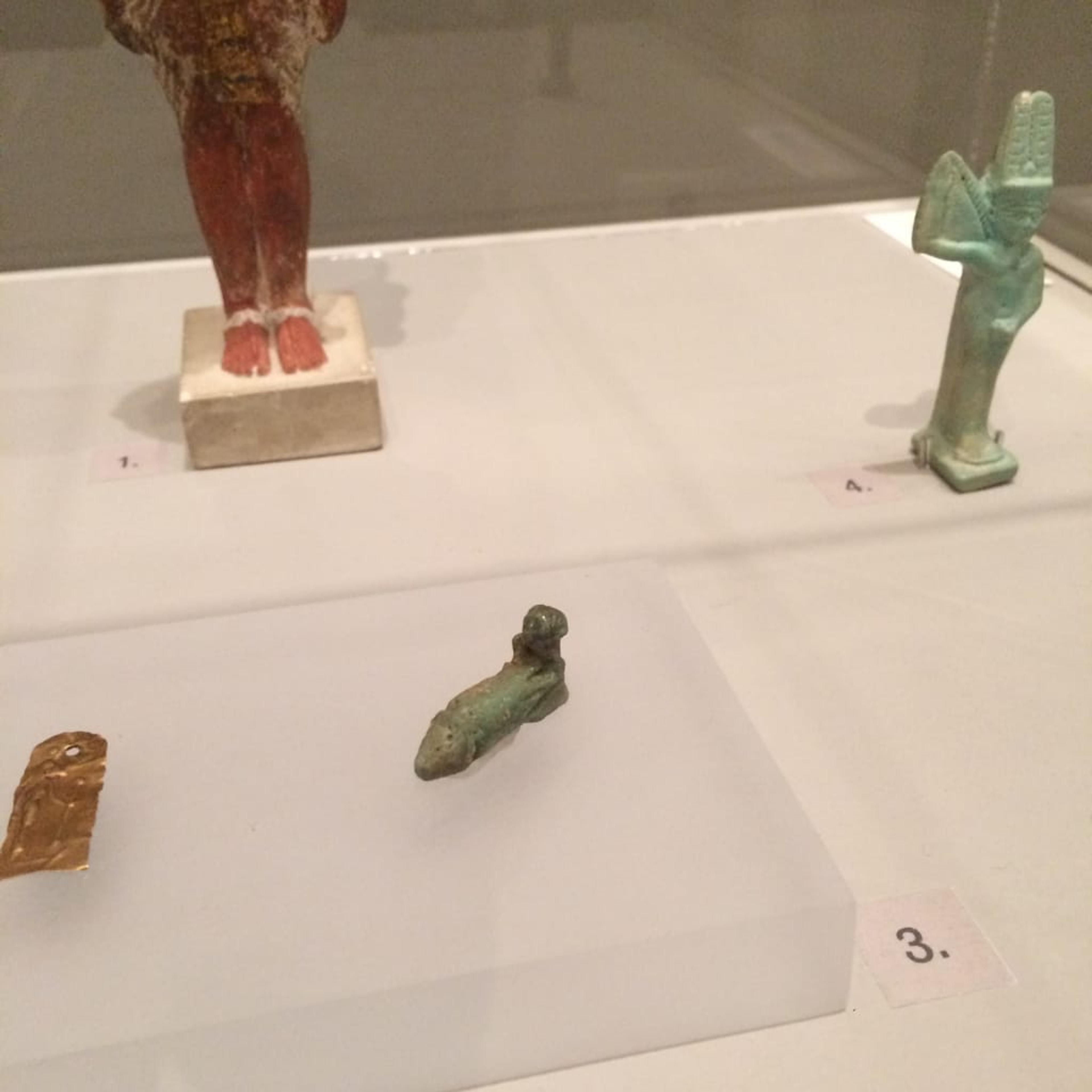 It varied throughout Egyptian history. For example, when the Roman Empire made its way into Egypt, it brought with it the idea that phallic imagery could ward off evil, and therefore was used in a household setting.The figure of Bes, the ancient Egyptian protector of households, similarly was shown with an alarmingly large phallus to ward off demons and those who might hurt the family.
Have information?
Have information about an artwork? Contact us at