Top Section of a Water Jug
late 12th–early 13th century


1 of 6
Object Label
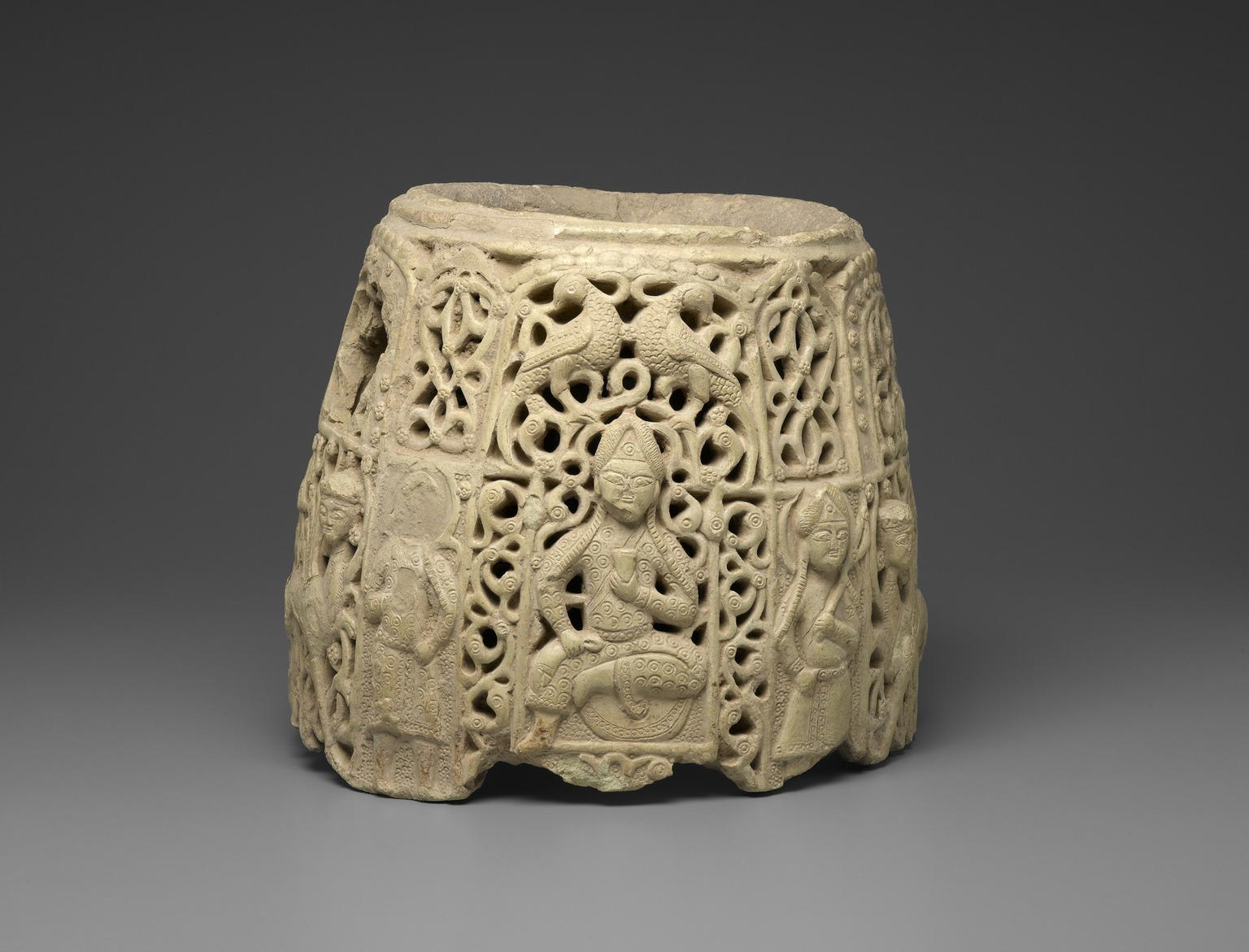
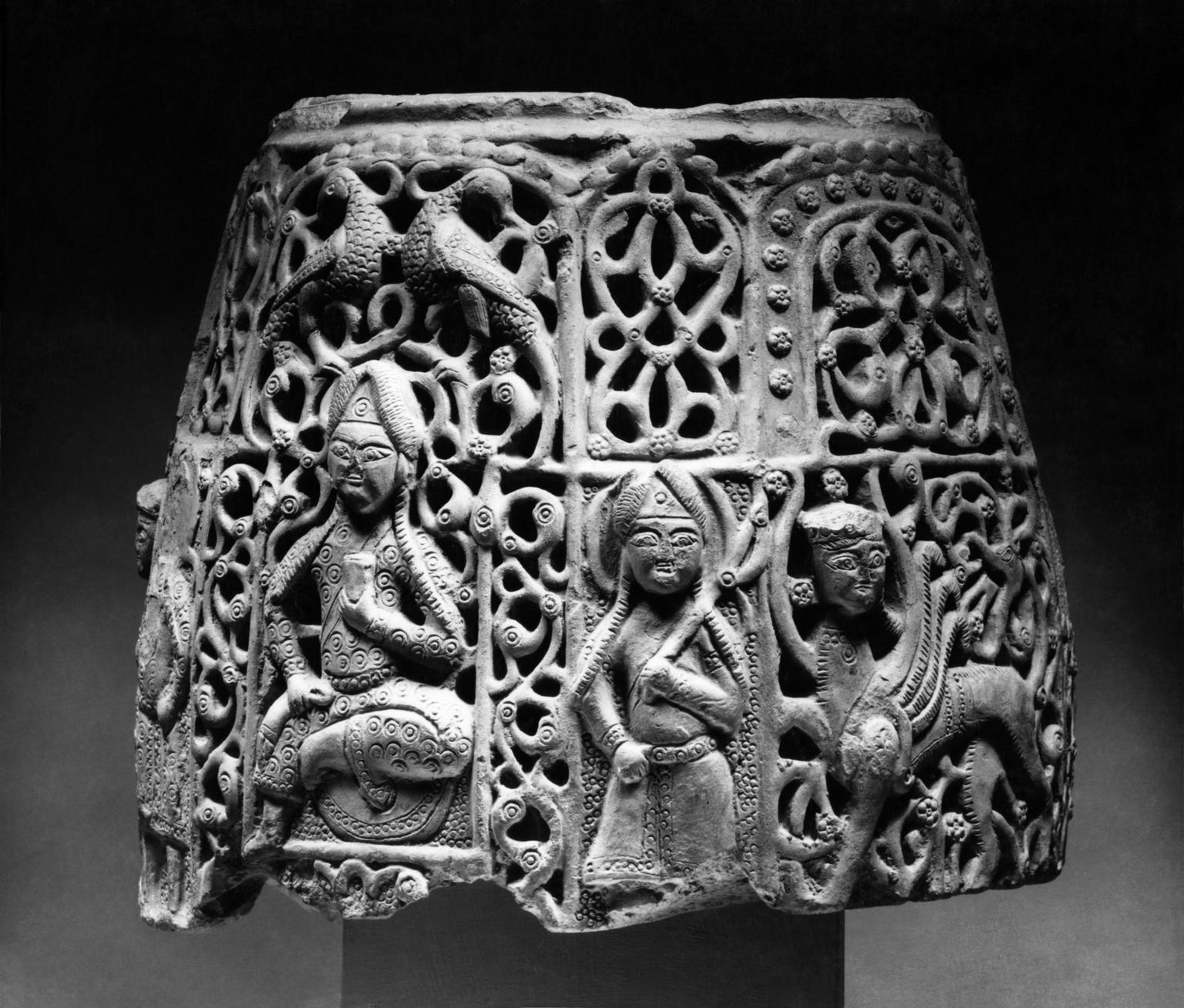
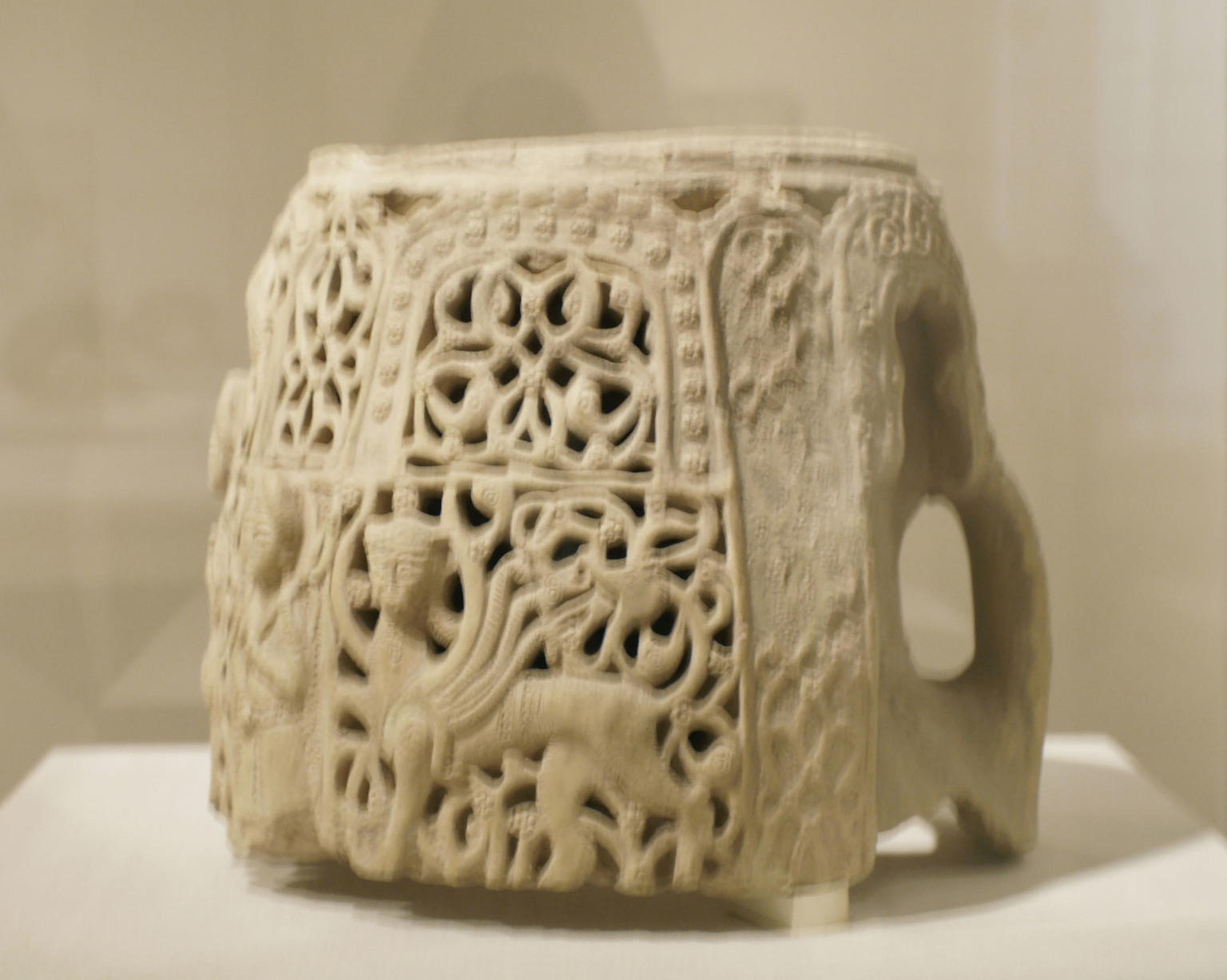
This remarkable object is the top half of a habb, or water jug. The unglazed ceramic body allowed for the cooling of water stored inside; for this reason, habbs have been used in Mesopotamia since pre-Islamic times. Surviving early examples vary in their degree of decoration. This habb is elaborately embellished, with a depiction of a ruler seated on a carpet and flanked by armed attendants and harpies (mythical birds possessing the head of a woman) with tails that terminate in dragon heads. A background of scrolling vines inhabited by birds is pierced into the vessel’s body. Overall, such figural decoration is typical of the courtly imagery popular in the eastern Islamic world during the medieval period, as is evident from both architectural decoration and manuscript painting of the time.
Caption
Top Section of a Water Jug, late 12th–early 13th century. Ceramic; earthenware, pierced decoration, 12 x 14 1/4 x 14 1/4 in. (30.5 x 36.2 x 36.2 cm). Brooklyn Museum, Gift of The Roebling Society, 73.30.6. (Photo: Brooklyn Museum)
Collection
Collection
Title
Top Section of a Water Jug
Date
late 12th–early 13th century
Dynasty
Possibly Seljuq
Period
Seljuq Period
Medium
Ceramic; earthenware, pierced decoration
Classification
Dimensions
12 x 14 1/4 x 14 1/4 in. (30.5 x 36.2 x 36.2 cm)
Credit Line
Gift of The Roebling Society
Accession Number
73.30.6
Have information?
Have information about an artwork? Contact us at