Double Bell (Ẹgogo)
Arts of Africa
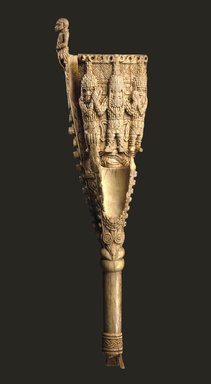
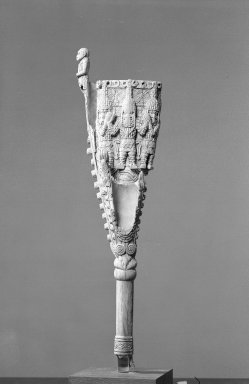
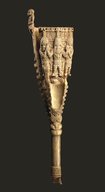
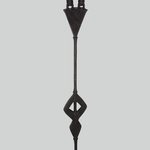
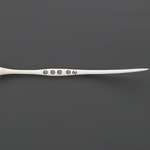
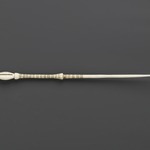
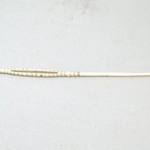
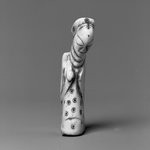
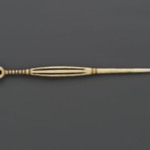
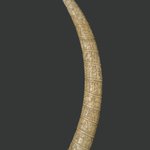
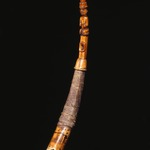
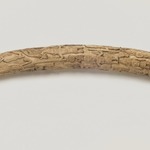
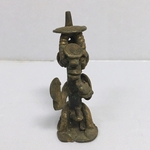
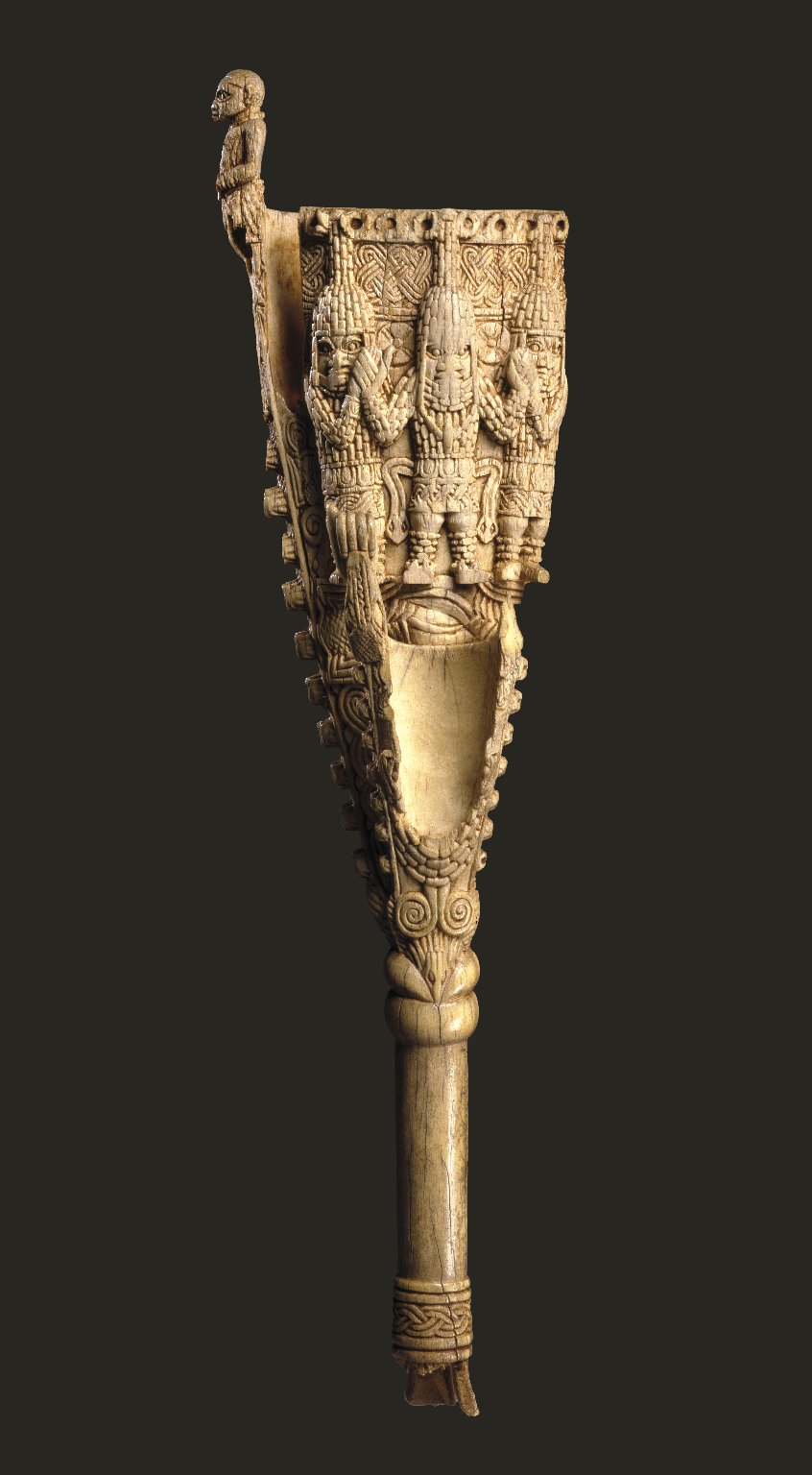
This is one of the oldest surviving African ivory sculptures; only six of these ivory gongs are known. Double gongs were used by the oba (king) during the Emobo ceremony to drive away evil spirits. The carving here depicts the oba, supported by his military commander and his heir.
MEDIUM
Ivory
DATES
early 16th century
DIMENSIONS
14 1/8 × 3 15/16 × 2 9/16 in. (35.8 × 10 × 6.5 cm)
(show scale)
INSCRIPTIONS
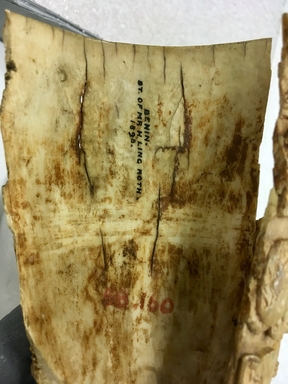
Written in black ink on inside of bell: "BENIN. BT. OF MR H. LING ROTH. 1898."; written in red ink on inside of bell: "58.160"
ACCESSION NUMBER
58.160
CREDIT LINE
A. Augustus Healy Fund and Frank L. Babbott Fund
PROVENANCE
Until 1897, Benin Kingdom; 1897, taken from the Royal Palace during the British military raid and occupation of Benin City by Dr. Felix Norman Roth; 1898, collection of Henry Ling Roth of Halifax, United Kingdom; October 2, 1898, purchased from Henry Ling Roth by Augustus Henry Lane-Fox Pitt-Rivers of Dorset, United Kingdom; 1898-1958, collection of the Pitt-Rivers Museum, Dorset, United Kingdom; 1958, purchased from the Pitt-Rivers Museum by Mathais Komor, New York, NY; October 8, 1958, purchased from Mathias Komor by the Brooklyn Museum.
Provenance FAQ
CATALOGUE DESCRIPTION
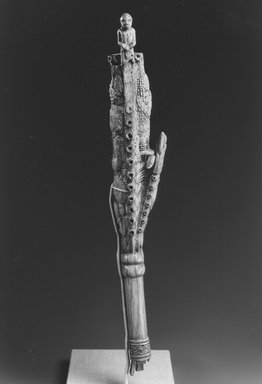
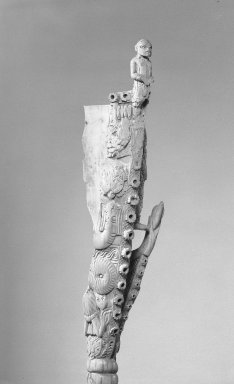
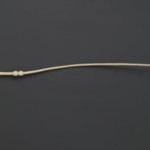
Two bell forms on a long handle; large bell carved with 3 figures: chief standing with arms upheld by attendants; background is elaborately carved with curved interlocking pattern, small bells or facsimiles of same run-up sides of sisturn and along top; one side of top has projecting human figure, on top of small bell is an alligator head holding a human hand. Base is geometrically carved. Large bell originally showed mudfish figure and snake-wing bird.
MUSEUM LOCATION
This item is not on view
CAPTION
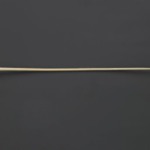
Edo. Double Bell (Ẹgogo), early 16th century. Ivory, 14 1/8 × 3 15/16 × 2 9/16 in. (35.8 × 10 × 6.5 cm). Brooklyn Museum, A. Augustus Healy Fund and Frank L. Babbott Fund, 58.160. Creative Commons-BY (Photo: Brooklyn Museum, 58.160_SL1.jpg)
IMAGE
overall, 58.160_SL1.jpg. Brooklyn Museum photograph
"CUR" at the beginning of an image file name means that the image was created by a curatorial staff member. These study images may be digital point-and-shoot photographs, when we don\'t yet have high-quality studio photography, or they may be scans of older negatives, slides, or photographic prints, providing historical documentation of the object.
RIGHTS STATEMENT
Creative Commons-BY
You may download and use Brooklyn Museum images of this three-dimensional work in accordance with a
Creative Commons license. Fair use, as understood under the United States Copyright Act, may also apply.
Please include caption information from this page and credit the Brooklyn Museum. If you need a high resolution file, please fill out our online
application form (charges apply).
For further information about copyright, we recommend resources at the
United States Library of Congress,
Cornell University,
Copyright and Cultural Institutions: Guidelines for U.S. Libraries, Archives, and Museums, and
Copyright Watch.
For more information about the Museum's rights project, including how rights types are assigned, please see our
blog posts on copyright.
If you have any information regarding this work and rights to it, please contact
copyright@brooklynmuseum.org.
RECORD COMPLETENESS
Not every record you will find here is complete. More information is available for some works than for others, and some entries have been updated more recently. Records are frequently reviewed and revised, and
we welcome any additional information you might have.
How did they discover this?

Many pieces from Benin were acquired by colonial powers, so Britain or France. In later times, people would often travel to collect objects for Museums or to sell in European art markets. After leaving Nigeria this work first belonged to a Doctor in London (from 1897-98) and eventually made its way to the Brooklyn Museum in 1958.
The Edo, who currently live in Nigeria and Benin, trace their ancestry to the Kingdom of Benin, which was a powerful state back during the 15th and 16th century.
Was there resistance from the local communities about this?
In some cases. Many objects did leave after Europeans started their colonies. In other cases, things would be sold by the communities if they were no longer of use.