Spoon



1 of 8
Object Label
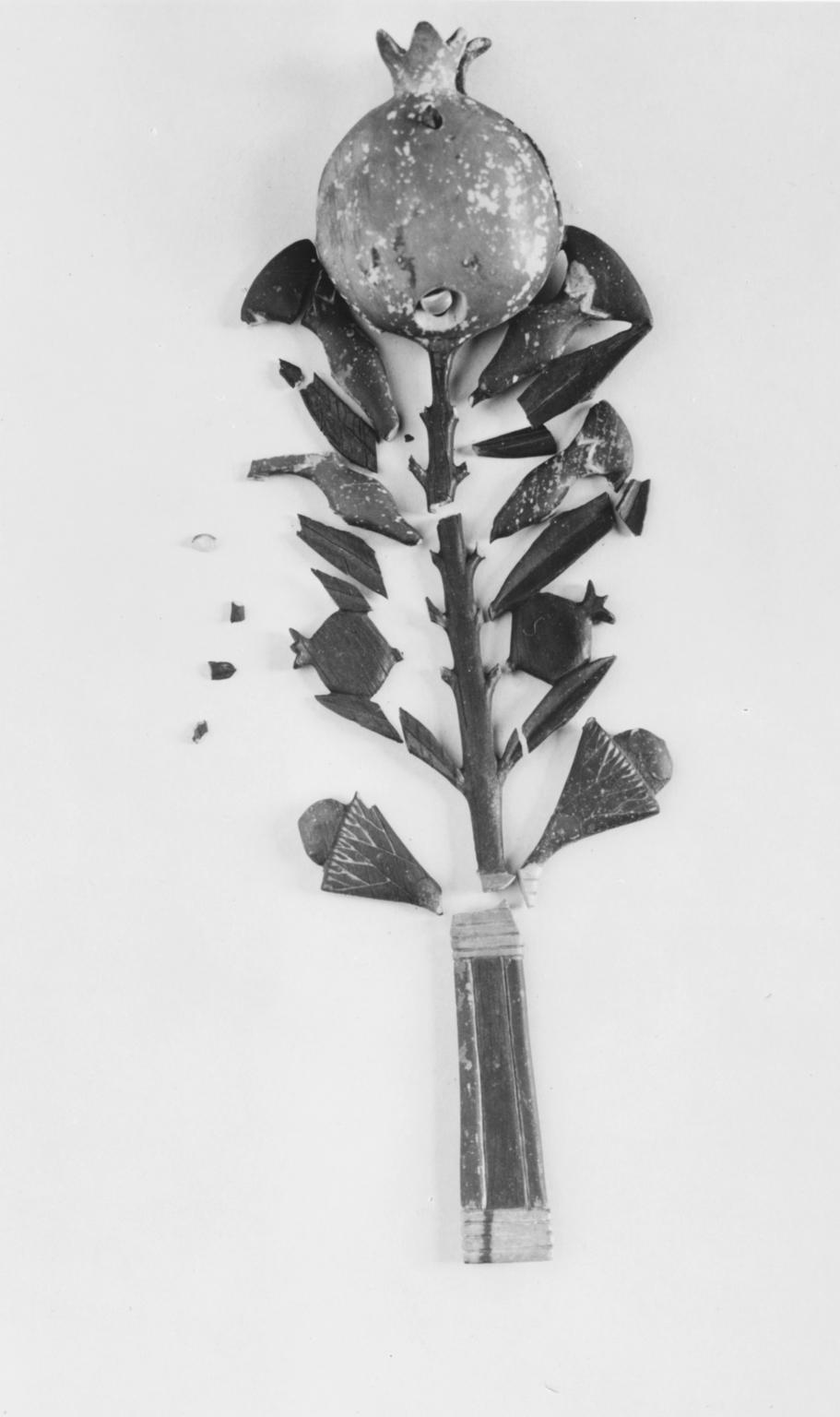
The late Eighteenth Dynasty was one of the the most flamboyant and excessive periods of design in Egyptian history. This spoon demonstrates the dominant aesthetic of the day: the complementary union of naturalistic elements, formal design, and excessive, stylized detailing.
The motif is a pomegranate branch terminating in a huge reddish-yellow fruit that swivels on a tiny pivot to reveal the bowl of the spoon. Tiny pomegranates, brightly painted flowers, and slender leaves project from the stem that serves as the handle. Beneath the lowest leaves the artisan has added an extraordinary embellishment: two lotus flowers, each with a Mimispos fruit emerging from it.
Although the individual elements of the spoon are treated with painstaking attention to detail, the design itself is pure fantasy. For example, pomegranate flowers and fruit never appear on a tree at the same time.
Caption
Spoon, ca. 1336–1327 B.C.E.. Ivory, 2 9/16 x 11/16 x 8 3/16 in. (6.5 x 1.8 x 20.8 cm). Brooklyn Museum, Charles Edwin Wilbour Fund, 42.411. (Photo: Brooklyn Museum)
Title
Spoon
Date
ca. 1336–1327 B.C.E.
Dynasty
late Dynasty 18
Period
New Kingdom
Geography
Place made: Egypt
Medium
Ivory
Classification
Dimensions
2 9/16 x 11/16 x 8 3/16 in. (6.5 x 1.8 x 20.8 cm)
Credit Line
Charles Edwin Wilbour Fund
Accession Number
42.411
Frequent Art Questions
The label says it is a spoon, but how would someone use it? Just remove the fruit shape lid?
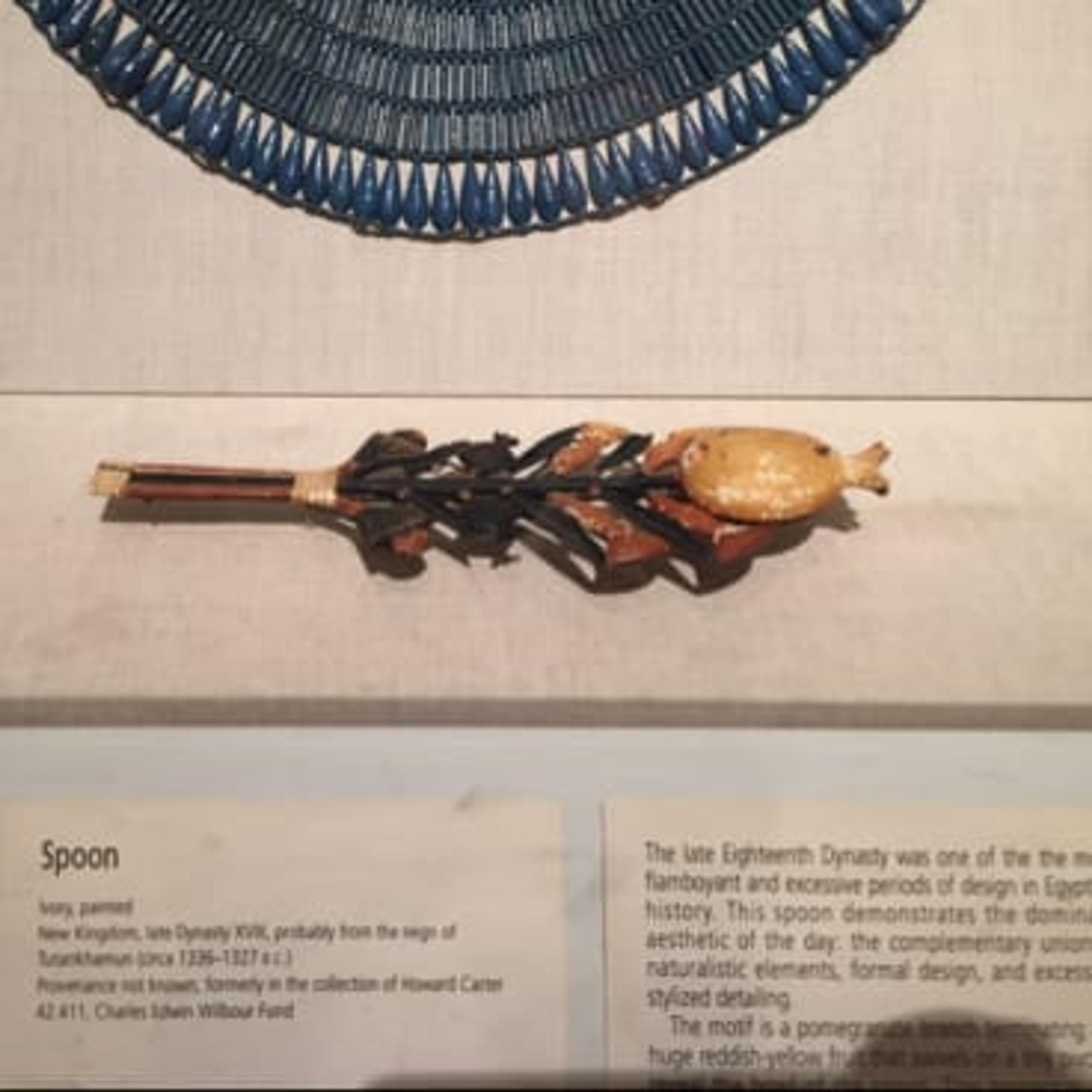 This spoon actually held an ointment, so it is more a container with a spoon shape not so much a spoon used for eating. But, yes, the ointment would be accessed by taking off the lid. The huge reddish-yellow fruit swivels on a tiny pivot to reveal the bowl of the spoon.
How do you actually eat with this?
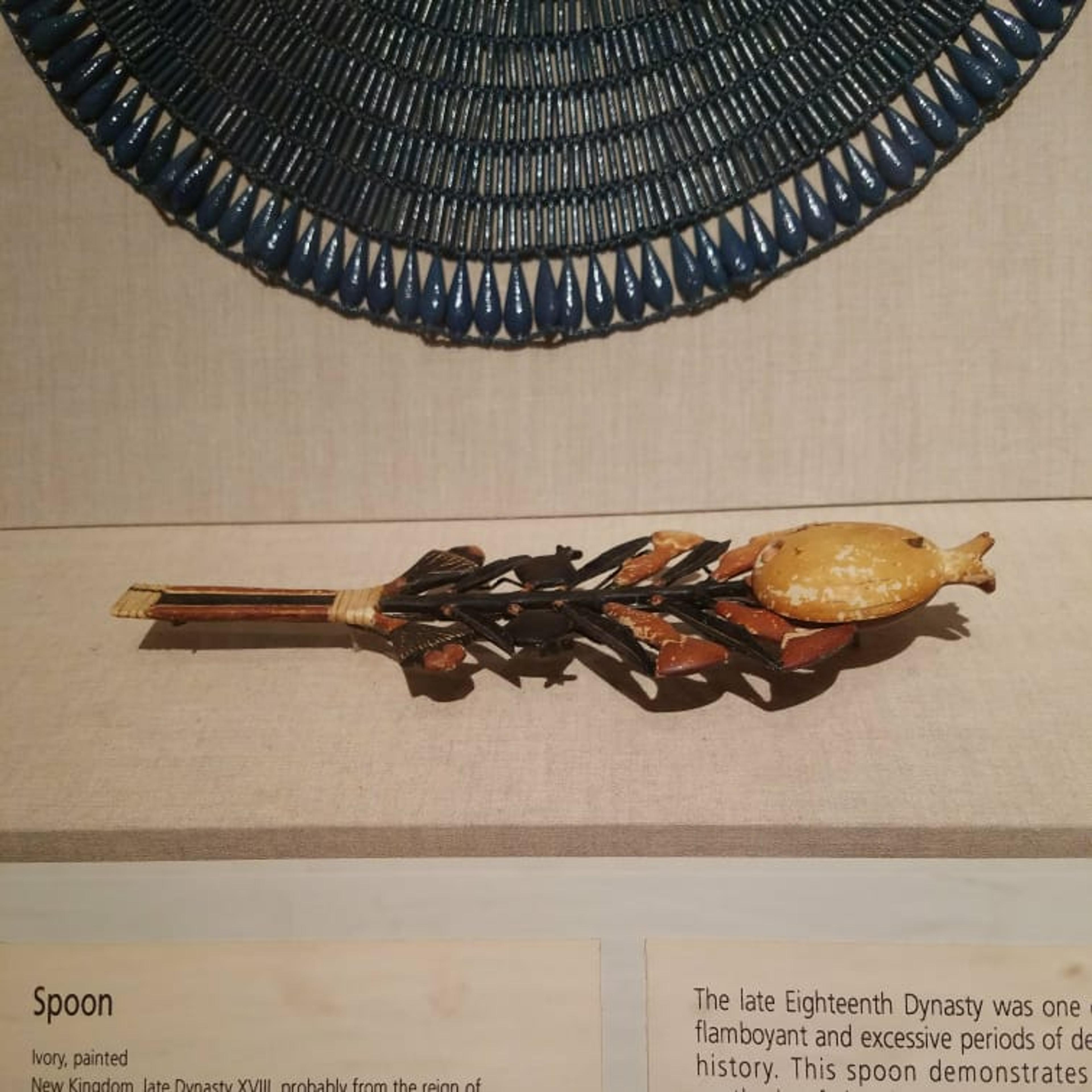 Though this object is indeed referred to as a spoon, it wasn't for eating with, it was designed to hold cosmetics like ointments or eye makeup.The pomegranate (to the right in the photo) is on a hinge and can swing to the side to reveal the bowl of the "spoon."What were the common ingredients for the cosmetics?We don't know for certain and it varies from cosmetic to cosmetic but a popular cosmetic in ancient Egypt was kohl. It was applied like modern day eyeliner and was made of ground stibnite, a sulfide mineral. It was believed that darkening the skin around one's eyes protected from the glare of the sun.Other cosmetics include the fragrant cone. You might see depiction of this in reliefs where women have a cone shaped mound on their head. This was made of fragrant oils and butters that would melt during the day, releasing a pleasant scent.
Have information?
Have information about an artwork? Contact us at