The Waste of Waters is Their Field

Brooklyn Museum photograph
Object Label
Albert Pinkham Ryder based this seascape on a poem by the Englishman Robert Southey that recounted the ocean voyage of a medieval king to the New World: “Day after day, day after day the same,— / A weary waste of waters!” Ryder was regarded as a visionary and experimental painter among artists. He often addressed the theme of human destiny, as played out in literature or the Bible. Influenced by modern European art, he rendered his subjects with highly simplified or expressively exaggerated forms and densely textured surfaces that challenged the visual expectations of his American audience.
Caption
Albert Pinkham Ryder (American, 1847–1917). The Waste of Waters is Their Field, early 1880s. Oil on panel, 11 5/16 x 12 in. (28.8 x 30.5 cm) frame (observed Feb 2016): 19 1/4 x 20 1/8 x 4 1/4 in. (48.9 x 51.1 x 10.8 cm). Brooklyn Museum, John B. Woodward Memorial Fund, 14.556. (Photo: Brooklyn Museum)
Collection
Collection
Artist
Title
The Waste of Waters is Their Field
Date
early 1880s
Medium
Oil on panel
Classification
Dimensions
11 5/16 x 12 in. (28.8 x 30.5 cm) frame (observed Feb 2016): 19 1/4 x 20 1/8 x 4 1/4 in. (48.9 x 51.1 x 10.8 cm)
Signatures
Unsigned
Credit Line
John B. Woodward Memorial Fund
Accession Number
14.556
Frequent Art Questions
What poem by Robert Southey inspired this?
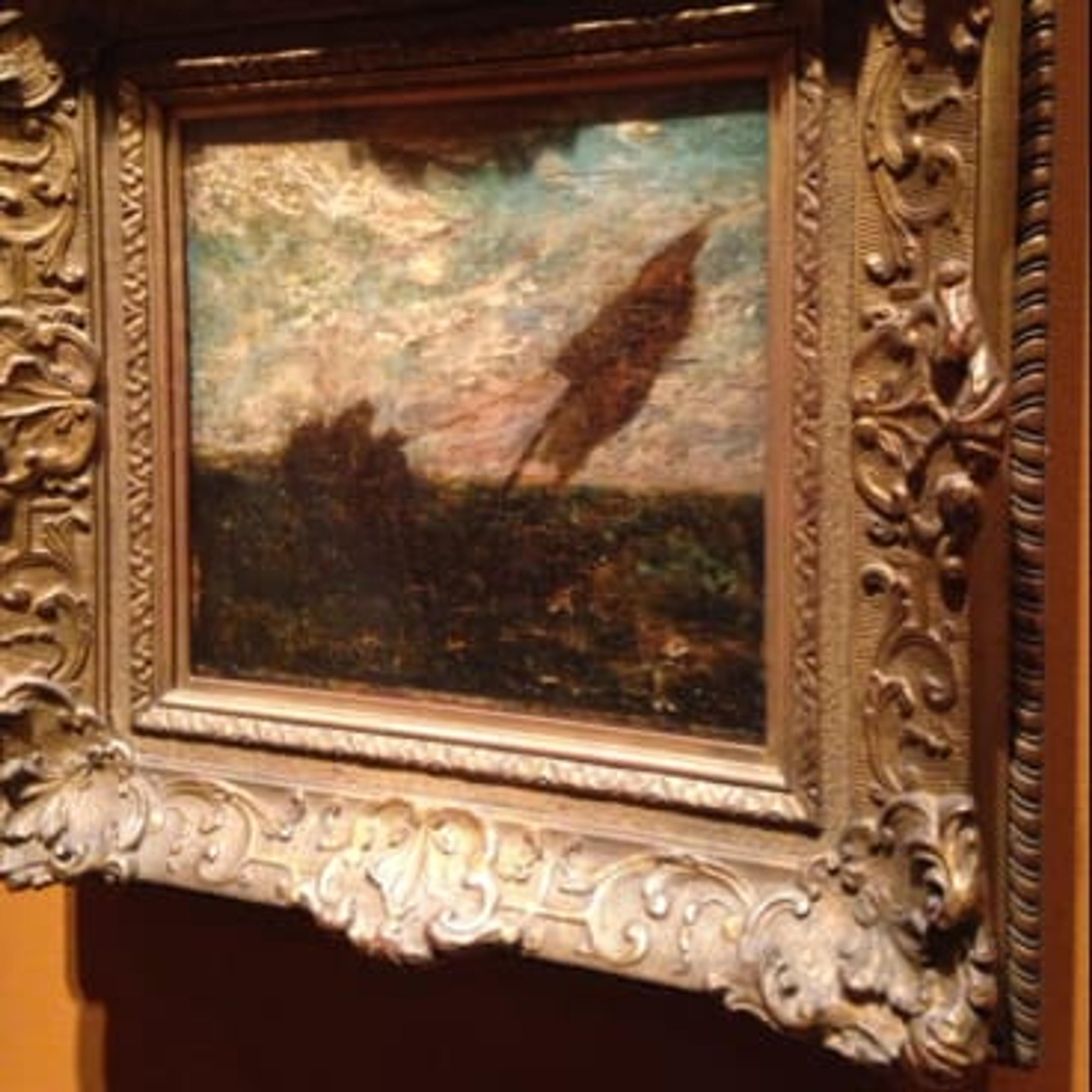 The poem is called "The Voyage." It recounted the ocean voyage of a medieval king across the ocean to the New World: "Day after day, day after day the same . . . A weary waste of waters!"Southey was an English poet active in the late 18th and early 19th centuries.
Have information?
Have information about an artwork? Contact us at