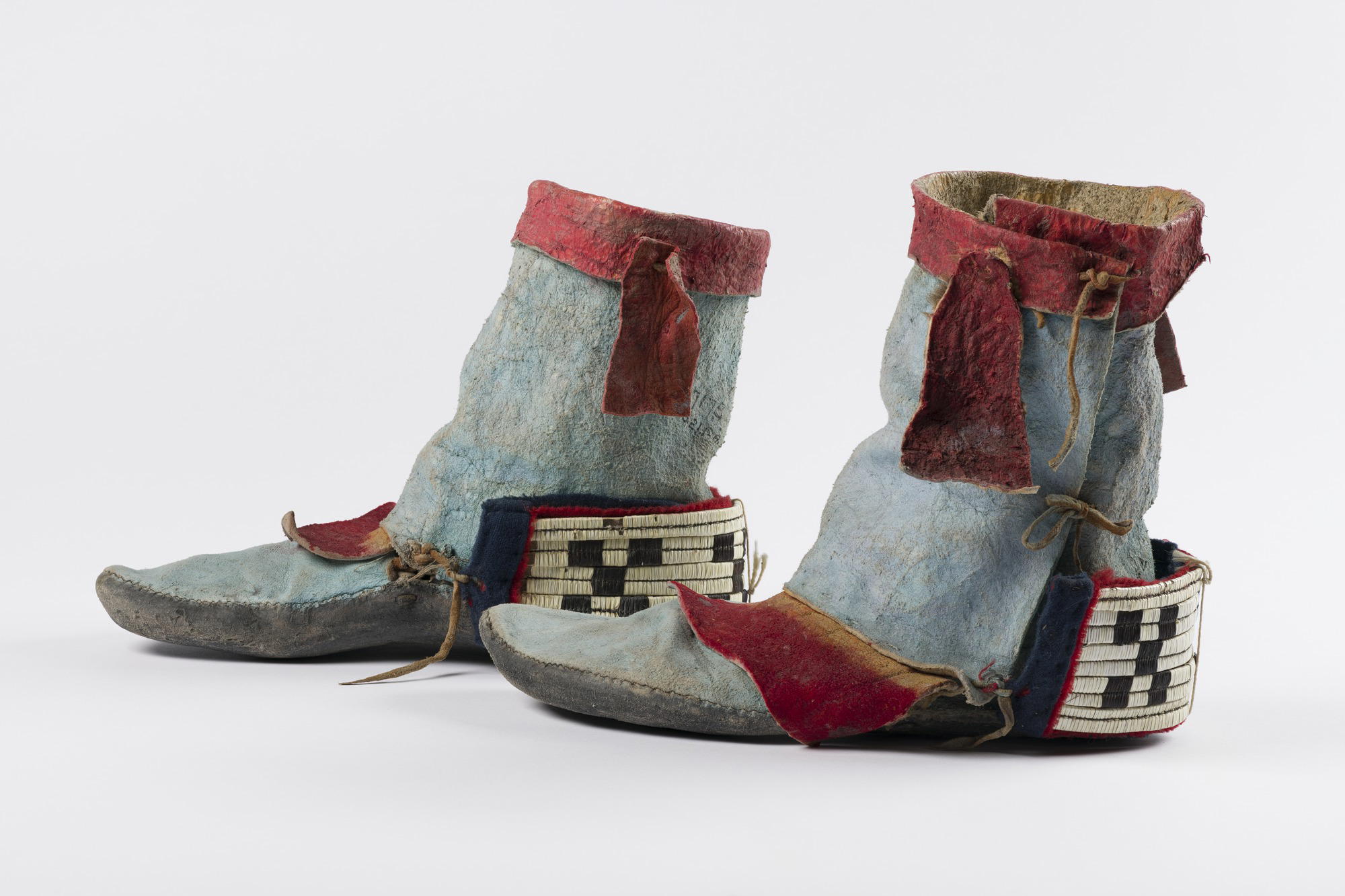
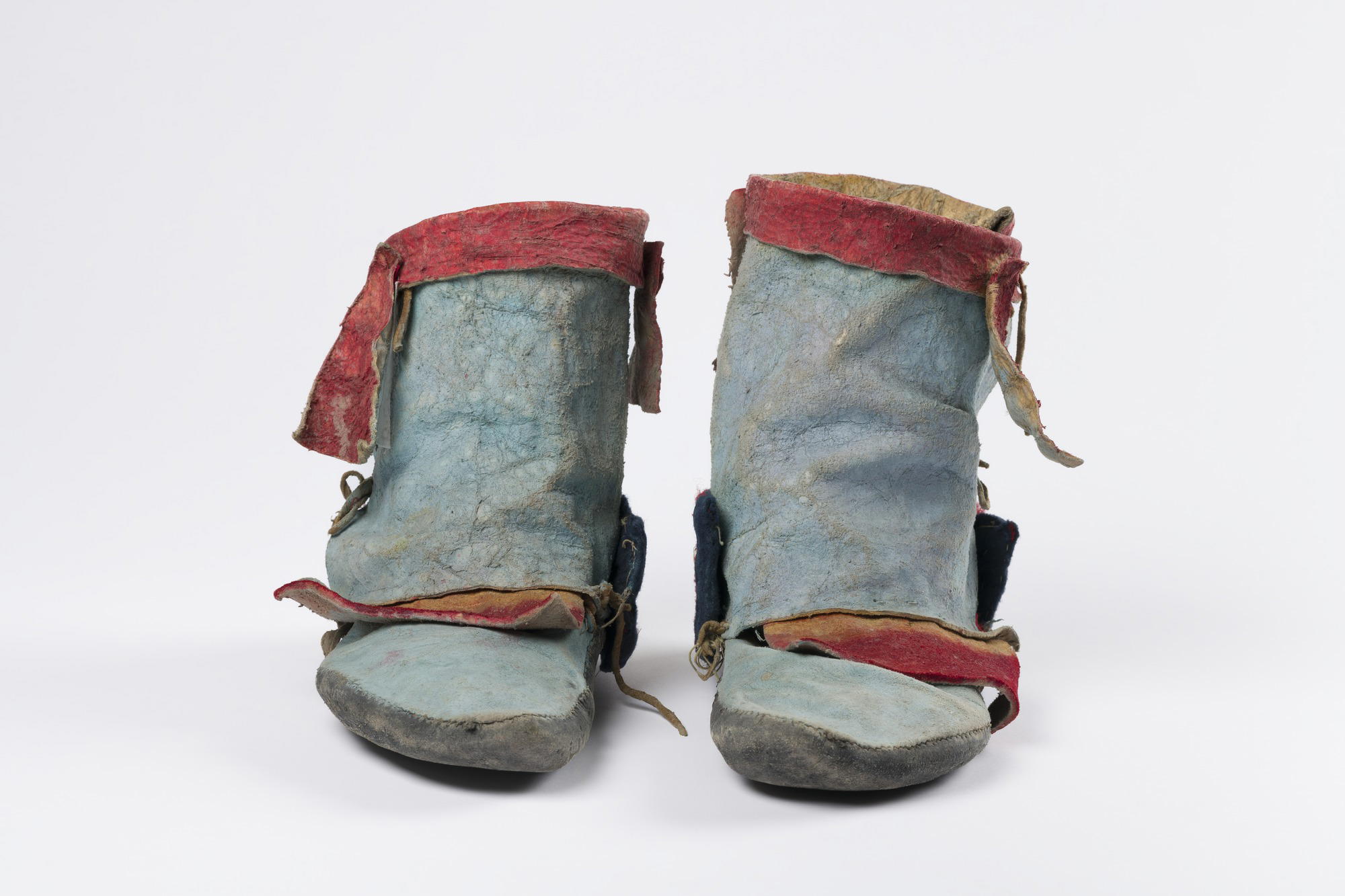
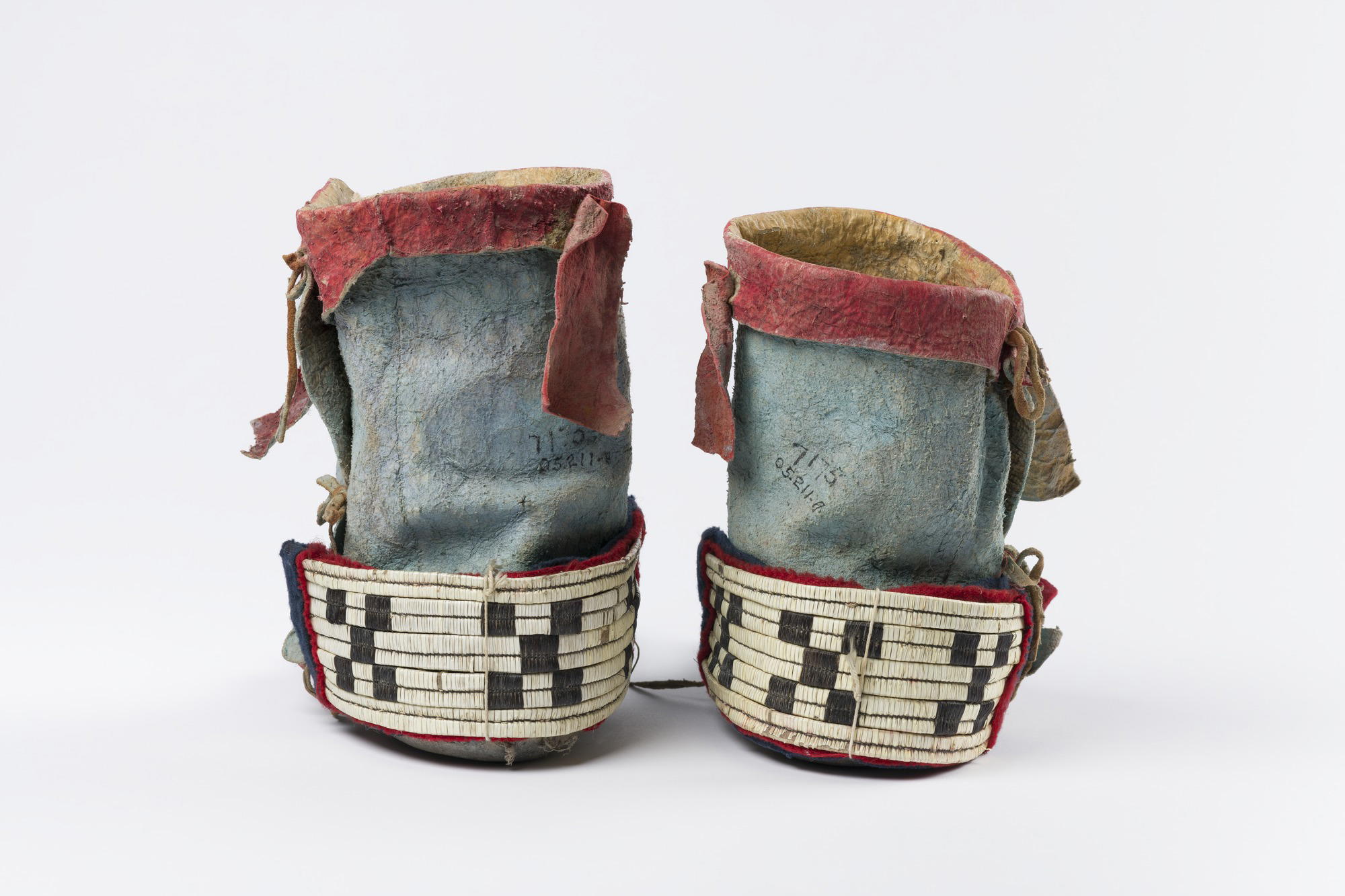
Dancing Shoes
Hopi Pueblo
1 of 3
Object Label
These Native American objects represent just a few of the items made in the late nineteenth and the early twentieth century, primarily for sale to dealers and collectors to satisfy the growing market for indigenous products. Finely coiled baskets like the example by the Maidu weaver Mary Kea’a’ala Azbill were in great demand, as were Zuni Kachina dolls. The desire for Eskimo objects such as the ivory pipe engraved with a whale-hunting scene was accelerated by the Klondike Gold Rush in 1897. To appeal to non-Native patrons, Native artists invented new designs using trade materials such as the glass beads forming the embroidered floral arrangement on the northeastern puzzle bag (so named for the way its pieces fold together to keep it closed). Other artists used traditional materials but tailored designs to non-Native aesthetics, as seen in the porcupine-quill box. The Navajo quickly adapted to the Spanish introduction of silver coins and silver mining in the seventeenth century, embellishing their traditional wrist guards with hammered silver. Some artists retained both traditional materials and designs but produced greater quantities of popular items such as the Plains owl pipe bowl made from Catlinite (red pipestone).
Caption
Hopi Pueblo. Dancing Shoes, late 19th century. Deer hide, pigments, sinew, porcupine quill, horse hair, wool, 10 3/16 x 4 5/16 x 7 5/16 in. (25.9 x 11 x 18.6 cm). Brooklyn Museum, Museum Expedition 1905, Museum Collection Fund, 05.588.7175a-b. (Photo: Brooklyn Museum)
Collection
Collection
Culture
Title
Dancing Shoes
Date
late 19th century
Medium
Deer hide, pigments, sinew, porcupine quill, horse hair, wool
Classification
Dimensions
10 3/16 x 4 5/16 x 7 5/16 in. (25.9 x 11 x 18.6 cm)
Credit Line
Museum Expedition 1905, Museum Collection Fund
Accession Number
05.588.7175a-b
Have information?
Have information about an artwork? Contact us at