Ewer with Globular Shape
13th century
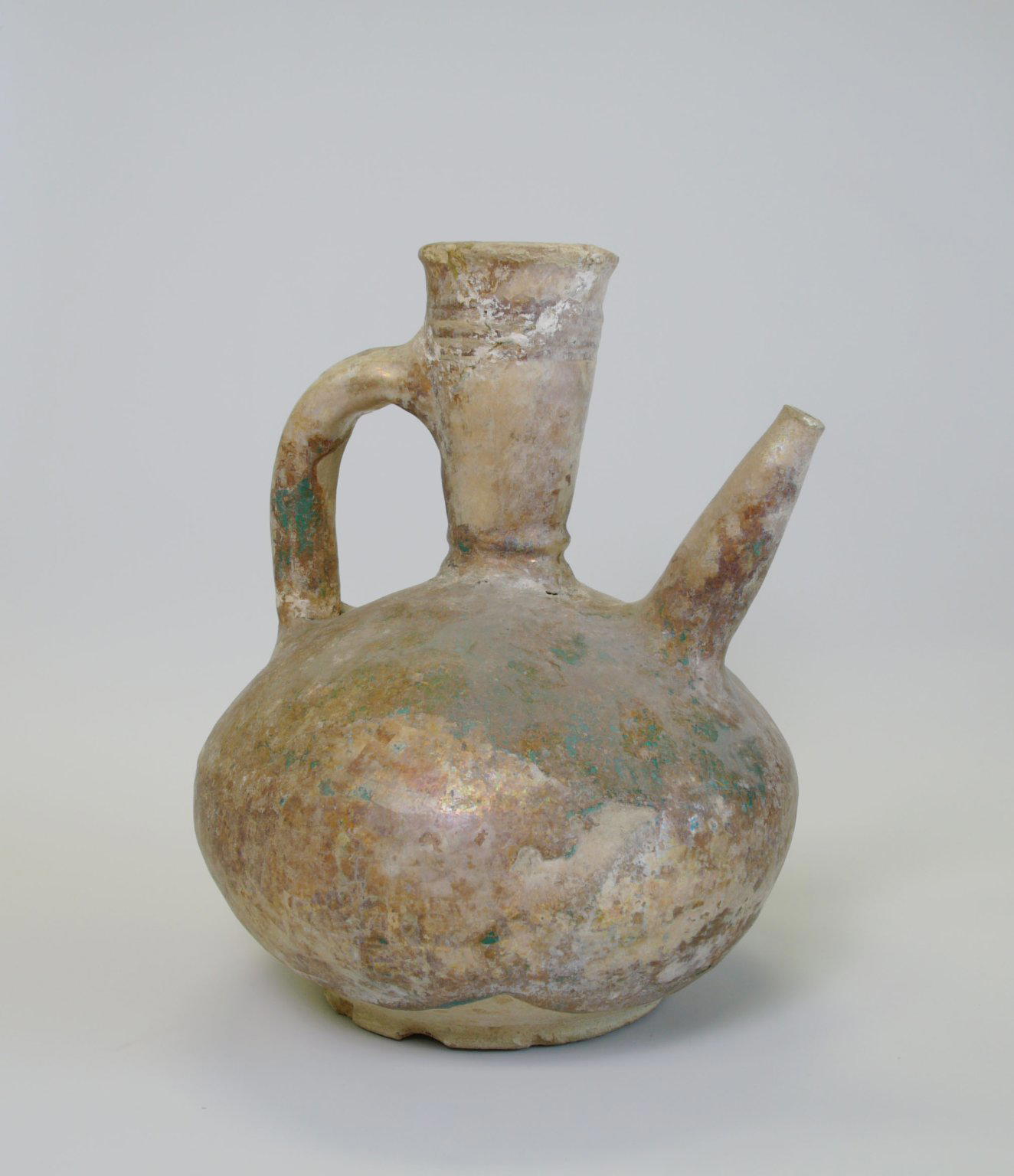
Brooklyn Museum photograph
Object Label
Wasters, or ceramic products damaged during the firing process and therefore discarded as waste near the original kilns. Excavations by the Ottoman Imperial Museum in 1906 and 1908, by chance conducted near the thirteenth-century kilns, most likely exposed the buried wasters.
Caption
Ewer with Globular Shape, 13th century. Ceramic, fritware, 10 5/8 x 8 1/4 in. (27 x 21 cm) Thickness of rim: 3/8 in. (0.9 cm) Diameter at spout: 3/8 in. (0.9 cm). Brooklyn Museum, Gift of Robert B. Woodward, 09.314. (Photo: Brooklyn Museum)
Gallery
Not on view
Collection
Gallery
Not on view
Collection
Title
Ewer with Globular Shape
Date
13th century
Period
Ayyubid
Medium
Ceramic, fritware
Classification
Dimensions
10 5/8 x 8 1/4 in. (27 x 21 cm) Thickness of rim: 3/8 in. (0.9 cm) Diameter at spout: 3/8 in. (0.9 cm)
Credit Line
Gift of Robert B. Woodward
Accession Number
09.314
Frequent Art Questions
Any idea how hot the kilns were fired to 800 years ago? Were they fired in oxidation or reduction?
The vessels were fired in oxygen reducing kilns. Fritware, or stonepaste, of which all the vessels in the show are constructed, is generally fired in the range of 900-1200 degrees Celsius.Fantastic, thank you!!
Have information?
Have information about an artwork? Contact us at