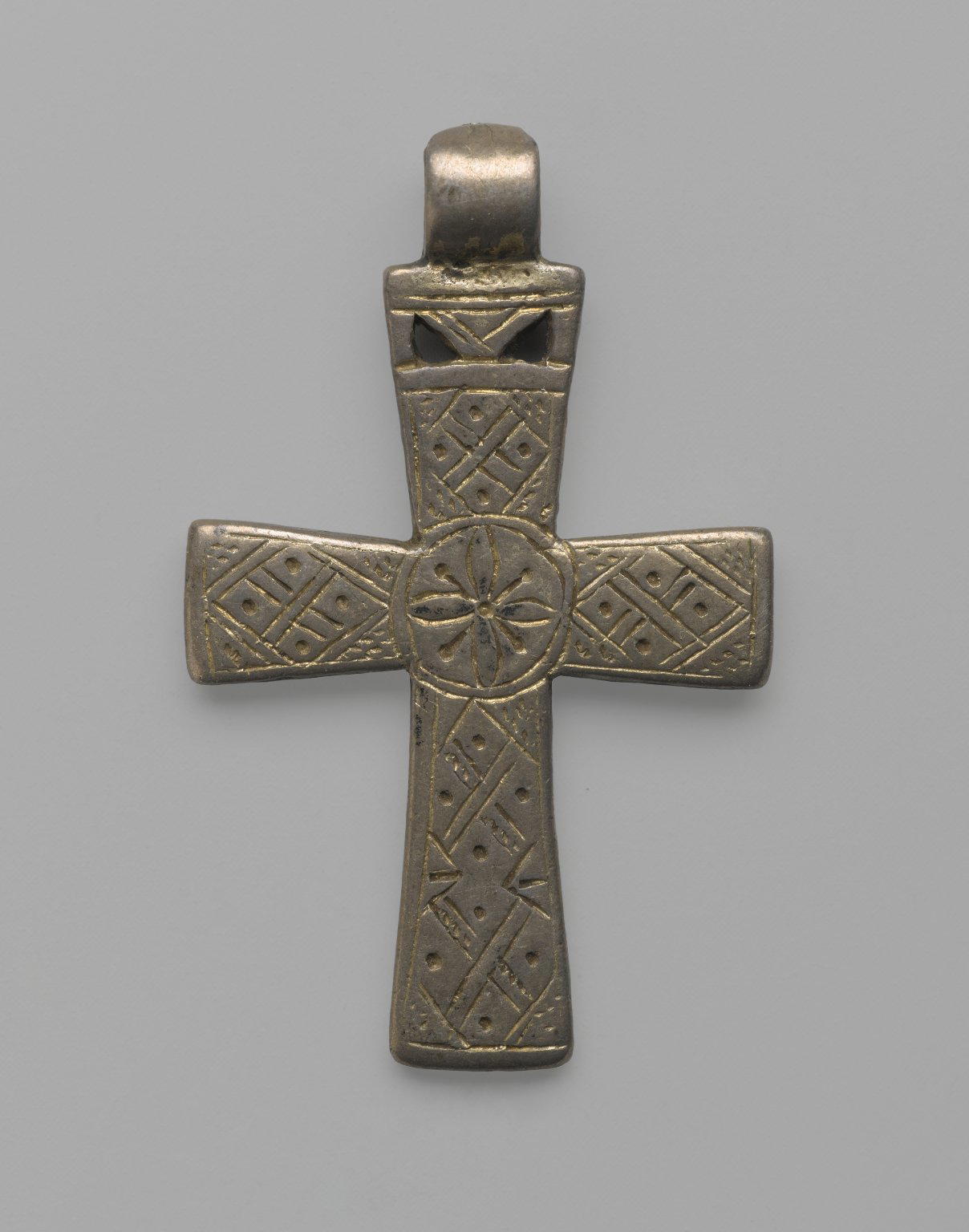
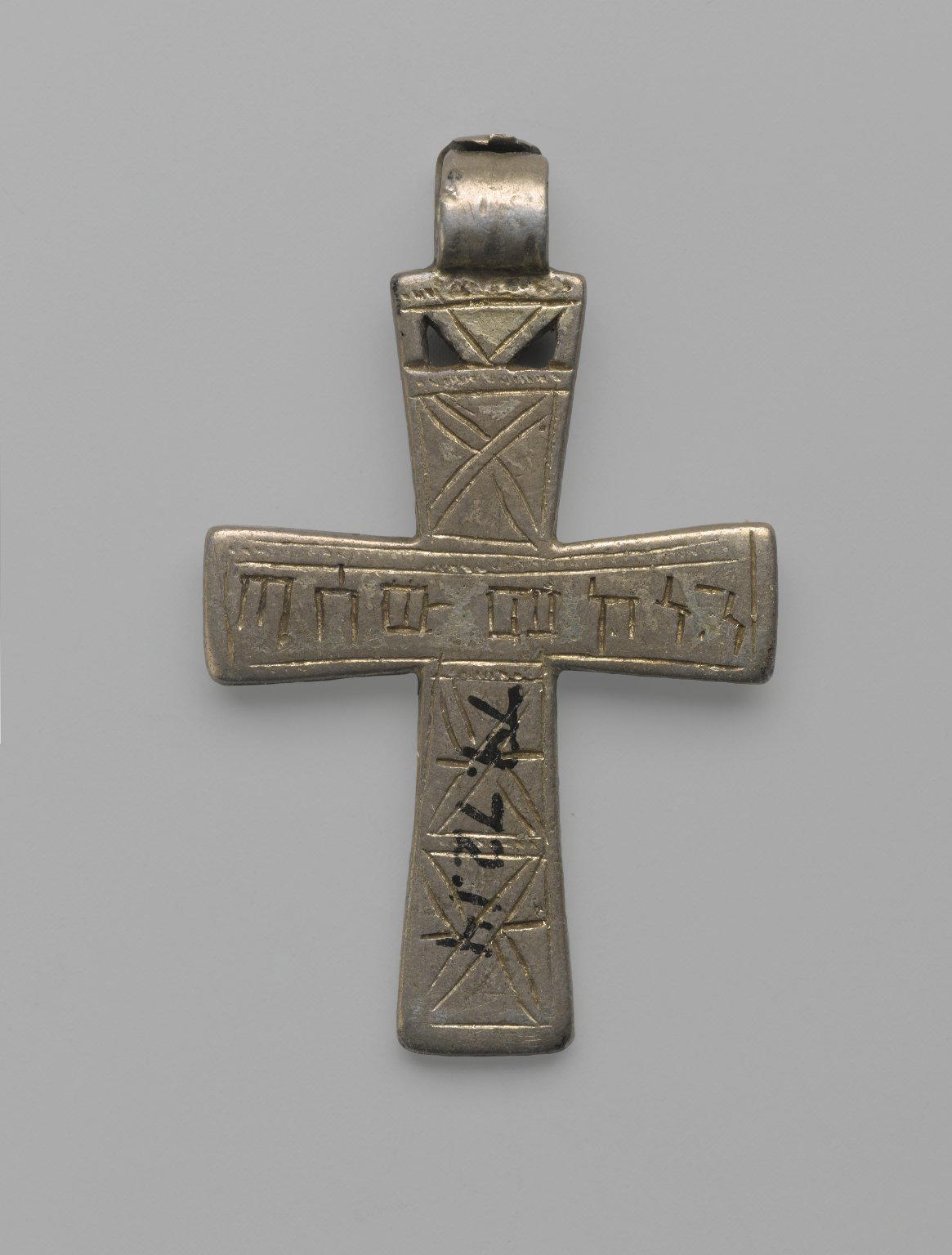
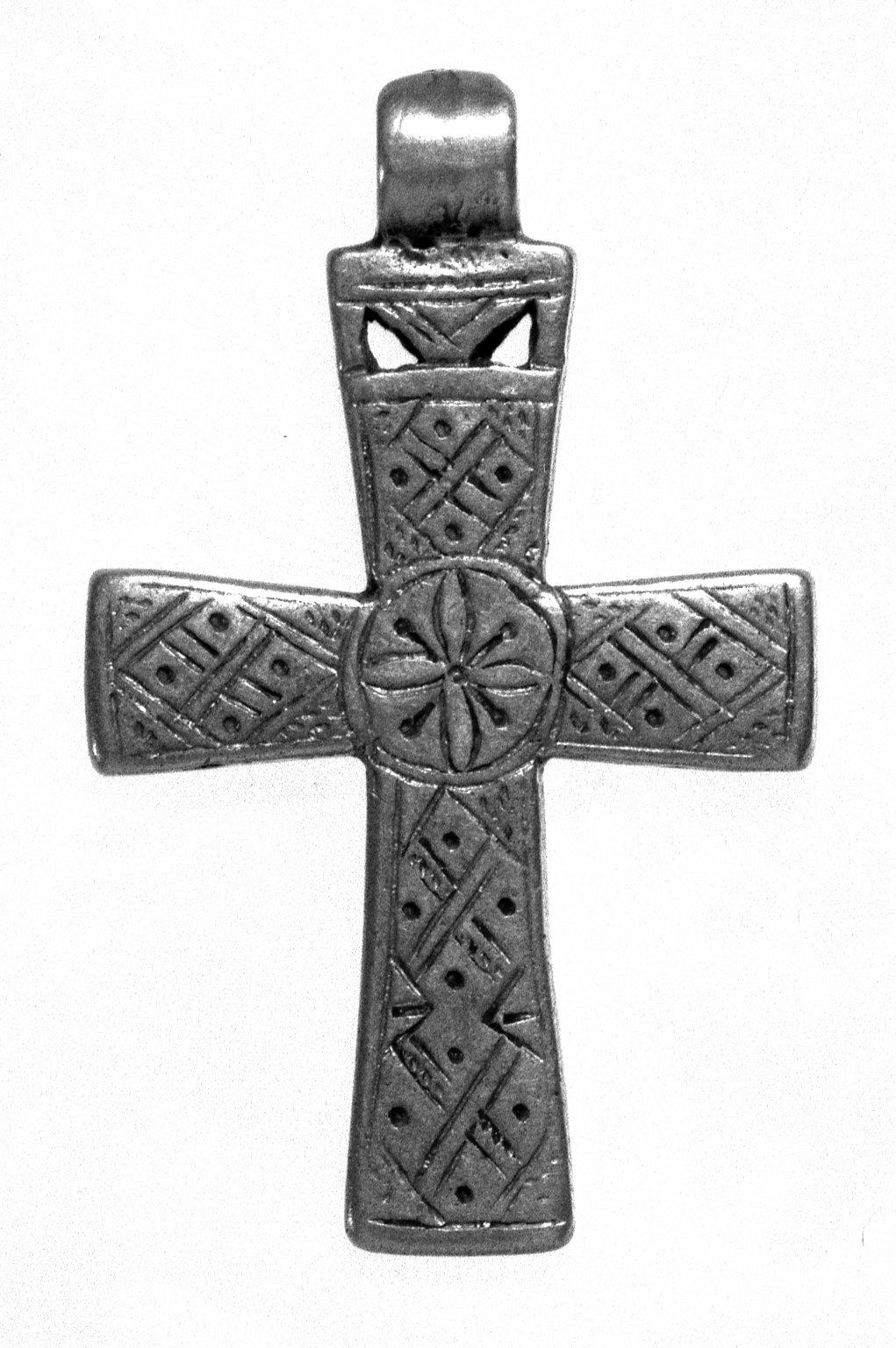
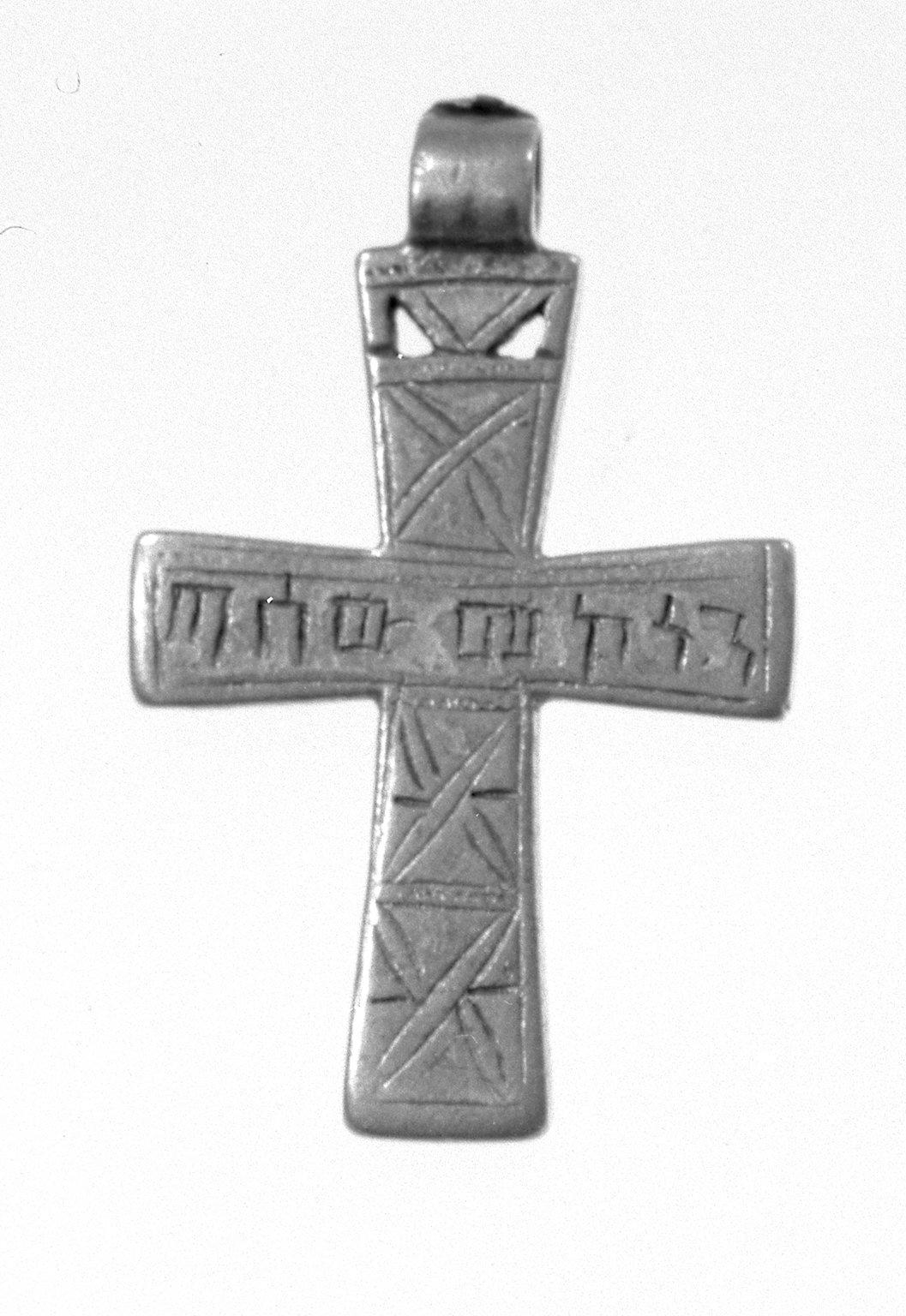
Pendant Cross
Amhara
1 of 4
Object Label
Ethiopian Crosses
Christianity most likely arrived in Ethiopia in the first century. The conversion of King Ezana in 330 c.e. led to its official acceptance and the minting of coins bearing one of the earliest uses of the cross as a Christian symbol. Although the silver pendant crosses in the Museum’s collection are from the nineteenth and twentieth centuries, their forms have a considerably longer history, as the much older copper, wood, and iron crosses here demonstrate.
Hand crosses, which are used by priests, are either hand-held or suspended from a cord around the neck. They are kissed by the faithful to receive a blessing. Processional crosses are carried on long poles in religious processions. Prayer staffs are used to mark rhythms during sacred dances and as supports to lean on while standing for long hours during Orthodox church services. Together, all of these crosses are emblems of the Ethiopian Orthodox church’s ongoing authority.
Christianity most likely arrived in Ethiopia in the first century. The conversion of King Ezana in 330 c.e. led to its official acceptance and the minting of coins bearing one of the earliest uses of the cross as a Christian symbol. Although the silver pendant crosses in the Museum’s collection are from the nineteenth and twentieth centuries, their forms have a considerably longer history, as the much older copper, wood, and iron crosses here demonstrate.
Hand crosses, which are used by priests, are either hand-held or suspended from a cord around the neck. They are kissed by the faithful to receive a blessing. Processional crosses are carried on long poles in religious processions. Prayer staffs are used to mark rhythms during sacred dances and as supports to lean on while standing for long hours during Orthodox church services. Together, all of these crosses are emblems of the Ethiopian Orthodox church’s ongoing authority.
Caption
Amhara. Pendant Cross, 19th or 20th century. Silver, 1 7/8 x 1 3/16 in. (4.8 x 3.0 cm). Brooklyn Museum, Gift of George V. Corinaldi Jr., 79.72.14. (Photo: Brooklyn Museum)
Gallery
Not on view
Collection
Gallery
Not on view
Collection
Have information?
Have information about an artwork? Contact us at