Fish
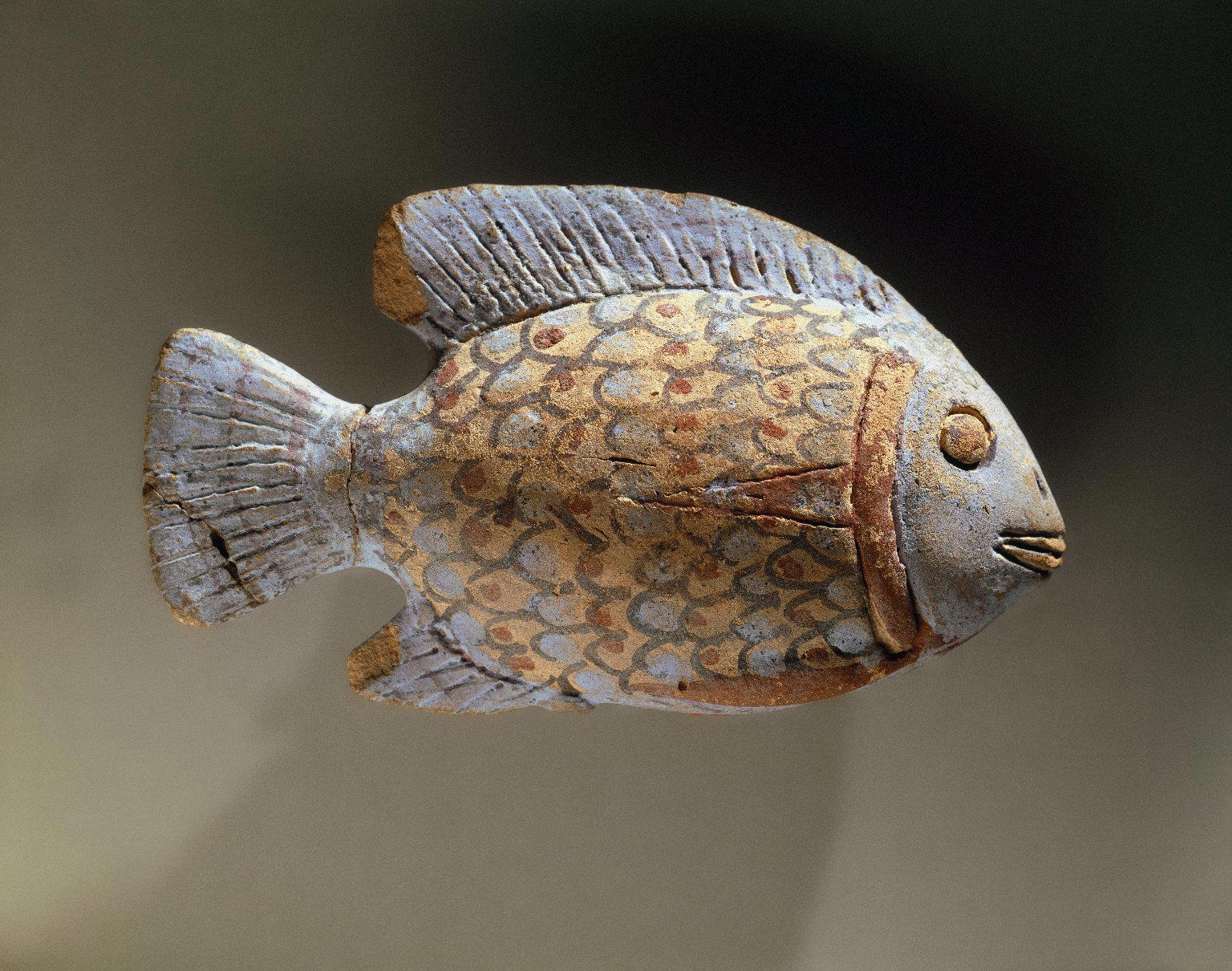
Brooklyn Museum photograph
Object Label
Caption
Fish, ca. 1390–1336 B.C.E.. Clay, pigment, 2 9/16 × 4 7/16 × 1 1/4 in. (6.5 × 11.2 × 3.2 cm) mount (deck mount display dims): 3 3/4 × 4 3/4 × 2 1/2 in. (9.5 × 12.1 × 6.4 cm). Brooklyn Museum, Charles Edwin Wilbour Fund, 48.111. (Photo: Brooklyn Museum)
Gallery
Not on view
Gallery
Not on view
Title
Fish
Date
ca. 1390–1336 B.C.E.
Dynasty
late Dynasty 18
Period
New Kingdom
Geography
Place made: Egypt, Possible place collected: Saqqara, Egypt
Medium
Clay, pigment
Classification
Dimensions
2 9/16 × 4 7/16 × 1 1/4 in. (6.5 × 11.2 × 3.2 cm) mount (deck mount display dims): 3 3/4 × 4 3/4 × 2 1/2 in. (9.5 × 12.1 × 6.4 cm)
Credit Line
Charles Edwin Wilbour Fund
Accession Number
48.111
Frequent Art Questions
How would the little blue "plaque" and this percussive fish have been displayed or kept during their time?
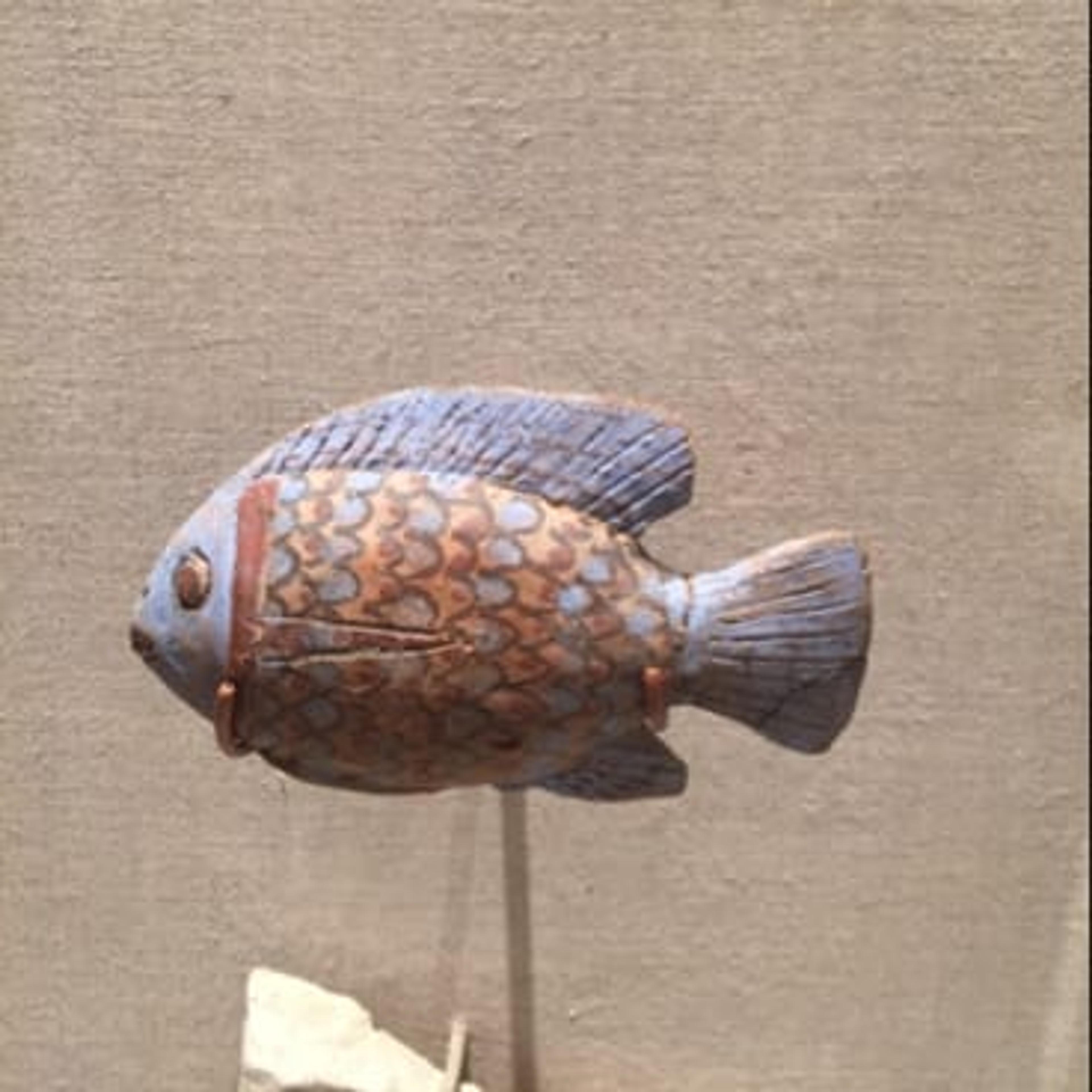 Would it be kept in a box or some sort of vessel or "displayed" on a mount like it is here?The small balls inside, which make the fish rattle, represent the eggs that the fish would lay to create new life!I believe the mount is a method of museum display -- not the way its original users/owners would have kept it. I actually don't know how the fish would have been stored, but it would have been used in religious rituals, where music and dance were common.
Have information?
Have information about an artwork? Contact us at