Cat Mummy
750–400 B.C.E.
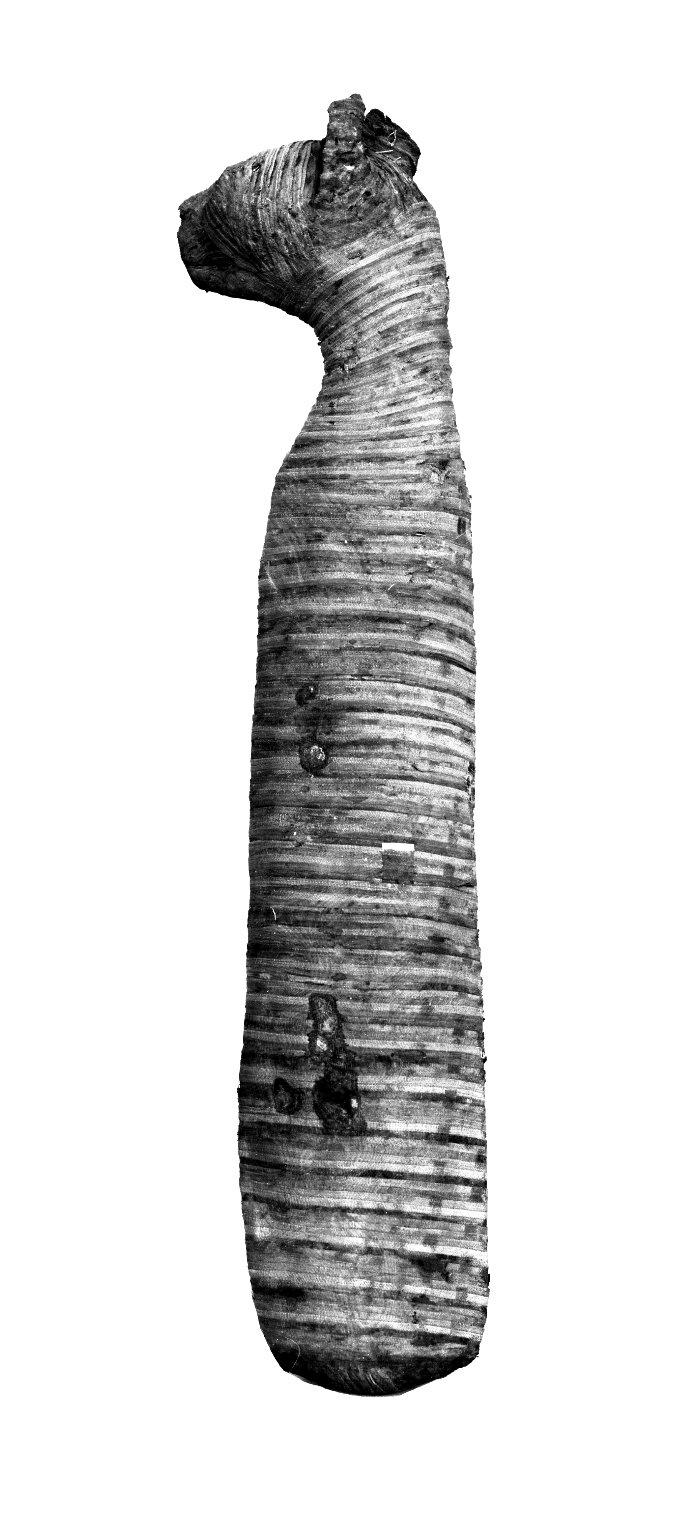
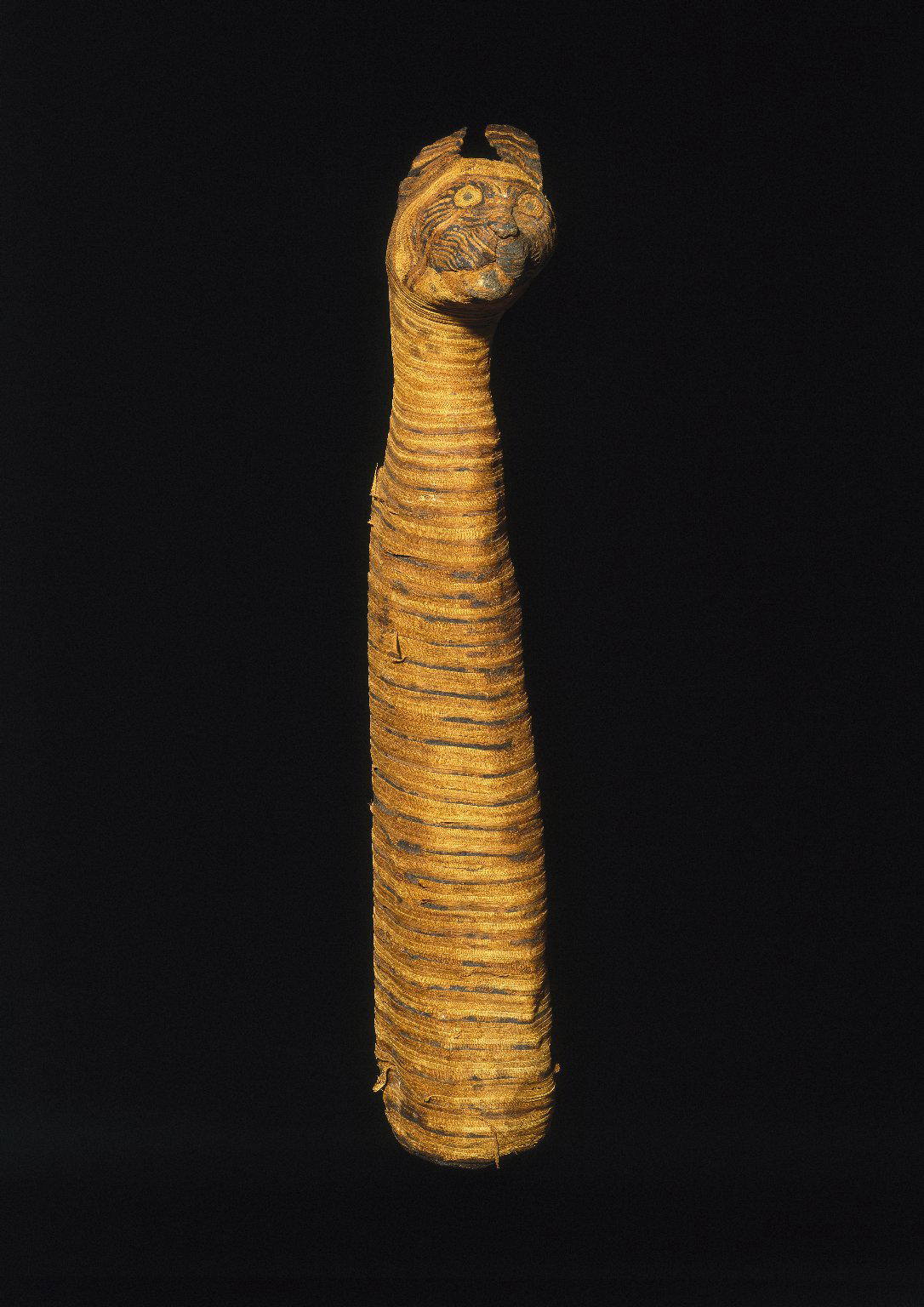
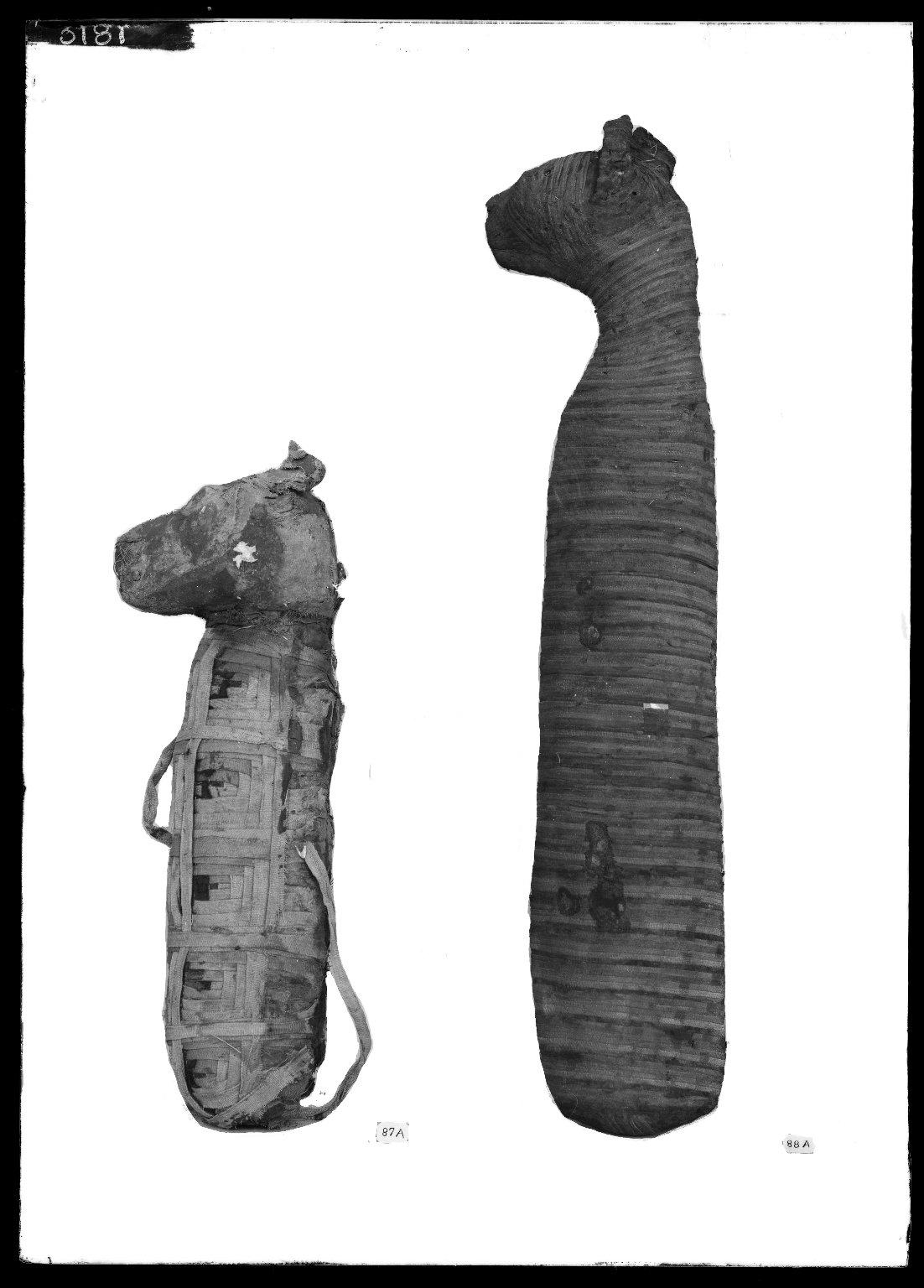
1 of 3
Object Label
Often, the more elaborate the wrapping, the less likely it is that the whole animal is inside, as the two CT scans shown here reveal. Perhaps the intricate wrapping substitutes for the animal.
This ibis is the most elaborately wrapped of all the animal mummies on display here. The herringbone pattern linen, the beak, and the elaborate crown all cover a mummy made only from ibis feathers. In contrast, the simple circular wrapping of this cat, with a head modeled in linen, conceals a complete cat mummy.
This ibis is the most elaborately wrapped of all the animal mummies on display here. The herringbone pattern linen, the beak, and the elaborate crown all cover a mummy made only from ibis feathers. In contrast, the simple circular wrapping of this cat, with a head modeled in linen, conceals a complete cat mummy.
Caption
Cat Mummy, 750–400 B.C.E.. Animal remains, linen, pigment, 5 1/2 × 3 3/4 × 24 1/2 in. (14 × 9.5 × 62.2 cm). Brooklyn Museum, Charles Edwin Wilbour Fund, 37.1988E. (Photo: Brooklyn Museum)
Gallery
Not on view
Gallery
Not on view
Title
Cat Mummy
Date
750–400 B.C.E.
Dynasty
Dynasty 22 to Dynasty 27
Period
Third Intermediate Period to early Late Period
Geography
Place made: Egypt
Medium
Animal remains, linen, pigment
Classification
Dimensions
5 1/2 × 3 3/4 × 24 1/2 in. (14 × 9.5 × 62.2 cm)
Credit Line
Charles Edwin Wilbour Fund
Accession Number
37.1988E
Frequent Art Questions
What is the history of the piece?
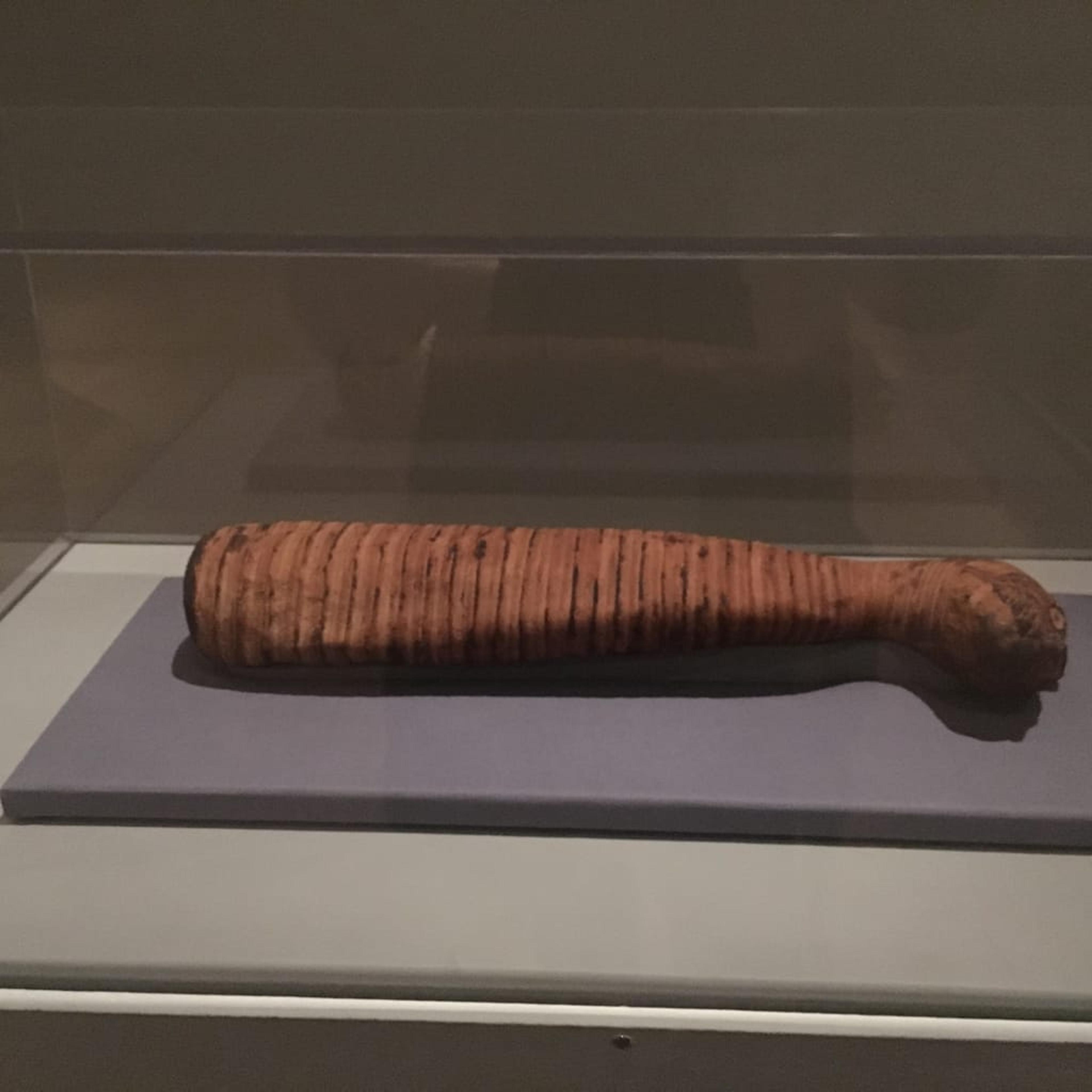 This cat was mummified as an offering to the goddess Bastet who was often depicted with the head of a cat. Bastet and cats themselves were associated with protection because cats are very maternal and are also known to kill vermin like mice!
Were the cats sacrificed? Or did they just die?
Both. Most cats that were mummified to be offered to Bastet and other feline deities were sacrificed for the occasion. Some cats, especially family pets, would have been mummified after they died of some other cause.Why is the cat mummy so long?
The cat mummy is long both because of the way the animals corpse was positioned in the wrappings and the fact that the wrapping itself adds extra padding. It's a surprisingly simple explanation, I know. If you look at some of the more elaborate mummies than the cat one in the last room, you'll notice that their decoration is actually compensating for a lack of a complete mummy inside. The cat mummy, meanwhile, does in fact have a full set of remains.Thank you.More about this please.
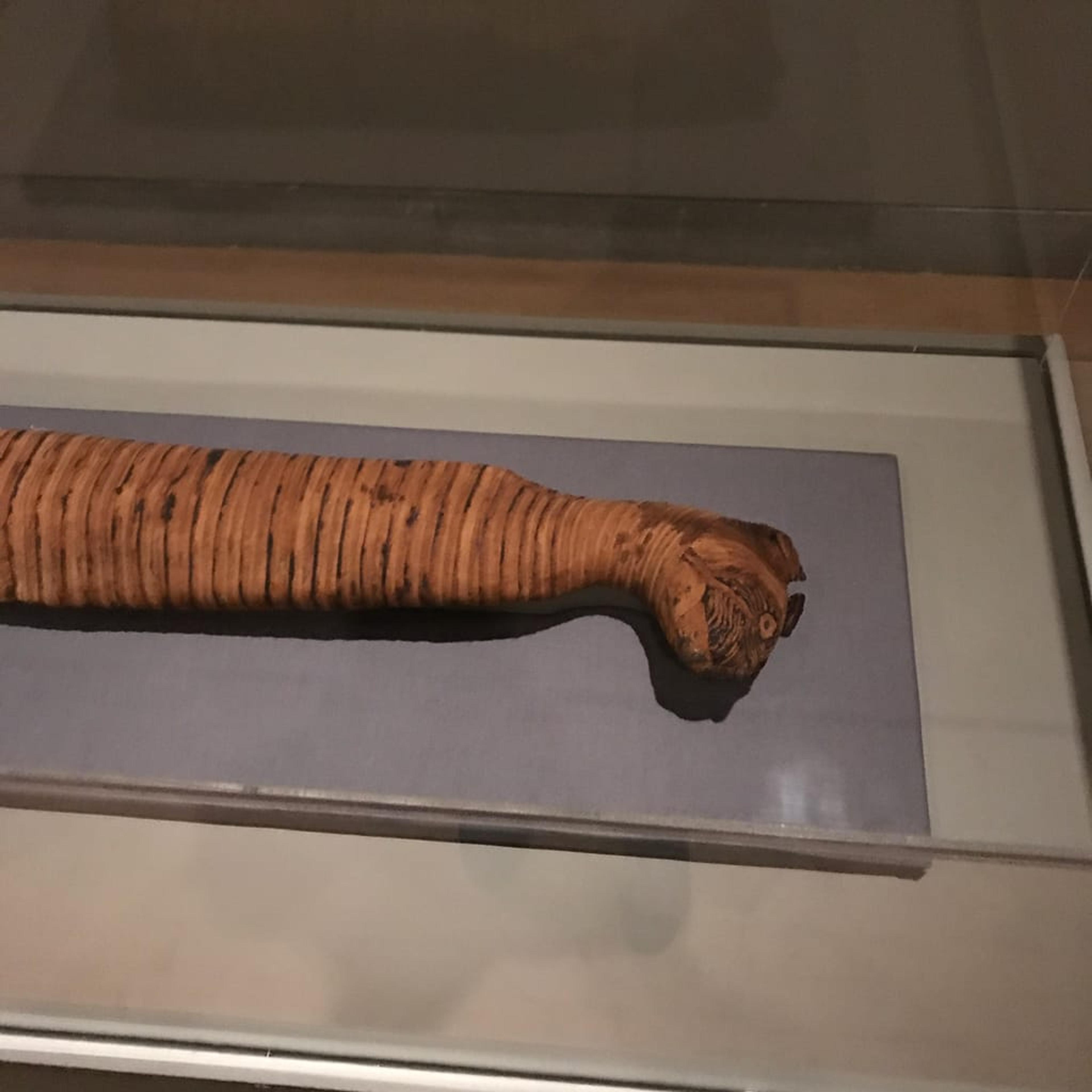 Of course! This cat was mummified as an offering to the goddess Bastet, who was often depicted with the head of a cat. Bastet and cats were associated with protection because cats are very maternal and known to kill vermin like mice.The mummies would be buried with prayers, either written on papyrus or spoken. Once the animal was buried, the could was thought to travel to the realm of the gods and convey the person's message to the god the animal was associated with. In this case, Bastet!
Were the cats dead prior to mummification or sacrificed for entrance into the afterlife?
The simple answer is, it depends. Many cats and other animals were sacrificed in order to send their souls to the afterlife. This likely represents a larger proportion of cat mummies.There is also evidence that pet cats were mummified after having died of natural causes.Thanks!
Have information?
Have information about an artwork? Contact us at