Dragon Jar
mid 17th century


1 of 2
Object Label
By the seventeenth century, porcelain had overtaken stoneware as the ceramic of choice for wealthy Koreans and underglaze brown—once favored for decoration of Buncheong stonewares—enjoyed a brief revival, this time on porcelain vessels. These large, bulbous storage jars were formed by joining two bowls, one inverted on top of the other. The swelling surfaces of the jars give dimension and energy to curvilinear forms, as seen in particular in the swirl of the highly abstracted dragon.
Caption
Dragon Jar, mid 17th century. Porcelain with iron-painted decoration under clear glaze, overall: 12 11/16 x 14 9/16 in. (32.2 x 37 cm) Height: 12 11/16 in. (32.2 cm) Diameter: 14 9/16 in. (37 cm). Brooklyn Museum, Gift of the Asian Art Council, 86.139. (Photo: Brooklyn Museum)
Gallery
Not on view
Collection
Gallery
Not on view
Collection
Title
Dragon Jar
Date
mid 17th century
Dynasty
Joseon Dynasty
Geography
Place made: Korea
Medium
Porcelain with iron-painted decoration under clear glaze
Classification
Dimensions
overall: 12 11/16 x 14 9/16 in. (32.2 x 37 cm) Height: 12 11/16 in. (32.2 cm) Diameter: 14 9/16 in. (37 cm)
Credit Line
Gift of the Asian Art Council
Accession Number
86.139
Frequent Art Questions
Tell me more.
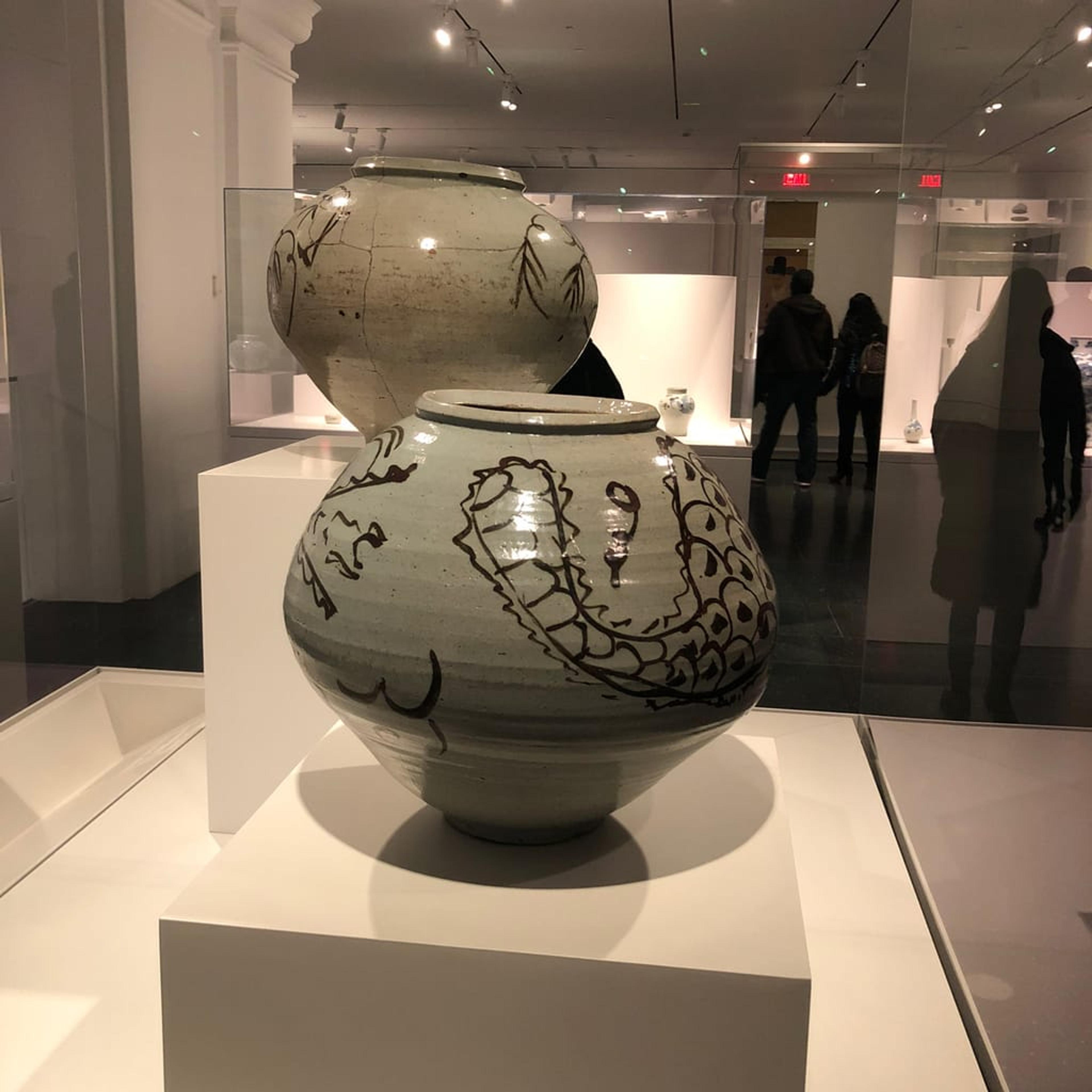 There is a terrific sense of movement in this jar: the loosely painted dragon swirls around the body and the "throwing lines" from when the vessel was made on a wheel add a sense of dynamism.Korean potters went through phases when they used iron red to decorate pottery because cobalt blue was more expensive and was not readily available.
How do you know this is made of porcelain? The foot is red clay and the texture is rough not smooth.
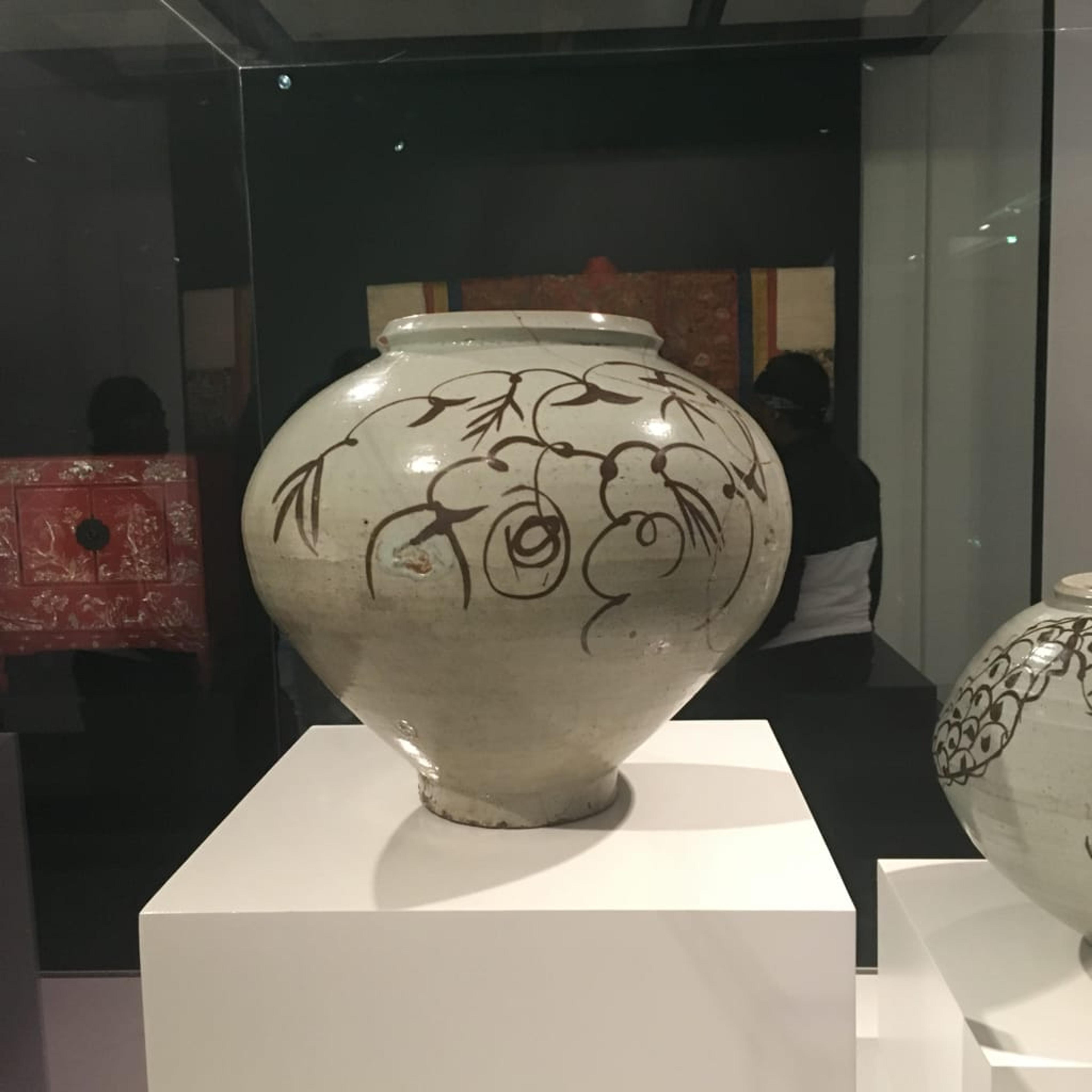 Early buncheong wares of this style were made using powdered green-tinted semi-translucent glaze, and were an affordable alternative to porcelain However, later buncheong wares, which have the loose designs you see in this work, were made with porcelain instead.
Tell me more.
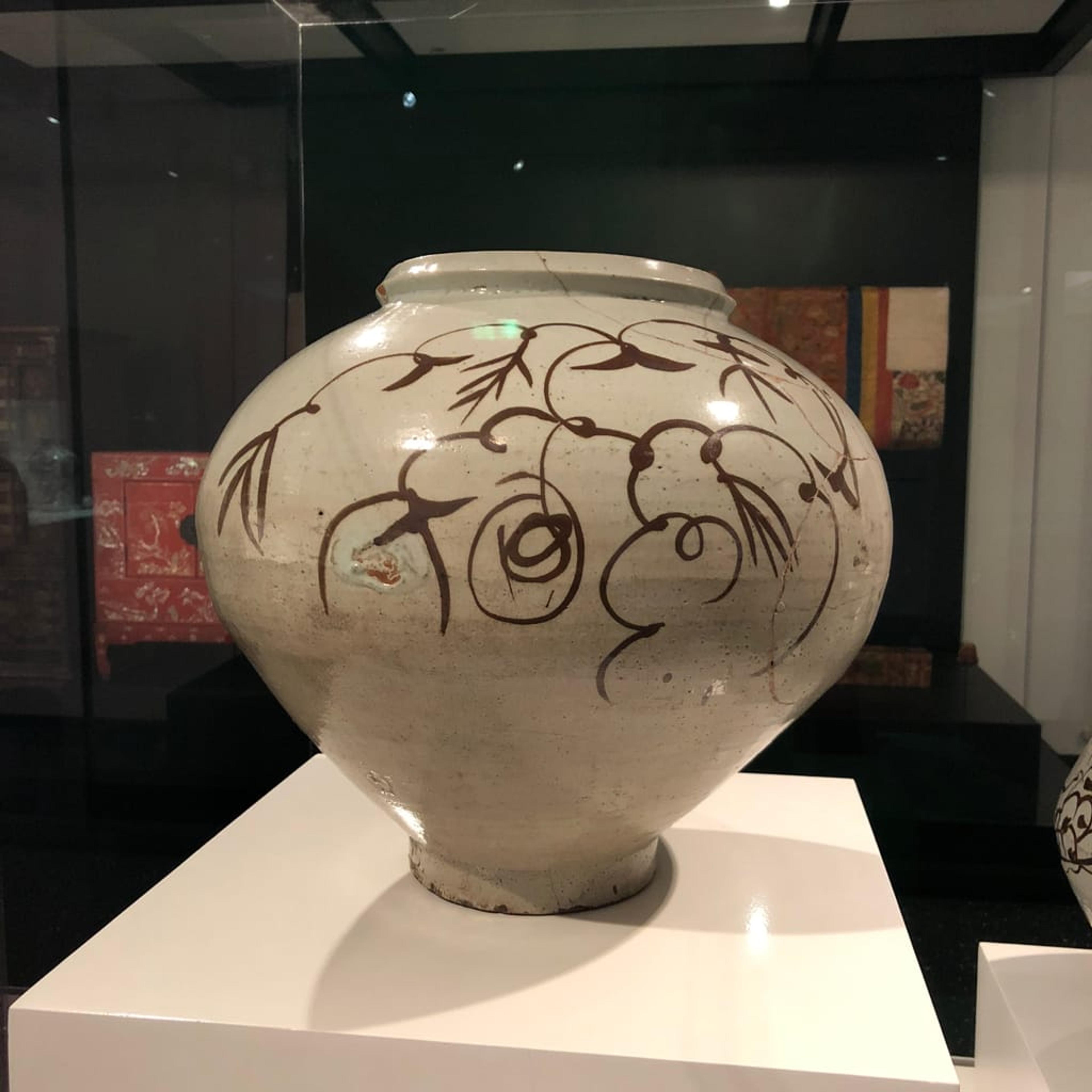 This jar is an example of early porcelain from the Joseon period in Korea. The loose, feathered brushstrokes were valued because they show the hand of the artist who made it.You can really compare the rendering of the plants and flowers on this jar with the more measured, regimented, and uniform decoration on some of the blue and white porcelain wares in our collection.
Have information?
Have information about an artwork? Contact us at