Handsome Morning -- A Dakota

Brooklyn Museum photograph
Object Label
Akin to the 1880 U.S. government–commissioned Crow Peace Delegation portraits, which were later appropriated and annotated by contemporary artist Wendy Red Star (on view nearby), Edwards’s use of his sitter’s name in the title signaled authenticity to viewers. Artists at the time were aware of the U.S. government’s long-standing exploitation of, and open assault on, the lives and lands of Native people. Edwards was likely motivated by an interest in his subject as a curiosity rather than by an active regard for her community.
Caption
Harry C. Edwards (American, 1868–1922). Handsome Morning -- A Dakota, 1921. Oil on canvas, frame: 81 9/16 x 45 9/16 x 4 1/8 in. (207.2 x 115.7 x 10.5 cm) 72 1/16 x 36 1/16 in. (183 x 91.6 cm). Brooklyn Museum, Gift of the Estate of Grace C. Edwards, 26.149. (Photo: Brooklyn Museum)
Gallery
Not on view
Collection
Gallery
Not on view
Collection
Artist
Title
Handsome Morning -- A Dakota
Date
1921
Medium
Oil on canvas
Classification
Dimensions
frame: 81 9/16 x 45 9/16 x 4 1/8 in. (207.2 x 115.7 x 10.5 cm) 72 1/16 x 36 1/16 in. (183 x 91.6 cm)
Signatures
Signed lower left: "c / 1921 / BY / H.C.EDWARDS"
Credit Line
Gift of the Estate of Grace C. Edwards
Accession Number
26.149
Frequent Art Questions
Why did the curator put these objects together?
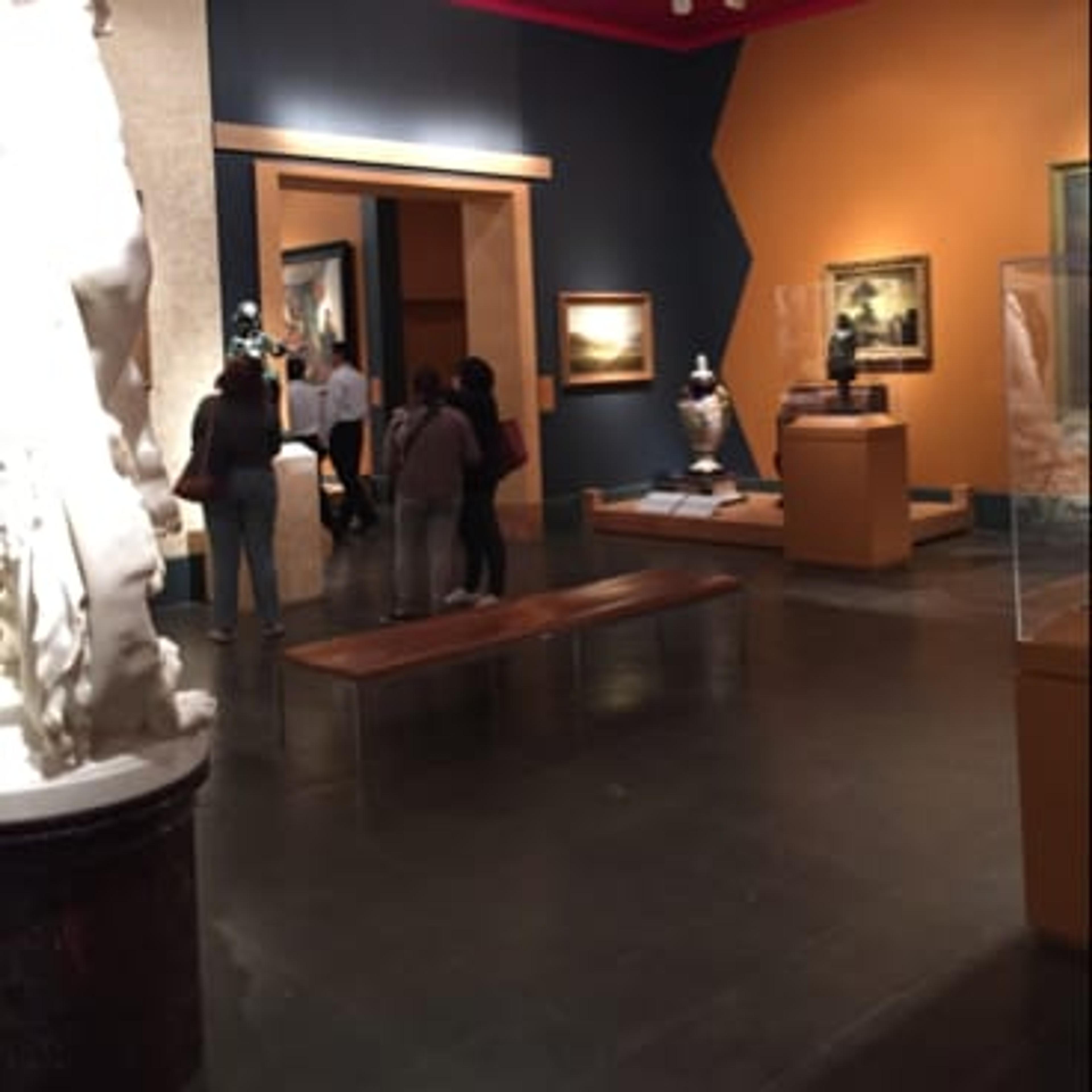 The views shared by many Americans around the centennial towards Native Americans people, contrasted with actual works made by Natives, are being highlighted here. Many people regarded natives as "Noble Savages" that were disappearing and wanted to capture and preserve that legacy.In actuality, Native American culture was alive and well. Some people continued to lived in traditional ways on tribal lands and others moved into cities and lived like "typical Americans."Thank you!You're welcome! You'll notice that many of the works in this room date to the 1870s. 1876 was the United States' Centennial celebration so it was a time of reflection -- what was America all about? How was national identity represented in visual art?
Can you tell me more about this?
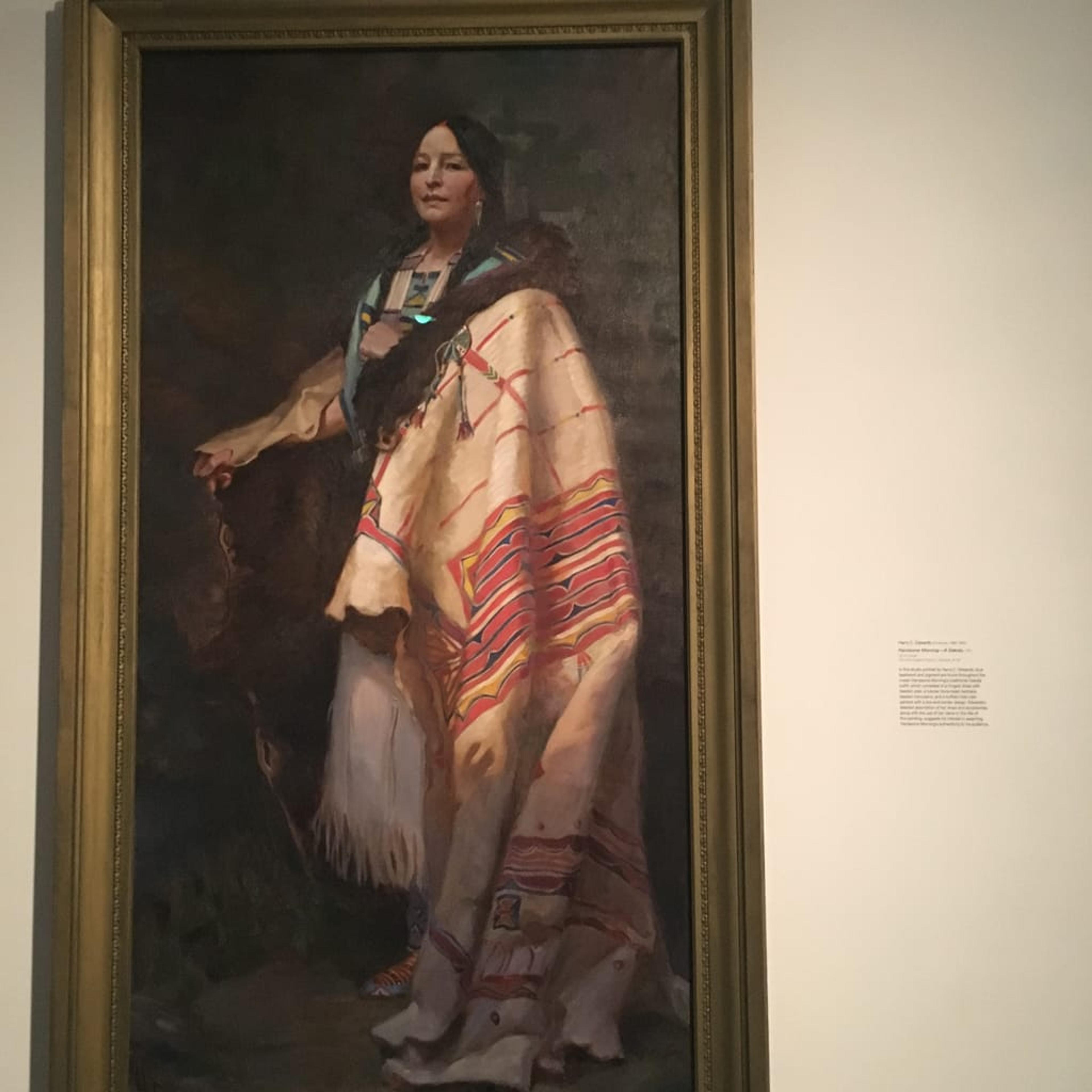 Of course! This portrait of a Dakota woman shows her posed in a studio setting wearing traditional Dakota dress. The ceremonial blanket of fur-lined buffalo hide, painted with abstract motifs, was a particular speciality of Dakota women.This work was painted in the 1920s and reflects many contemporary New Yorkers' interest in representations of the "exotic."What distinguished this from other superficial depictions of Native Americans is the studio setting. She poses proudly in traditional dress, free of the artificial narratives typically employed to create and "authentic" depiction of Native American life.
Have information?
Have information about an artwork? Contact us at