Head of the God Osiris
305–30 B.C.E.


1 of 2
Object Label
Most sculptures of deities, including the countless images of Osiris made during the Late and Ptolemaic Periods, were smaller than the statue represented by this head, a dramatic example of a composite sculpture in mixed media. The smiling mouth is a stylistic element that helps date the head to the fourth century B.C. or later. For more information on Osiris, see the installations in Temples, Tombs, and the Egyptian Universe.
Caption
Head of the God Osiris, 305–30 B.C.E.. Wood, bronze, glass, gold leaf, Height: 14 1/4 in. (36.2 cm). Brooklyn Museum, Charles Edwin Wilbour Fund, 58.94. (Photo: Brooklyn Museum)
Frequent Art Questions
Tell me more.
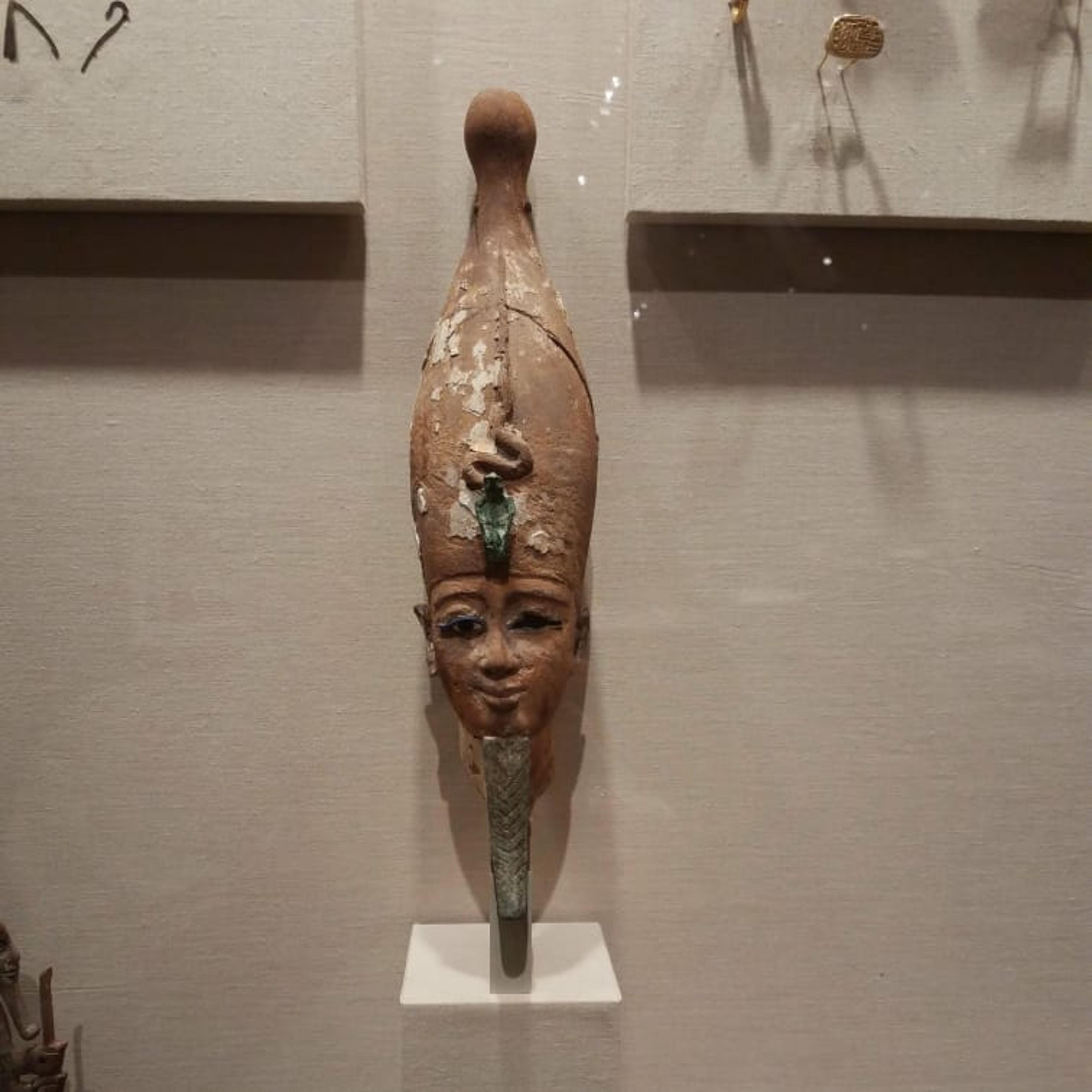 This is a head of the God Osiris, King of the afterlife. He is shown wearing the white crown of Upper Egypt, that distinctive bowling pin shape.On the front of his crown is a uraeus in bronze. You can see the fine detailing of the body and tail of the cobra carved into the crown itself in raised relief. The uraeus is typically worn by royalty and gods and is a protective symbol.One of the key identifying characteristics of Osiris is his long beard with a curve at the end, shown here. You'll often see people on coffins with the beard, it served to liken themselves to Osiris, king of the afterlife they were trying to gain entrance to.
Have information?
Have information about an artwork? Contact us at