Raised Relief of Montuemhat(?)


1 of 3
Object Label
As perhaps the most powerful official of his time in southern Egypt, Montuemhat had one of the largest and most lavishly decorated nonroyal tombs known. Although this relief is probably of the man himself, it is not a portrait. Rather, It is an idealizing, archalzing image reflecting the style of Theban works of Dynasty XVIII and possibly also the Middle Kingdom. The fortuitous blackening of the relief's surface is the result of a burning of unknown date.
Caption
Egyptian. Raised Relief of Montuemhat(?), ca. 670–650 B.C.E.. Limestone, 14 15/16 x 12 in. (38 x 30.5 cm). Brooklyn Museum, Bequest of Mrs. Carl L. Selden, 1996.146.3. (Photo: Brooklyn Museum)
Culture
Title
Raised Relief of Montuemhat(?)
Date
ca. 670–650 B.C.E.
Dynasty
late Dynasty 25 to early Dynasty 26
Period
Late Third Intermediate Period to early Late Period
Geography
Possible place collected: Thebes (El-Assasif), Egypt
Medium
Limestone
Classification
Dimensions
14 15/16 x 12 in. (38 x 30.5 cm)
Credit Line
Bequest of Mrs. Carl L. Selden
Accession Number
1996.146.3
Frequent Art Questions
Why is this ombré? Was it to do with fire of some sort?
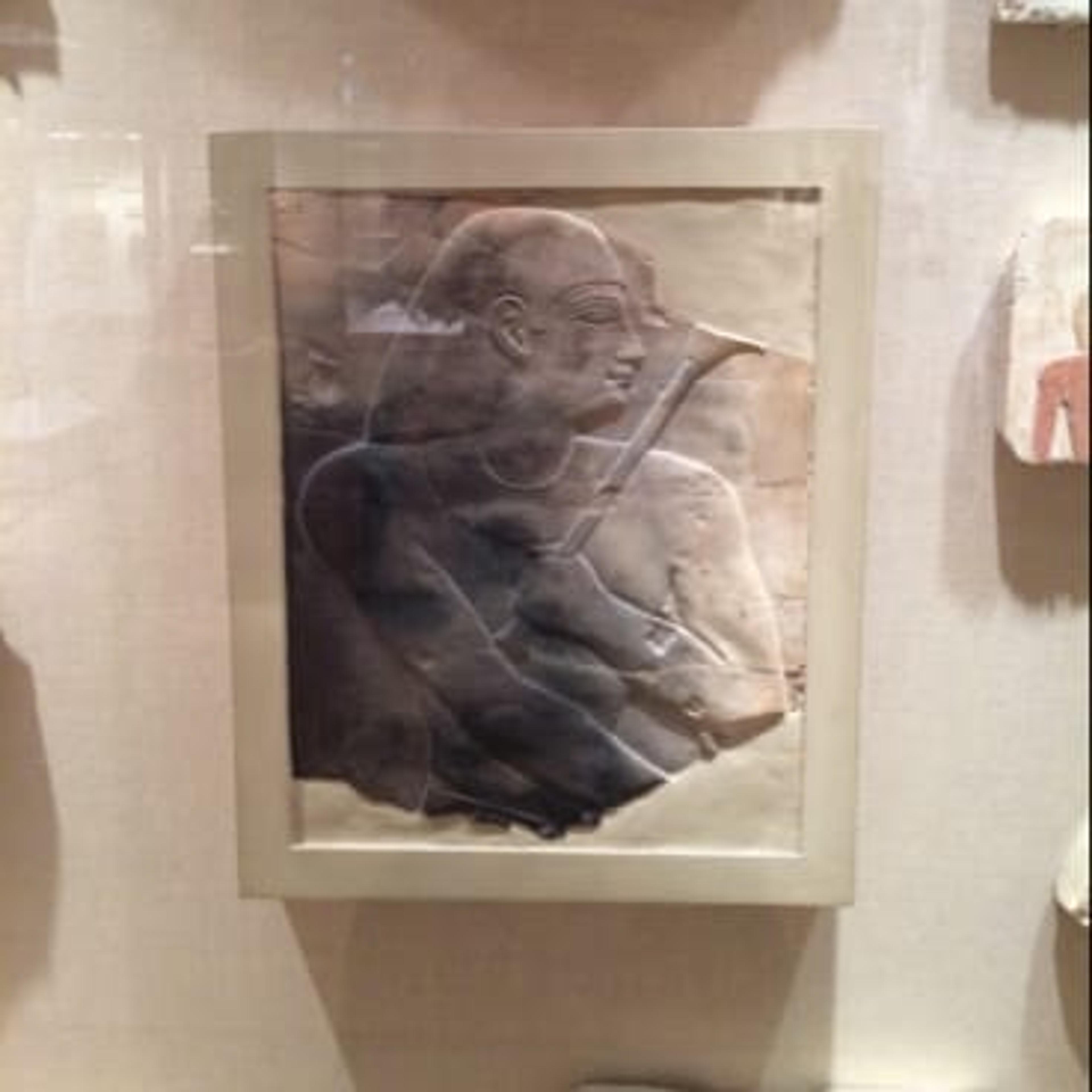 Yes, it's been blackened by smoke, though the date of the fire is unknown.
We think this choice to pair fragments together is rather contemporary!
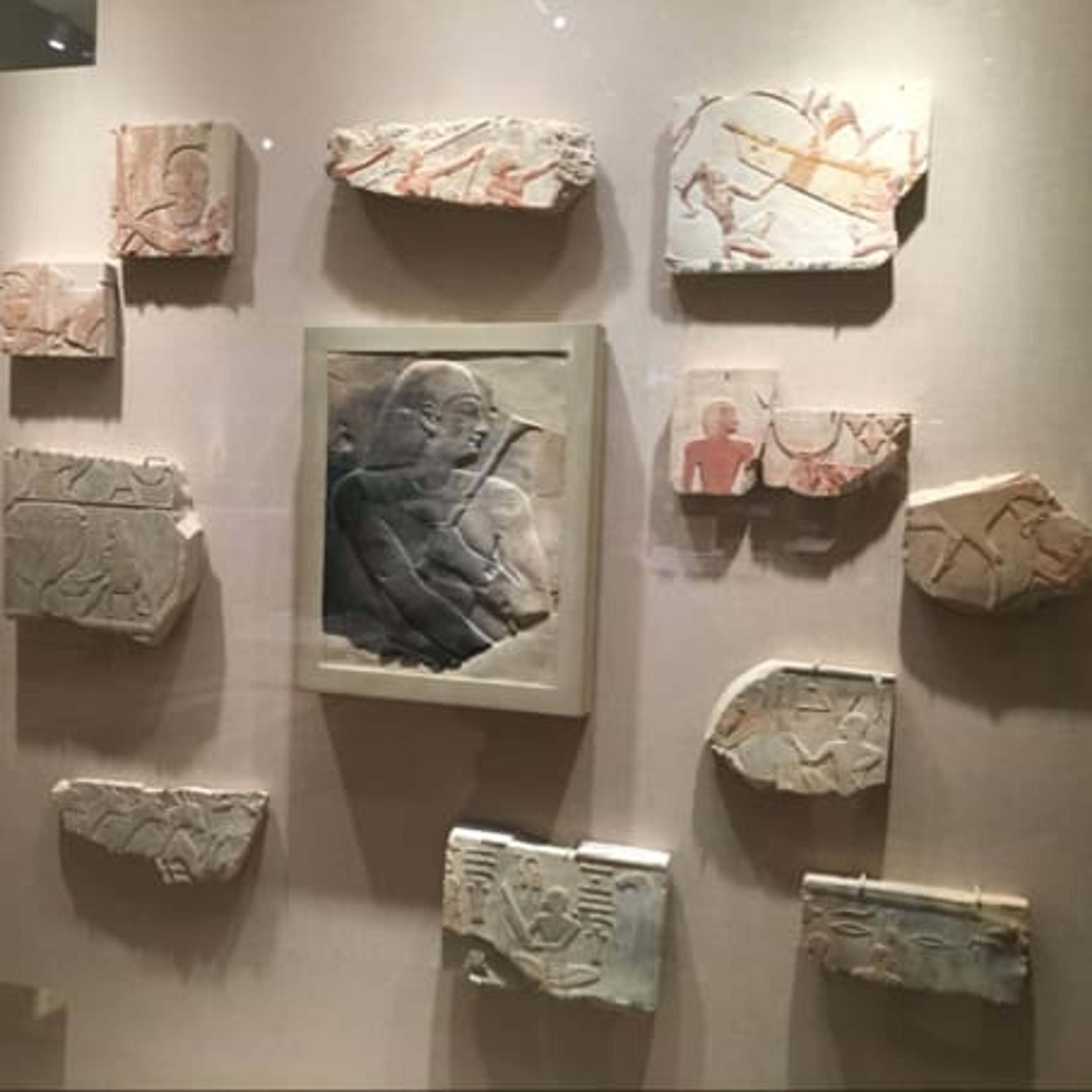 Elaborate! What makes you say that?As in pairing fragments together for aesthetic reasons that don't necessarily belong together in a linear sense is a contemporary move, especially when the early Egyptian works are pretty abstract/stylized anyway. It looks like a diptych or triptych.Interesting observation. I'd have to agree with you, the fragments aren't attempting to complete each other. But also the fragmentation of the body and the erasure of narrative is such a contemporary thought as well. The connection between these objects is that they all come from the time of the 26th Dynasty and many of them likely come from the same tomb. It's interesting to apply more contemporary ideas to the antiquities. I tend to think of the Egyptian depiction of the body as sort of proto-cubist, in the way that many sides of the same object are shown simultaneously.
Have information?
Have information about an artwork? Contact us at