Andromeda (Andromède)


1 of 2
Object Label
This bent, twisted figure appears to convey the fable’s moment of greatest psychological torment, but in fact the sculpture was unnamed when it was first exhibited. This has led some scholars to believe it simply represents a position taken by a model at rest in the studio that inspired Rodin, who only later gave it that title.
Andromeda has not been located anywhere in The Gates of Hell, but her dejected appearance would have been highly appropriate there.
Caption
Auguste Rodin (French, 1840–1917). Andromeda (Andromède), 1887; cast 1979. Bronze, 10 1/2 × 12 3/4 × 8 in., 20.5 lb. (26.7 × 32.4 × 20.3 cm). Brooklyn Museum, Gift of Iris and B. Gerald Cantor, 84.77.1. (Photo: Brooklyn Museum)
Gallery
Not on view
Gallery
Not on view
Artist
Title
Andromeda (Andromède)
Date
1887; cast 1979
Geography
Place made: France
Medium
Bronze
Classification
Dimensions
10 1/2 × 12 3/4 × 8 in., 20.5 lb. (26.7 × 32.4 × 20.3 cm)
Signatures
Base, side with face: "A. Rodin" Interior of rocky base, applied as raised stamp: "A. Rodin"
Inscriptions
Base, side with face: "No 10"
Markings
Lower edge of rocky base, side without face: ".Georges Rudier./.Fondeur. Paris." Lower edge of side with buttocks: " © by Musée Rodin 1979."
Credit Line
Gift of Iris and B. Gerald Cantor
Accession Number
84.77.1
Frequent Art Questions
Tell me more.
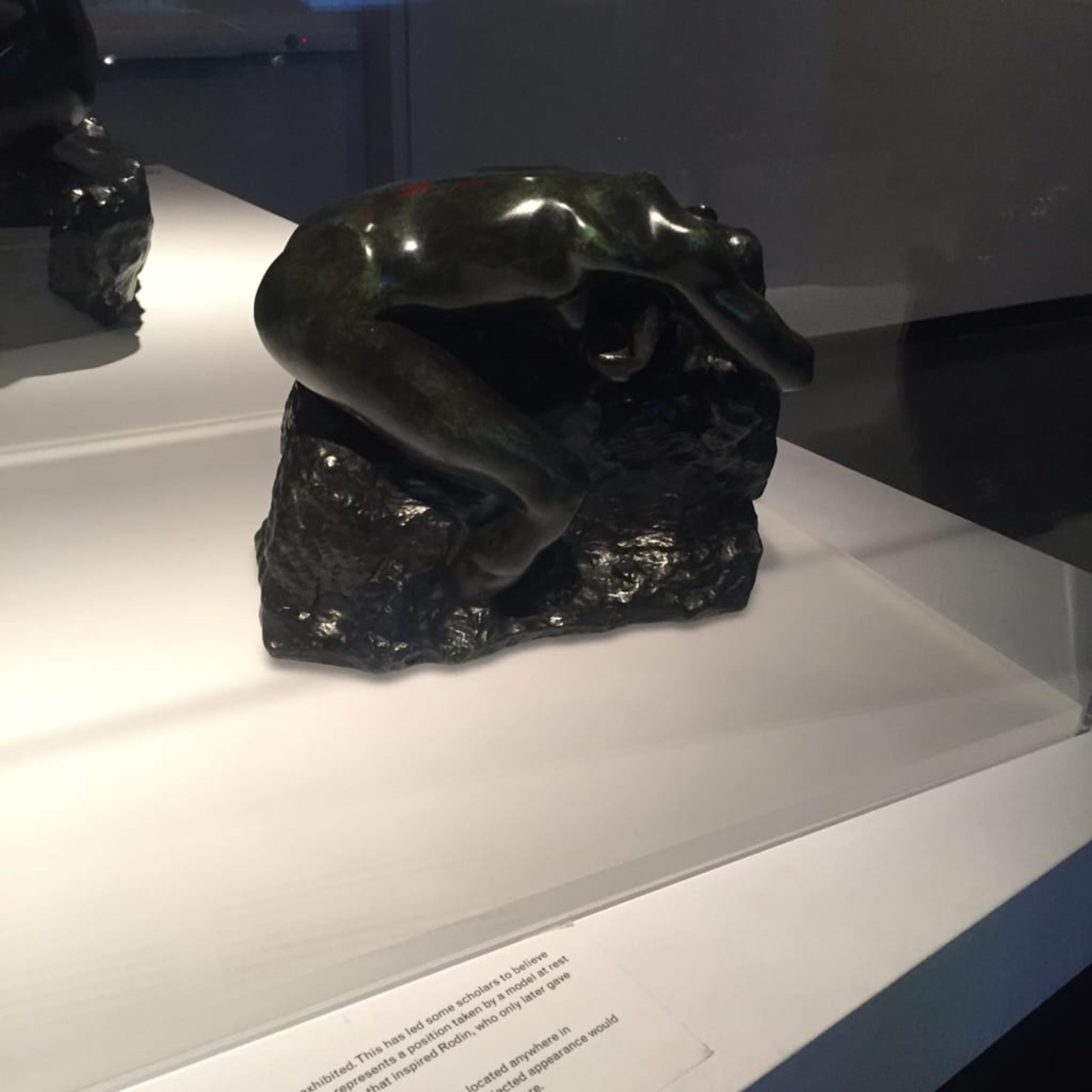 A marble version of this sculpture, Andromeda, was exhibited at the 1893 World Columbian Exposition in Chicago! The marble sculpture was removed from the exhibit hall within a week, as it was deemed too risqué by the organizing committee.Andromeda is a figure from Greek mythology who was chained to a rock by Poseidon, and then rescued by Perseus so she wouldn't be eaten by a sea monster.
Have information?
Have information about an artwork? Contact us at