Charger
16th to mid–17th century (possibly)

1 of 2
Object Label
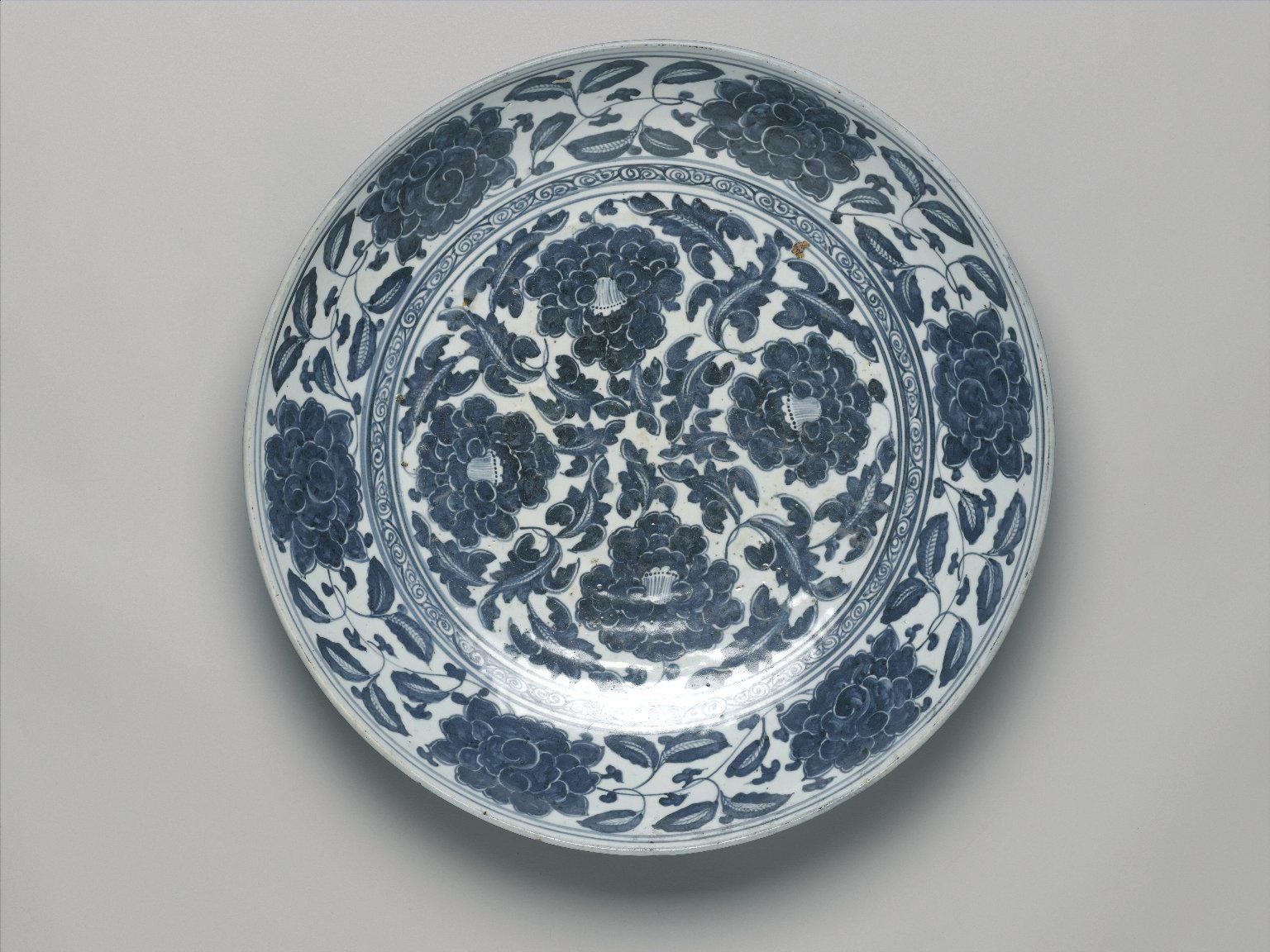
This magnificent service plate for formal occasions was made for export to the Middle East, most likely Iran. A similar example exists in the Topkapi Saray Palace Museum in Istanbul, Turkey.
Caption
Charger, 16th to mid–17th century (possibly). Porcelain with underglaze cobalt blue decoration, 3 15/16 x 20 3/8 in. (10 x 51.8 cm). Brooklyn Museum, Gift of Dr. Alvin E. Friedman-Kien, 2004.112.18. (Photo: Brooklyn Museum)
Gallery
Not on view
Collection
Gallery
Not on view
Collection
Title
Charger
Date
16th to mid–17th century (possibly)
Dynasty
Ming Dynasty
Period
Ming Dynasty
Medium
Porcelain with underglaze cobalt blue decoration
Classification
Dimensions
3 15/16 x 20 3/8 in. (10 x 51.8 cm)
Credit Line
Gift of Dr. Alvin E. Friedman-Kien
Accession Number
2004.112.18
Frequent Art Questions
What is a charger? Why did the Ming dynasty like blue and white so much?
A charger is a decorative plate used in formal dinner services. It is placed underneath the plate one eats from, so it adds a splash of color or design that isn't coming into contact with food. "Charger" is also used to refer to any plate that is too large for a single person. Chargers were used as serving plates in a number of cultures, and in the Middle East were used communally. Blue and white porcelains became popular for Chinese audiences during the Ming dynasty. In previous times, blue-and-whites were more popular as an export. The appeal of the color at the time was the same as today, people really liked it! Additionally, cobalt was one of the only bright colors that you could apply under the glaze. Other colors would burn up in the glaze firing, so they had to be added on top of the glaze, which meant they chipped off easily.Why is the blue on these different than on other Chinese ceramics I’ve seen?
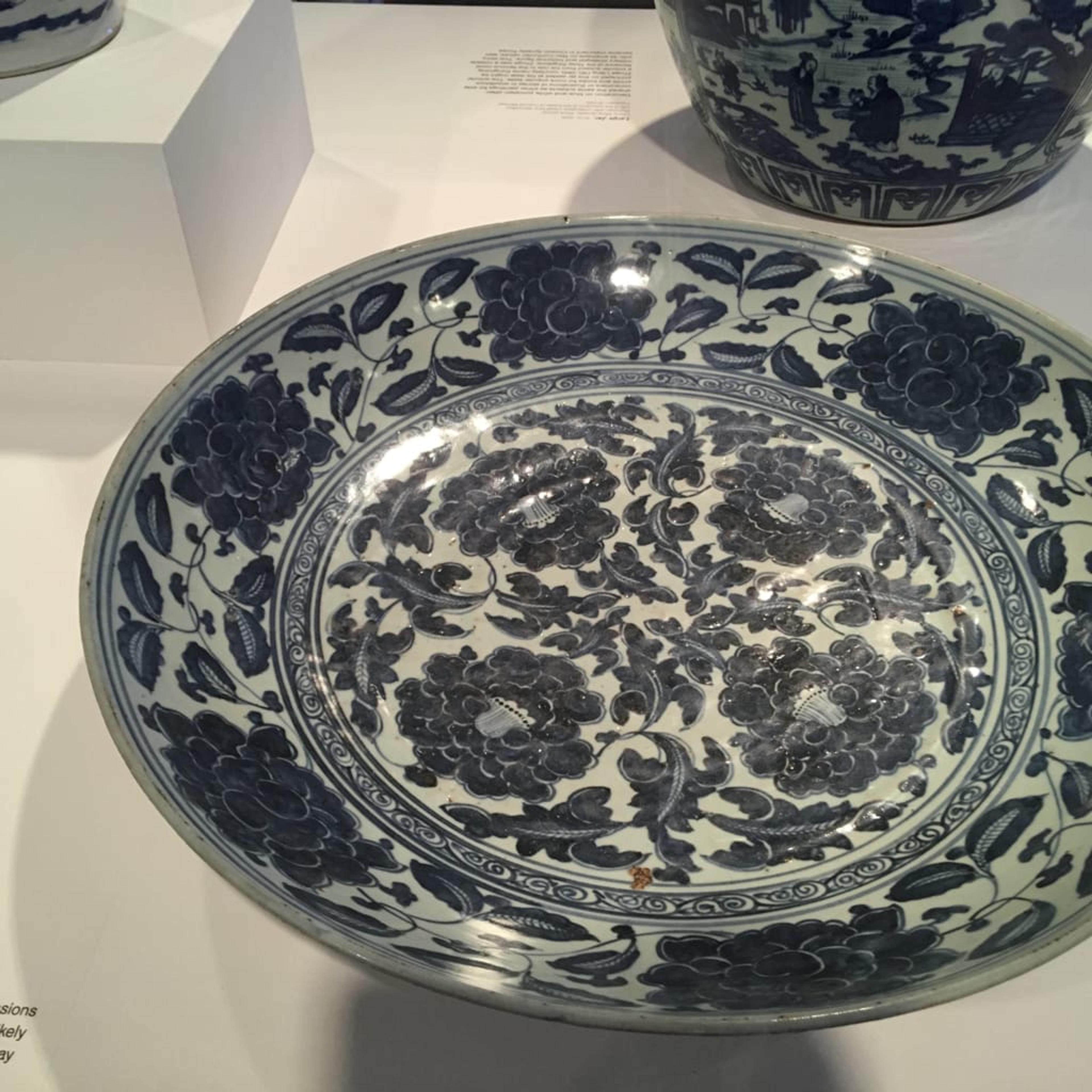 As far at the plates: I believe the difference in color is simply a result of different ratio of chemicals in the pigment. My understanding is that Chinese potters at the time were striving for that same brilliant blue every time.
Have information?
Have information about an artwork? Contact us at