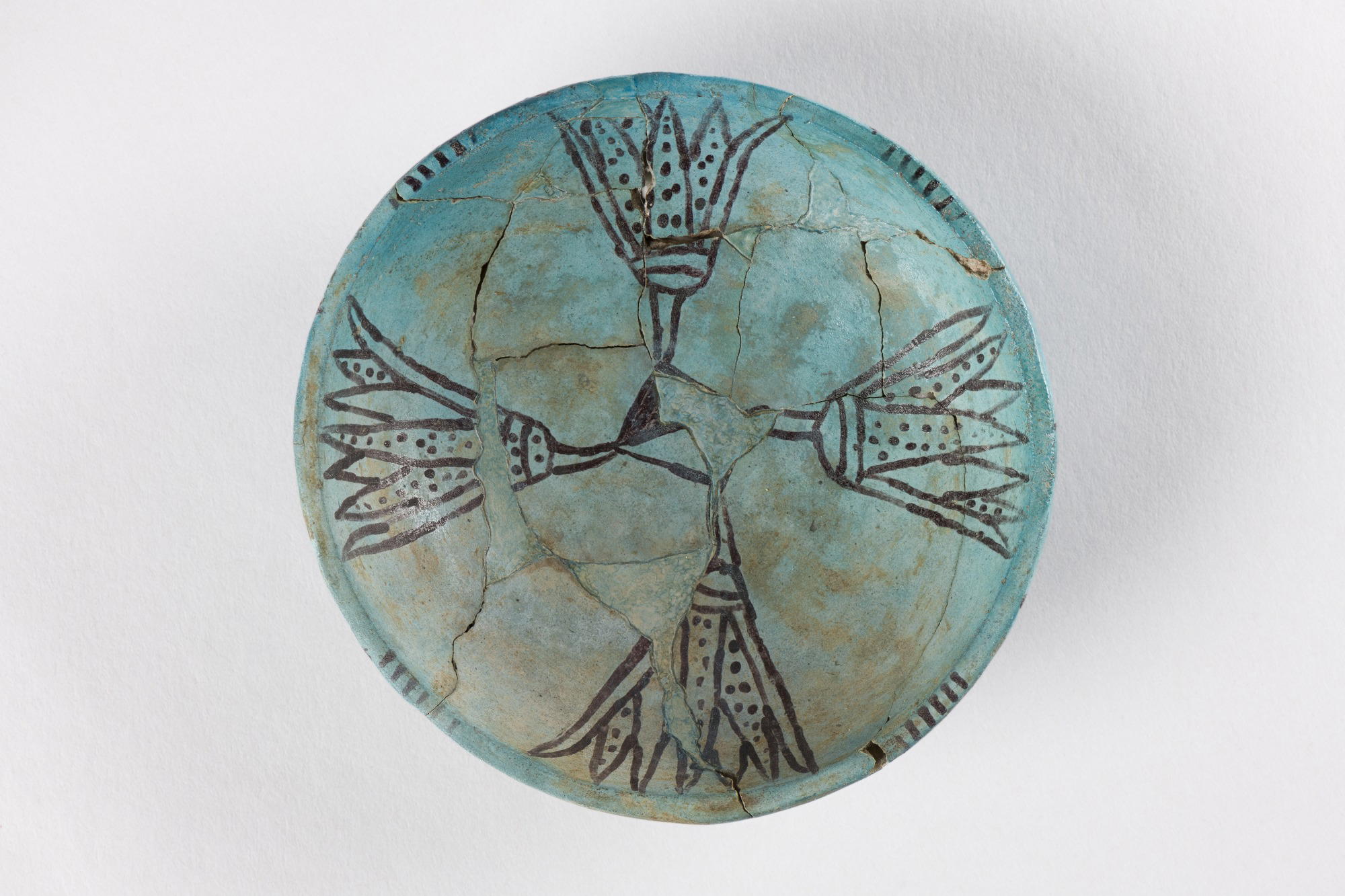
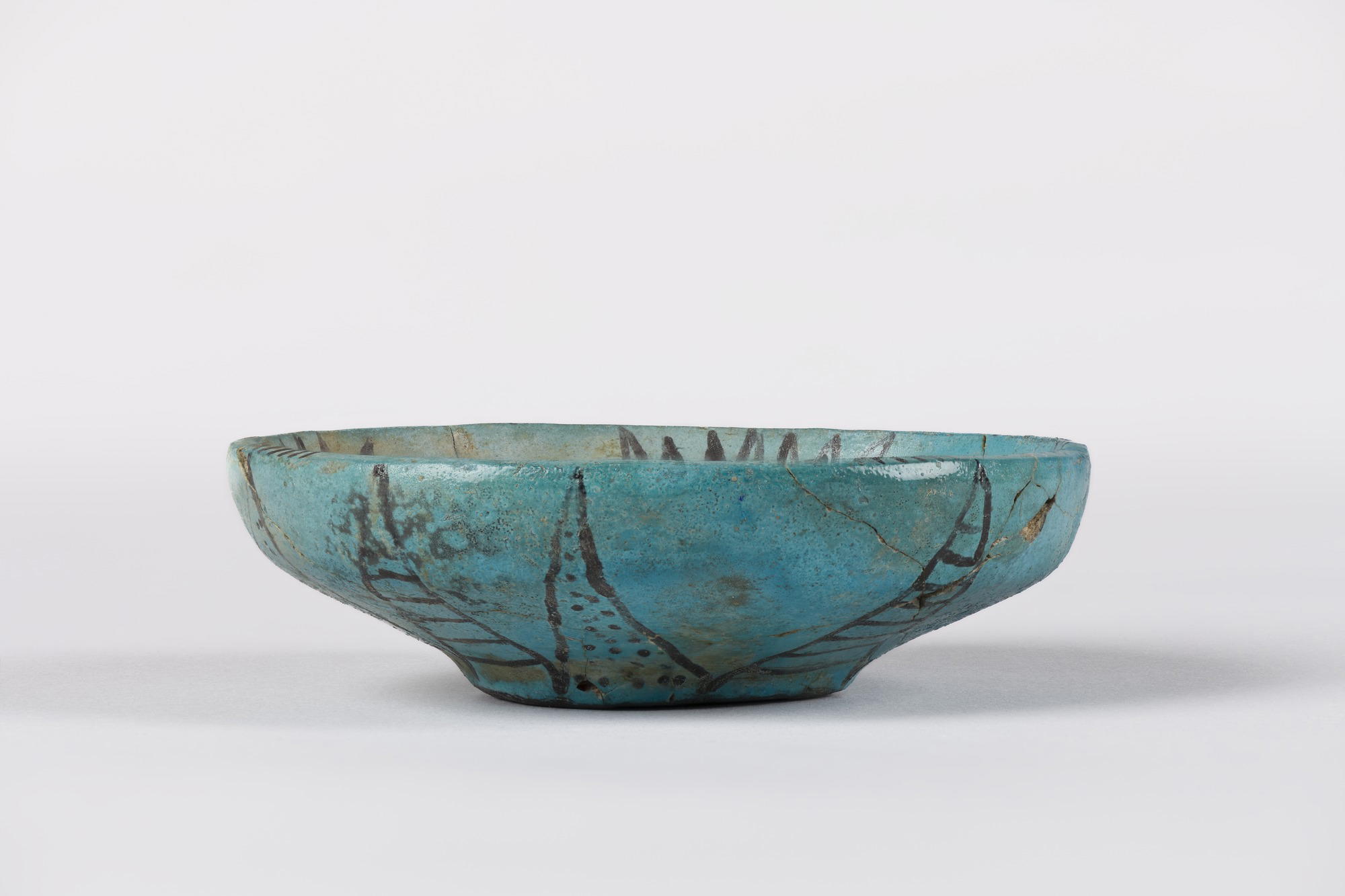
Bowl with Lotus Design
ca. 1479–1400 B.C.E.


1 of 6
Object Label
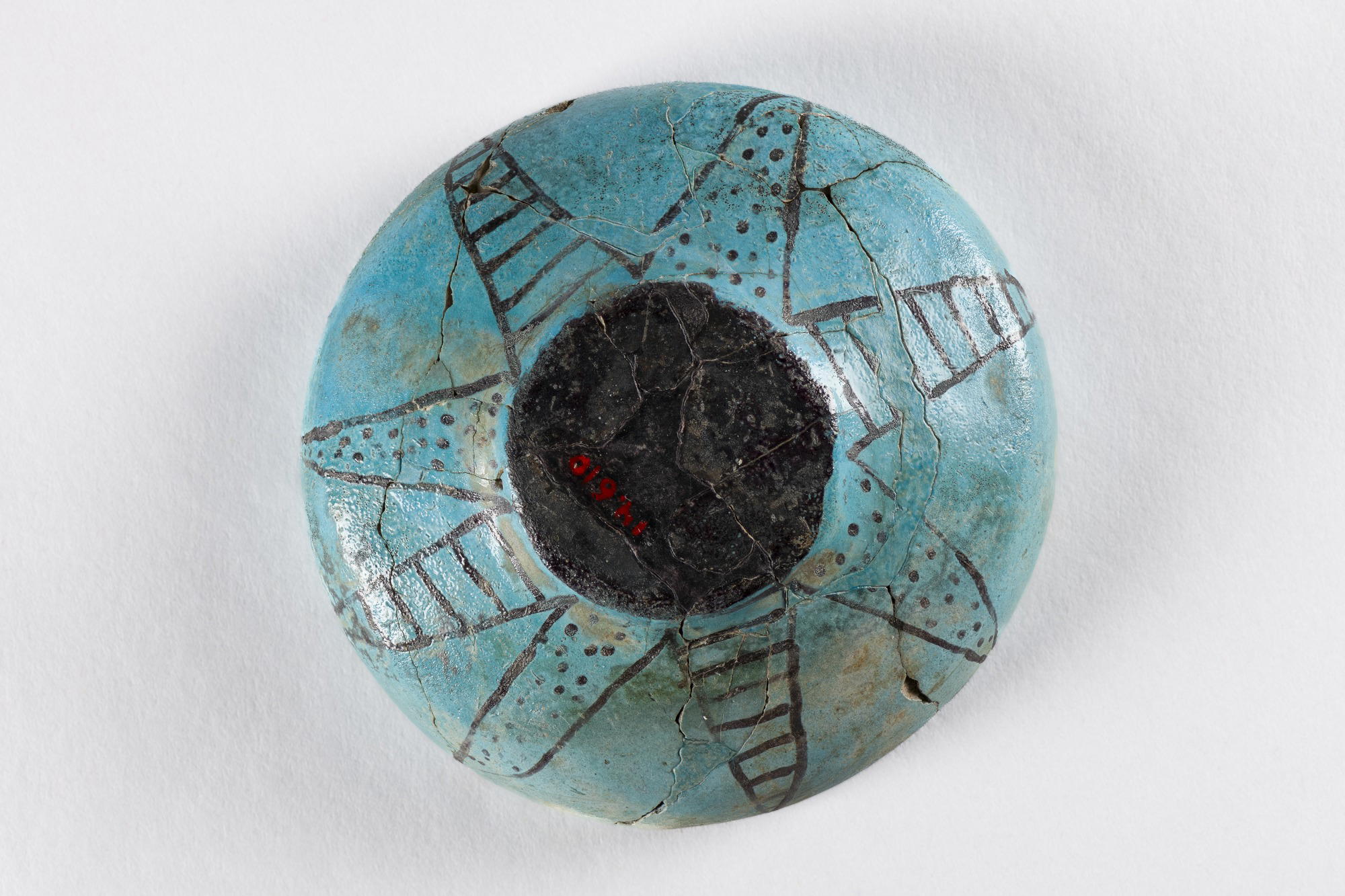
The blue hue and simple black designs of this vessel are typical of Egyptian faience objects. Craftsmen painted the designs onto raw faience compound or mixed moist faience paste with mineral colorants before firing.
Caption
Bowl with Lotus Design, ca. 1479–1400 B.C.E.. Faience, 1 1/4 × 4 1/8 in. (3.2 × 10.5 cm) mount : deck mount (m2, in 2025): 8 × 4 1/4 × 3 in. (20.3 × 10.8 × 7.6 cm). Brooklyn Museum, Gift of the Egypt Exploration Fund, 14.610. (Photo: Brooklyn Museum)
Gallery
Not on view
Gallery
Not on view
Title
Bowl with Lotus Design
Date
ca. 1479–1400 B.C.E.
Dynasty
Dynasty 18
Period
New Kingdom
Geography
Place excavated: Sawama, Egypt
Medium
Faience
Classification
Dimensions
1 1/4 × 4 1/8 in. (3.2 × 10.5 cm) mount : deck mount (m2, in 2025): 8 × 4 1/4 × 3 in. (20.3 × 10.8 × 7.6 cm)
Credit Line
Gift of the Egypt Exploration Fund
Accession Number
14.610
Frequent Art Questions
Could you tell me how faience was made?
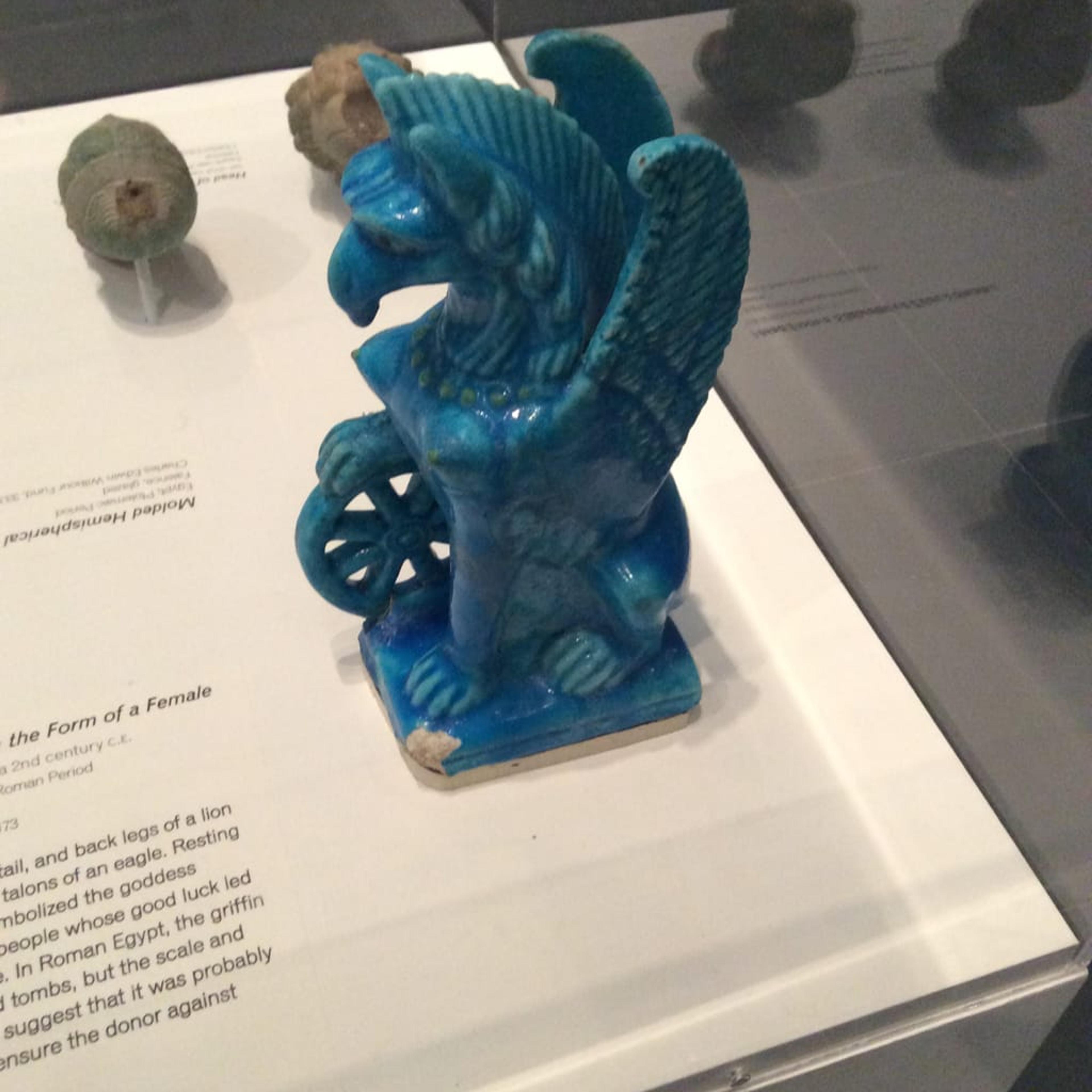 Faience is a man-made mixture of "ground quartz or quartz-sand held together by and alkaline binder. The bright and shiny surface seen on this figurine is a result of glazing. The glaze was made of a form of powdered glass mixed with a liquid and applied either with a brush or by dipping the entire figurine.It gets it's blue color from copper that is mixed into or applied to the surface of the quartz body before firing.
How common is the image of a blue lotus in Egyptian Art? (I see one example in this museum).
Very common.The lotus is a symbol of birth and rebirth on which the Creator solar deity first appeared in the Nun, the formless ocean within which the universe was created.Got it, thank you.
Have information?
Have information about an artwork? Contact us at