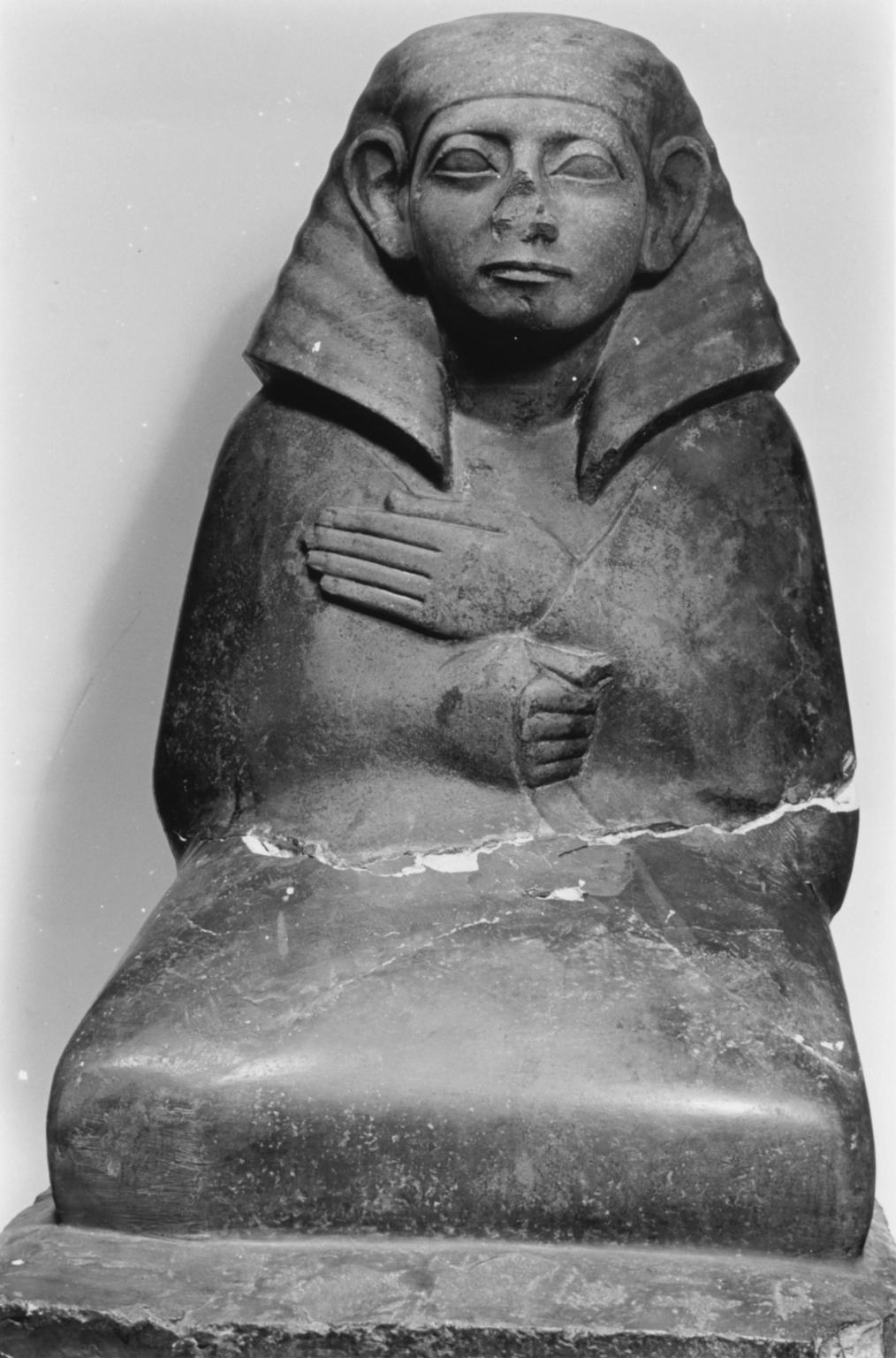
Cloaked Official
ca. 1759–1675 B.C.E.
1 of 9
Object Label
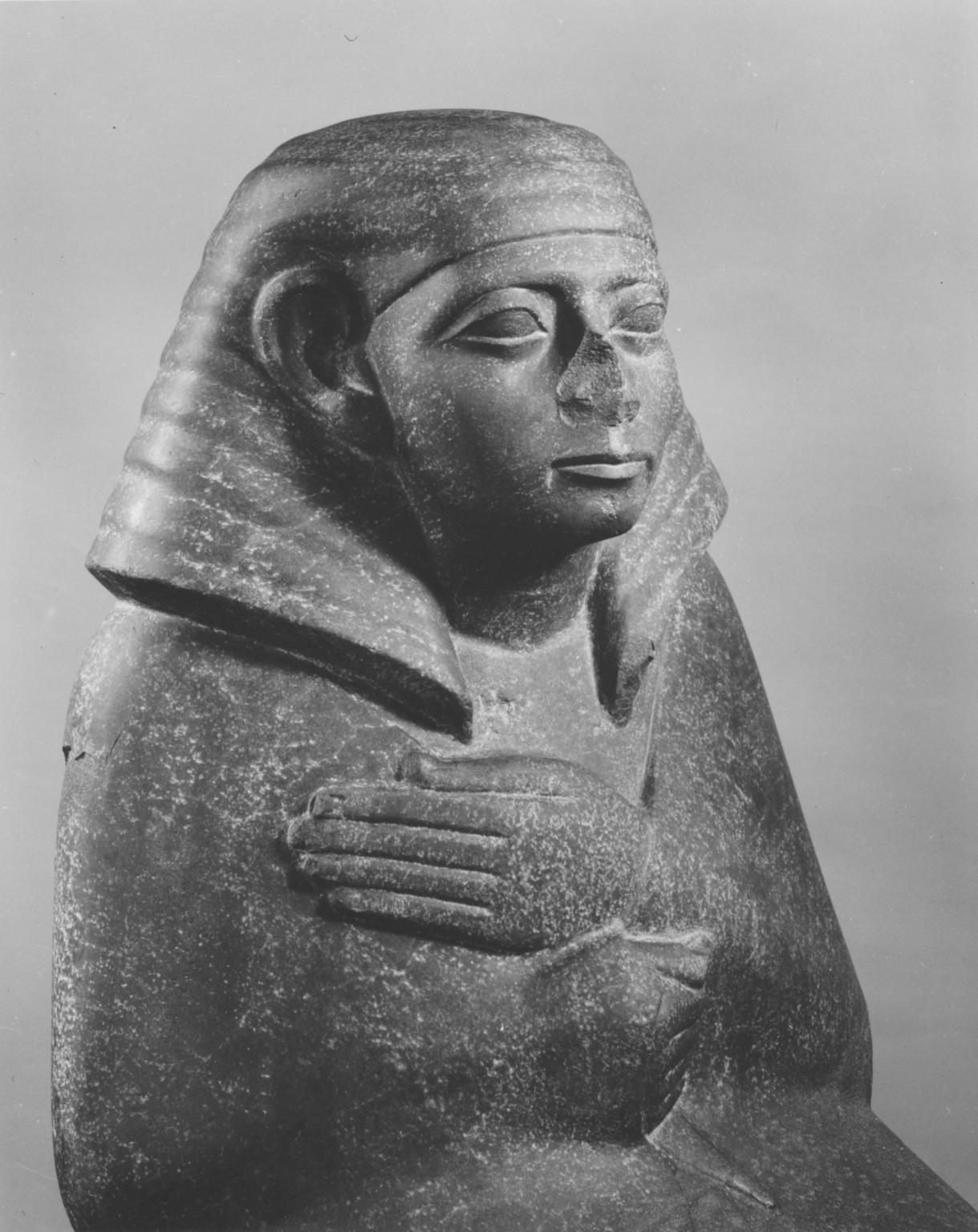
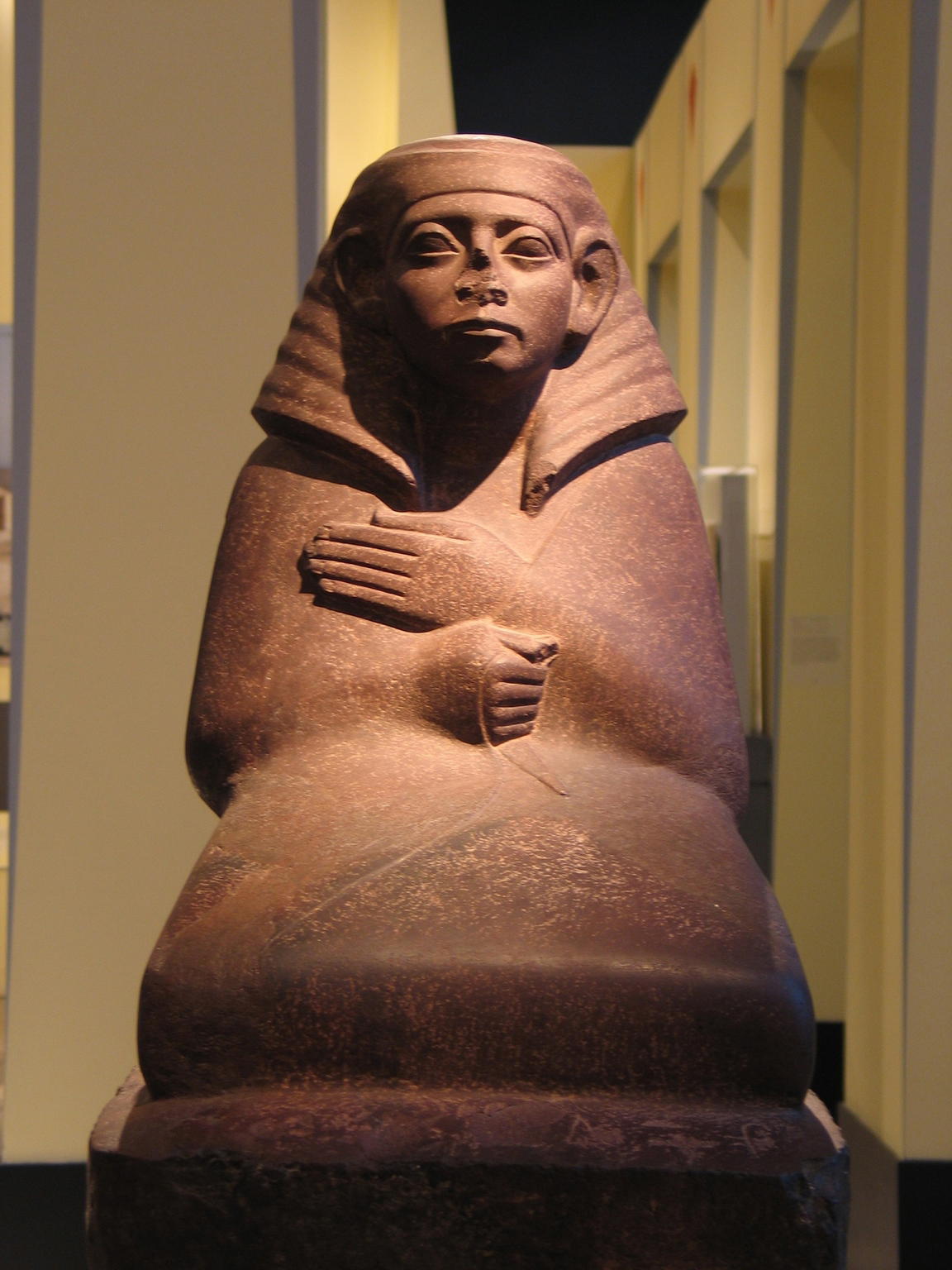
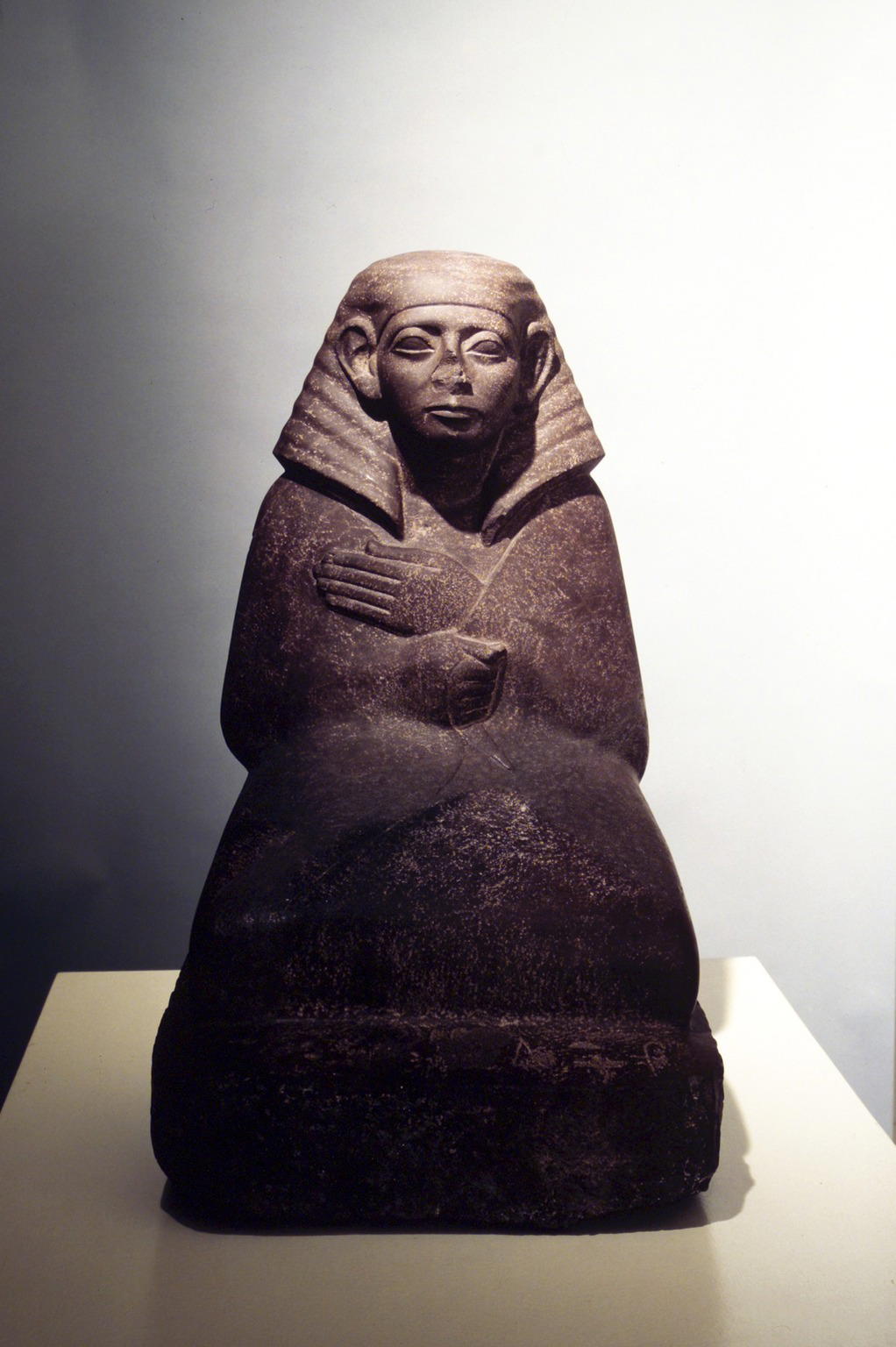
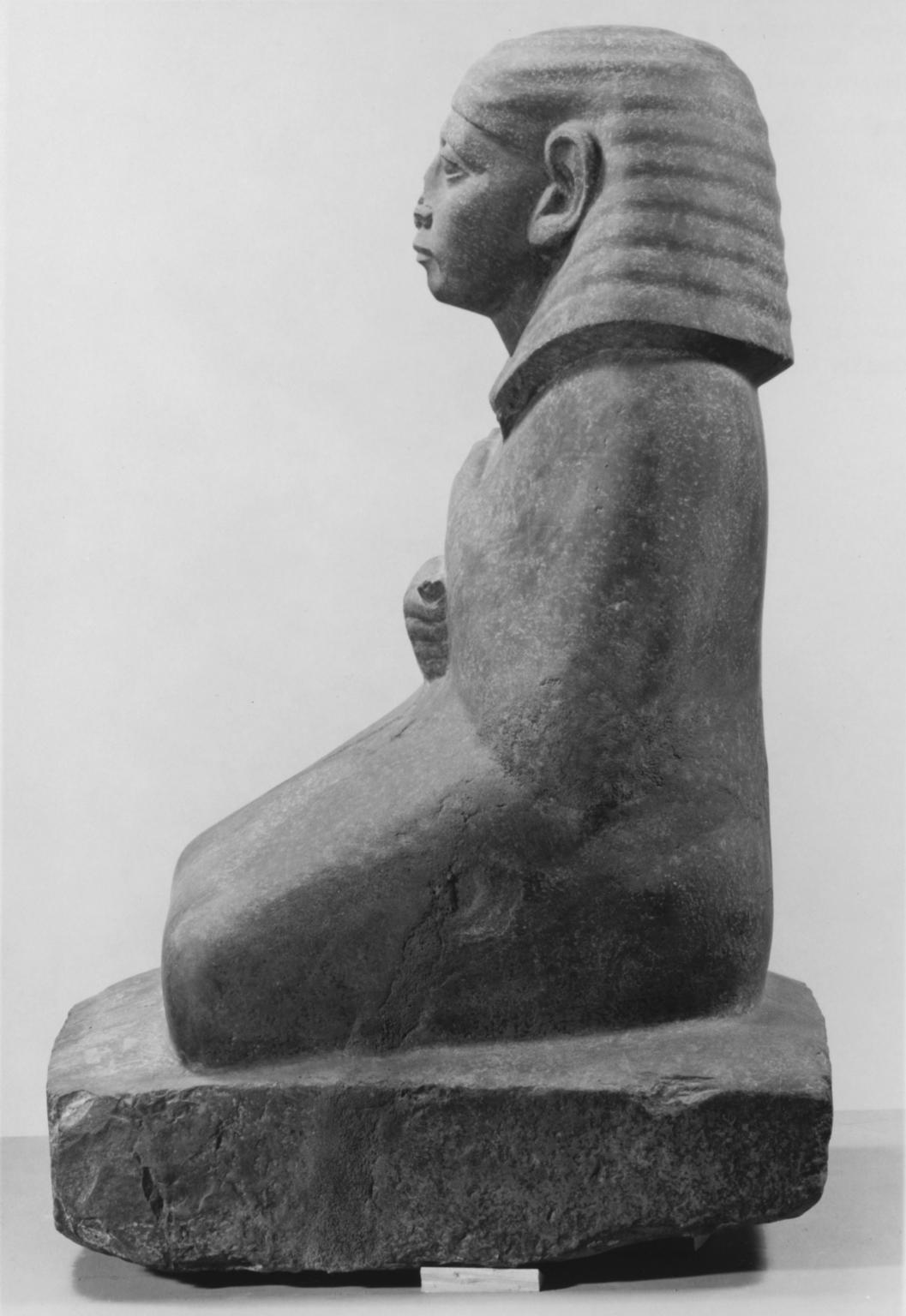
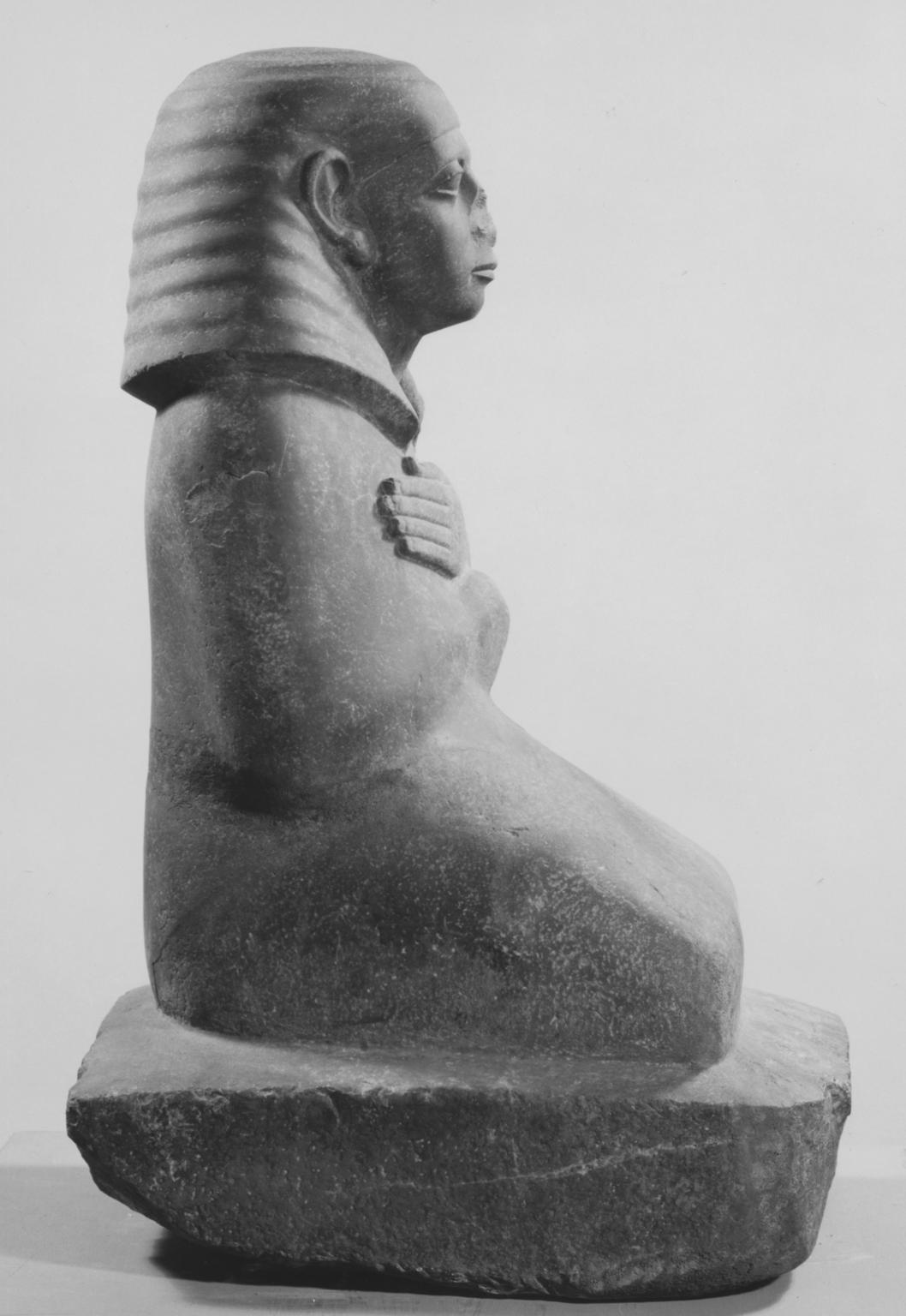
The Twelfth and early Thirteenth Dynasties comprised one of the most creative artistic epochs in Egyptian history. Artists introduced many new sculptural forms—some that continued for centuries and others that were soon abandoned.
One of the period’s most dramatic and long-lasting innovations was the cloaked statue. The cloak symbolized the god Osiris, whose corpse was wrapped tightly in bandages and who was eventually reborn to everlasting life. Individuals shown with their bodies shrouded in a thick mantle thus expressed the wish to be reborn following their own physical deaths.
One of the period’s most dramatic and long-lasting innovations was the cloaked statue. The cloak symbolized the god Osiris, whose corpse was wrapped tightly in bandages and who was eventually reborn to everlasting life. Individuals shown with their bodies shrouded in a thick mantle thus expressed the wish to be reborn following their own physical deaths.
Caption
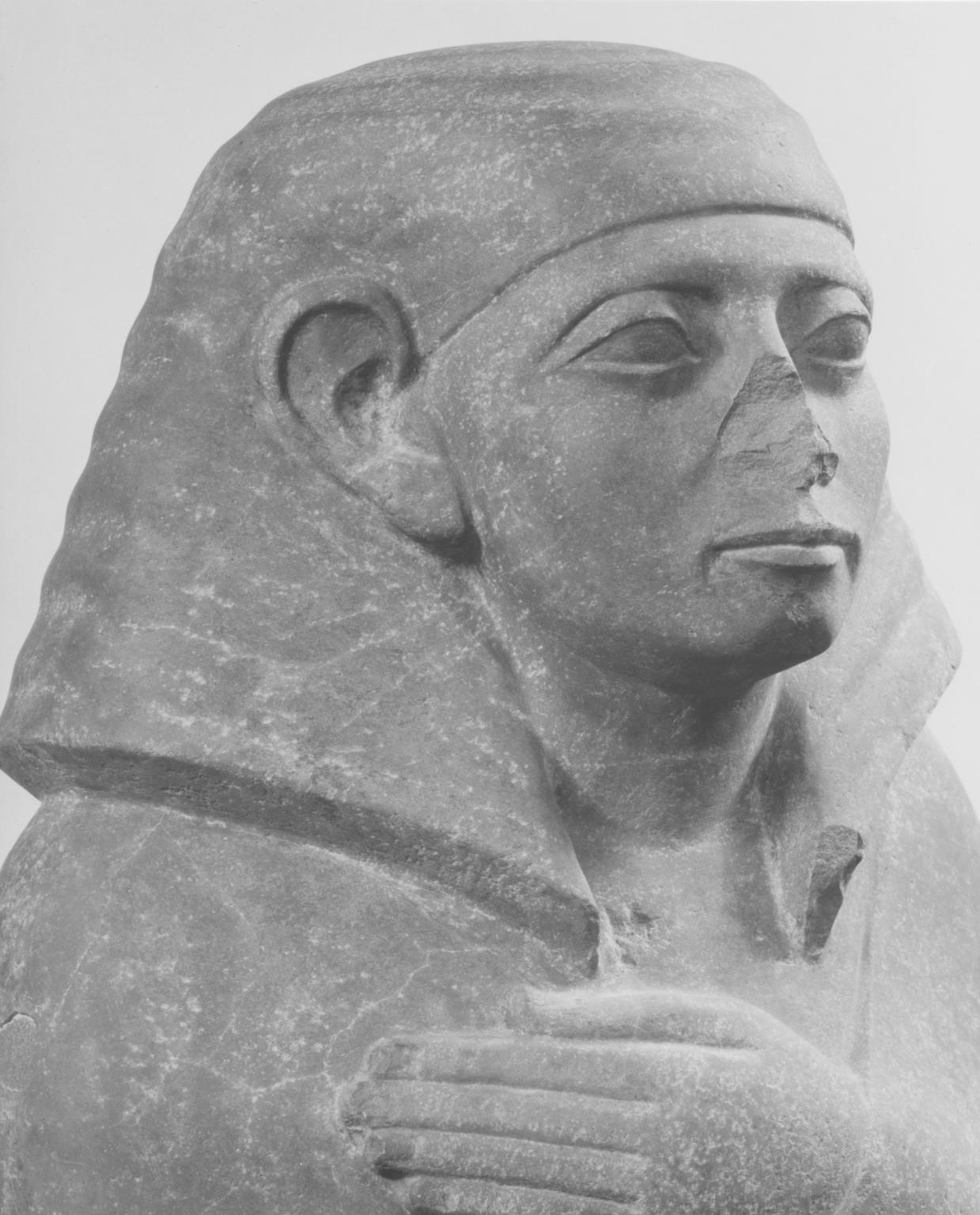
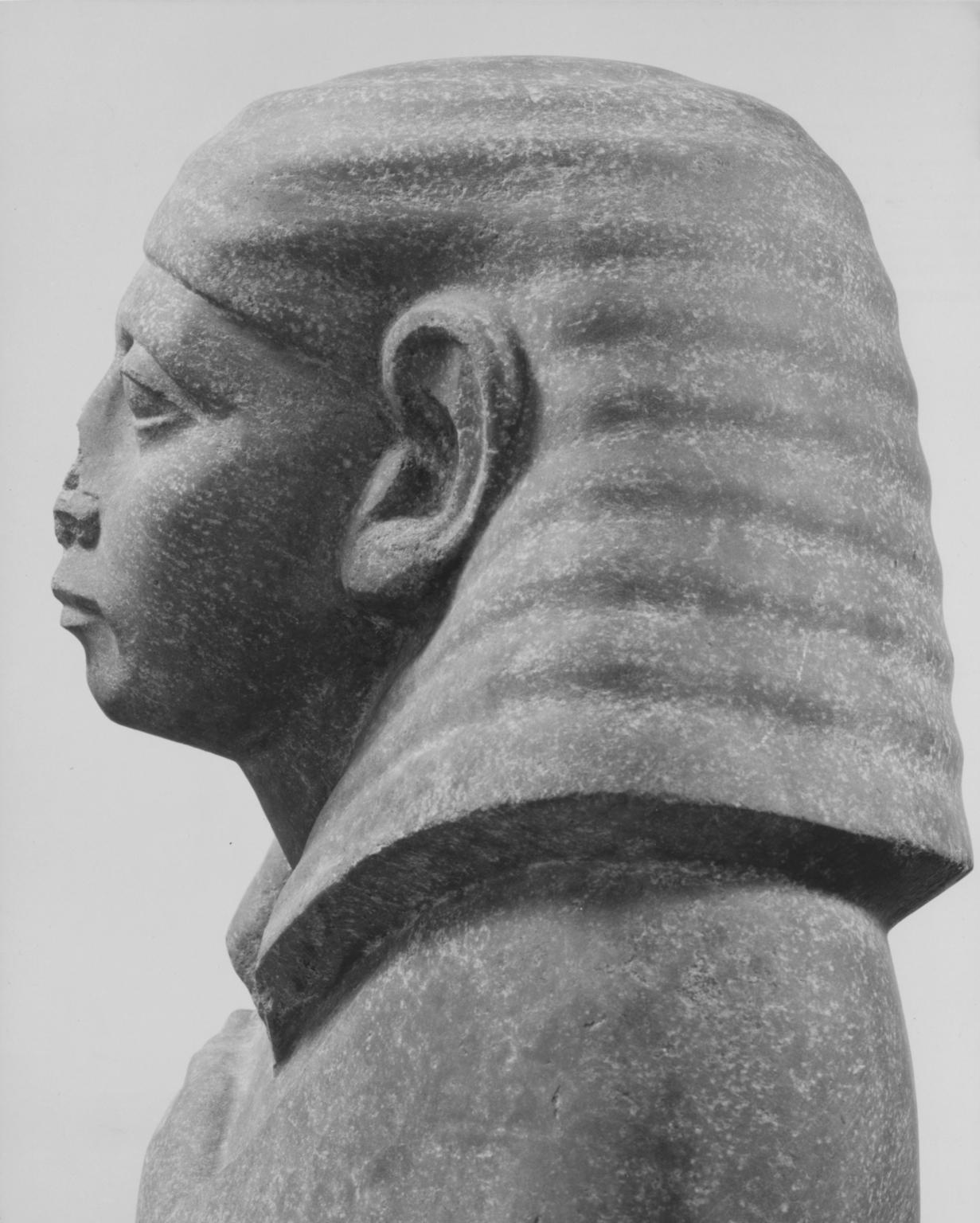
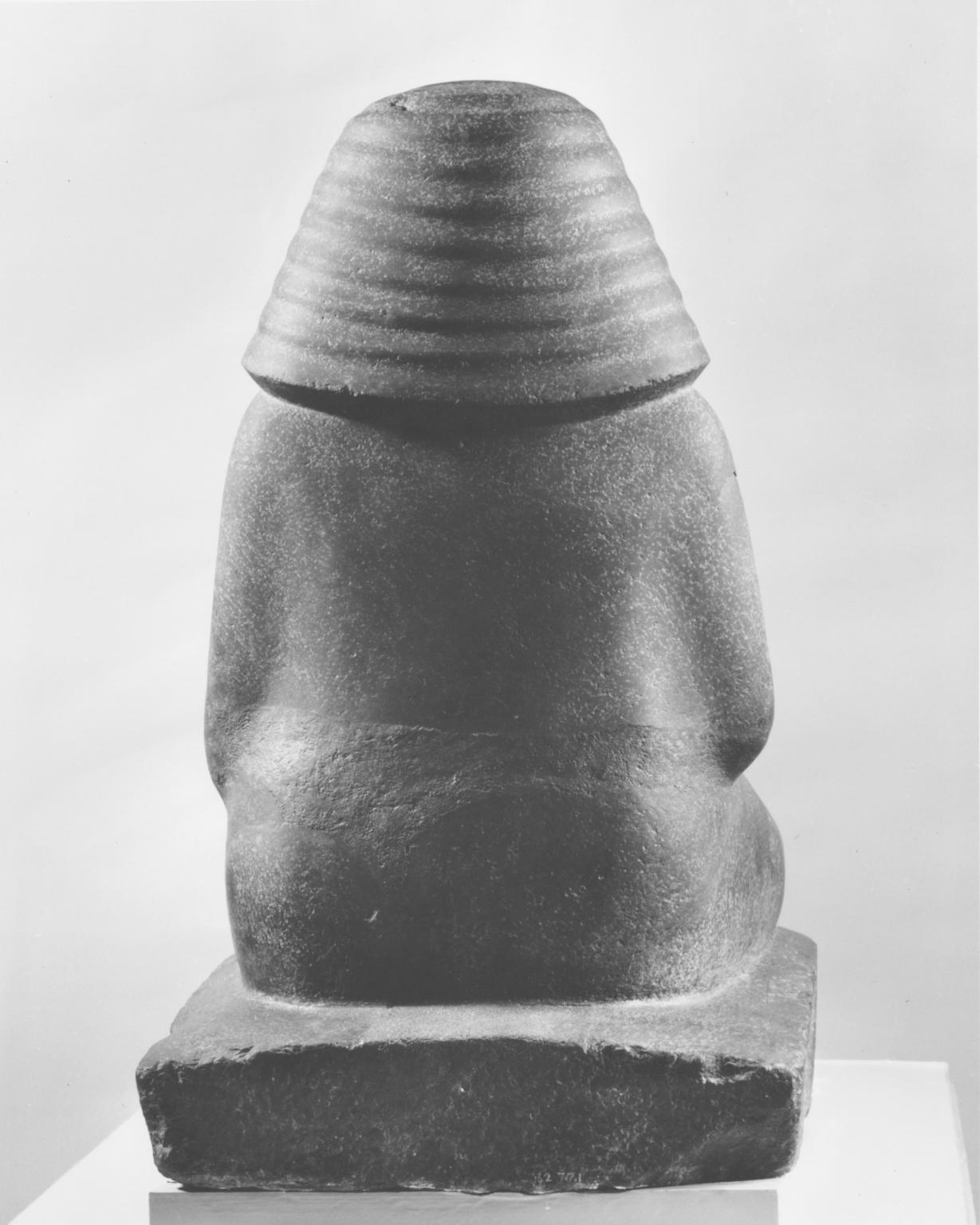
Cloaked Official, ca. 1759–1675 B.C.E.. Quartzite, 27 1/2 in. (69.8 cm) Base: 4 3/4 x 16 1/4 x 16 3/4 in. (12 x 41.3 x 42.5 cm). Brooklyn Museum, Charles Edwin Wilbour Fund, 62.77.1.
Frequent Art Questions
The ears of many of the Egyptian sculptures seem to show exaggerated size. is there any significance to this or was it a common/desired trait of the people at the time?
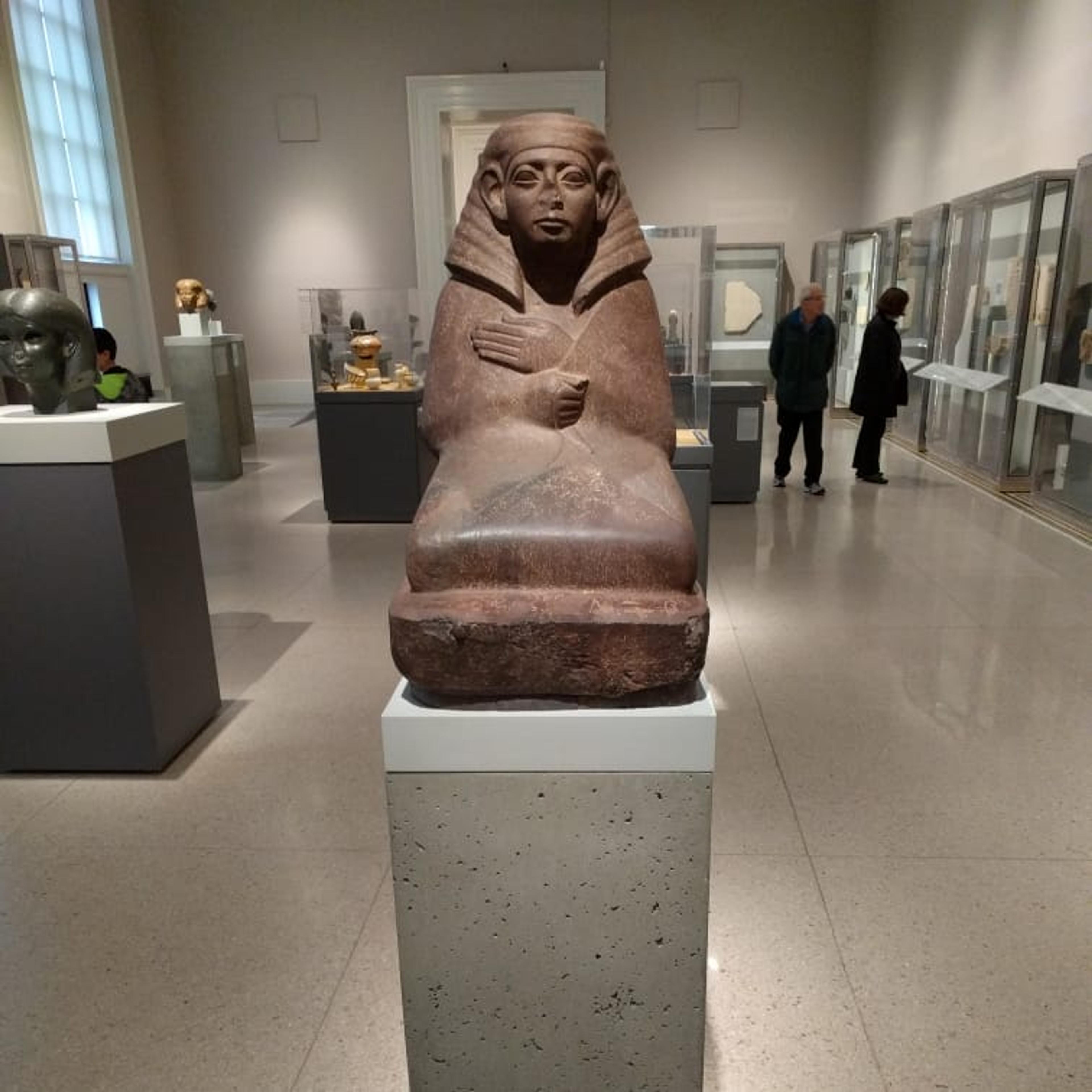 Large ears, like the ones we see here were a popular feature of Middle Kingdom period art and are actually a good indicator of a statue having been made at that time. You'll notice similarly large ears on other statues from the Middle Kingdom, like the nearby Block Statue of Senwosret-senebefny. The large ear trend is a great example of how ancient Egyptian art changed over time. Facial features can often be used to date ancient Egyptian art because different shapes and sizes of features were trendy at different times.
Why are all their noses gone?
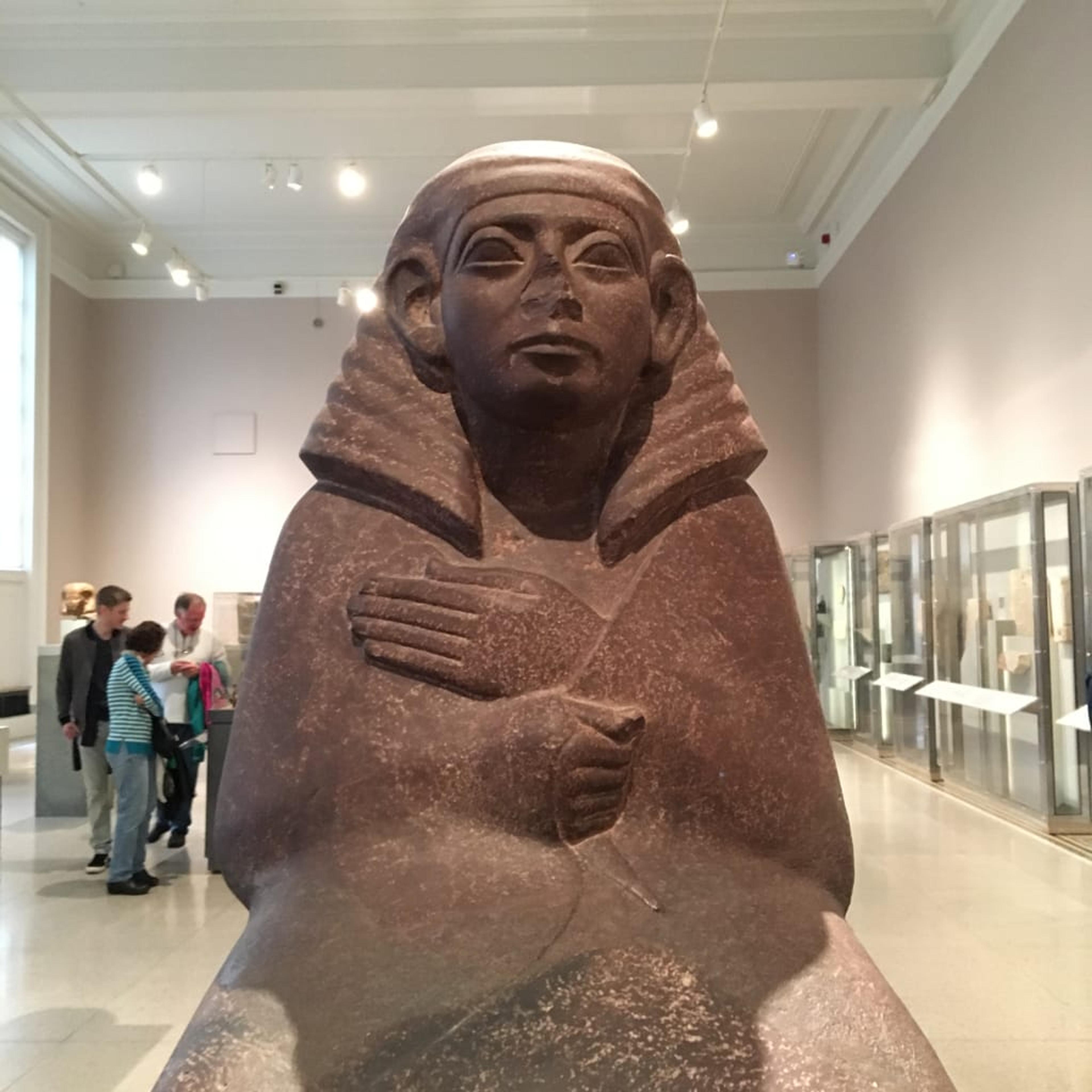 There are two reasons: either they broke off by accident or were chipped off on purpose. On the one hand, the nose is small and sticks out and therefore could easily break off (this statue is over 3000 years old after all).Also, there was a belief that a person's soul could live in a statue so if you didn't want their soul to live in that statue any more, chipping off the nose was an easy way to "kill" the statue without having to break apart the whole thing.
Can you tell me more about this?
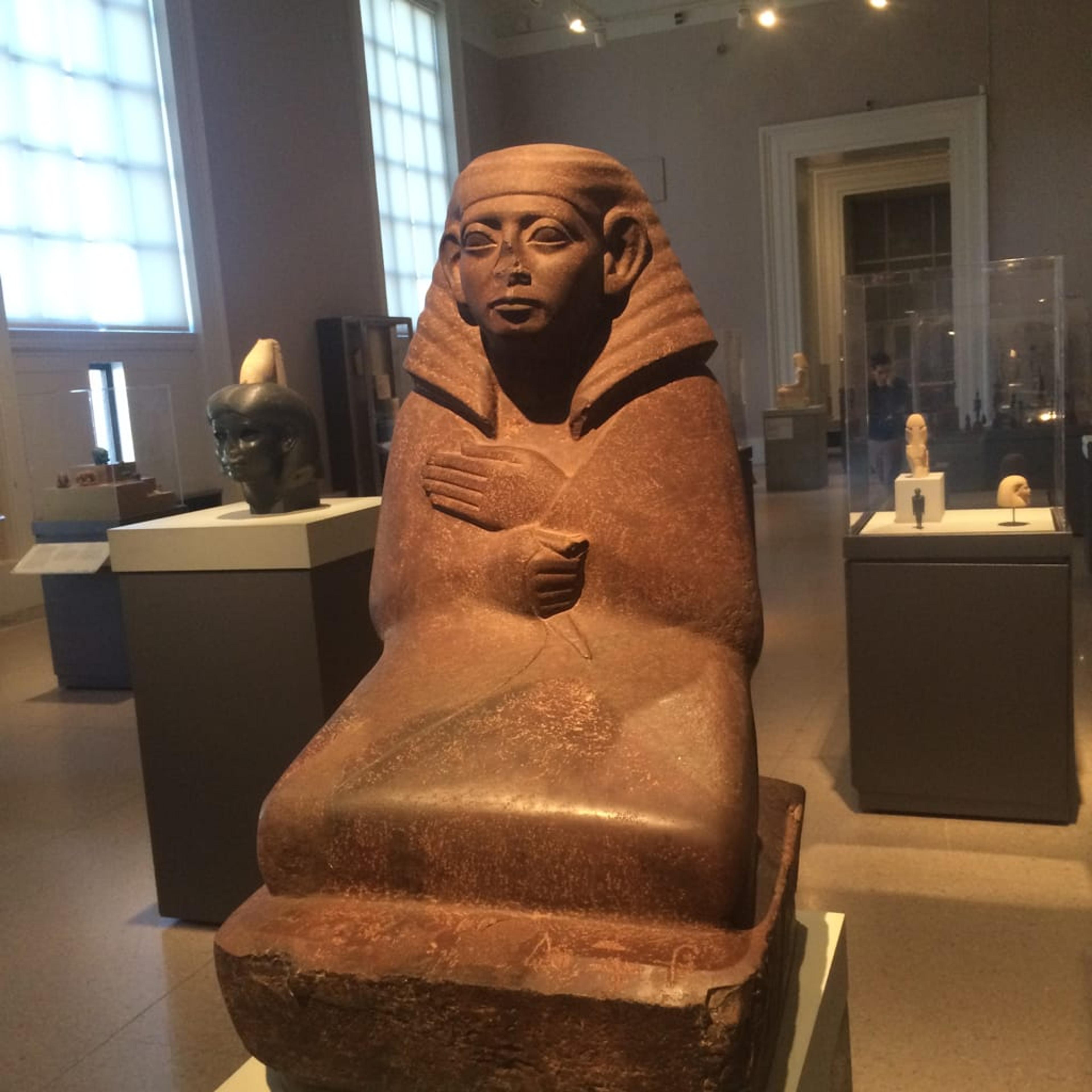 Sure! This cloak garment became popular in the Middle Kingdom period (when this official lived) and it had a big impact on art. At this time we start to see sculptures of men wrapped in the cloak like this and in a cube like form (seen nearby) called a block statue. These forms in sculpture remained popular for centuries after!Interestingly, one of the ways we can tell this particular sculpture comes from the Middle Kingdom period is because of how large his ears are.Thank you
Have information?
Have information about an artwork? Contact us at