Stela of Pakhaas
2nd–1st century B.C.E.


1 of 8
Object Label
The central vignette here features a unique combination of two types of stela illustration. Normally the deceased is shown offering to Osiris, lord of the underworld, or to another deity. Alternatively, the deceased and his or her spouse receive offerings from their family. At first glance, the stela seems to fit the second category. The dead person, Pakhaas, accompanied by his wife, Nesihor, who stands behind him holding a sistrum, or rattle, enjoys the oblations of his son, Pakhy (a nickname, in effect, Pakhaas, Jr.).
This scene, however, is hardly conventional. Pakhy’s censer and Nesihor’s sistrum rarely appear in scenes of offerings to humans, and Pakhaas is not depicted as a mortal. The small image of the god Osiris that sits on his knees suggests that Pakhaas has become that god. Pakhy thus becomes Horus, who offers to his dead father, Osiris, and Nesihor is Isis.
This scene, however, is hardly conventional. Pakhy’s censer and Nesihor’s sistrum rarely appear in scenes of offerings to humans, and Pakhaas is not depicted as a mortal. The small image of the god Osiris that sits on his knees suggests that Pakhaas has become that god. Pakhy thus becomes Horus, who offers to his dead father, Osiris, and Nesihor is Isis.
Caption
Stela of Pakhaas, 2nd–1st century B.C.E.. Limestone, pigment, 14 3/4 x 10 5/8 x 1 5/8 in. (37.5 x 27 x 4.2 cm). Brooklyn Museum, Charles Edwin Wilbour Fund, 71.37.2. (Photo: Brooklyn Museum)
Title
Stela of Pakhaas
Date
2nd–1st century B.C.E.
Period
Ptolemaic Period
Geography
Reportedly from: Thebes, Egypt
Medium
Limestone, pigment
Classification
Dimensions
14 3/4 x 10 5/8 x 1 5/8 in. (37.5 x 27 x 4.2 cm)
Credit Line
Charles Edwin Wilbour Fund
Accession Number
71.37.2
Frequent Art Questions
Have the red and green colors been maintained? Or were they likely a completely different color when created?
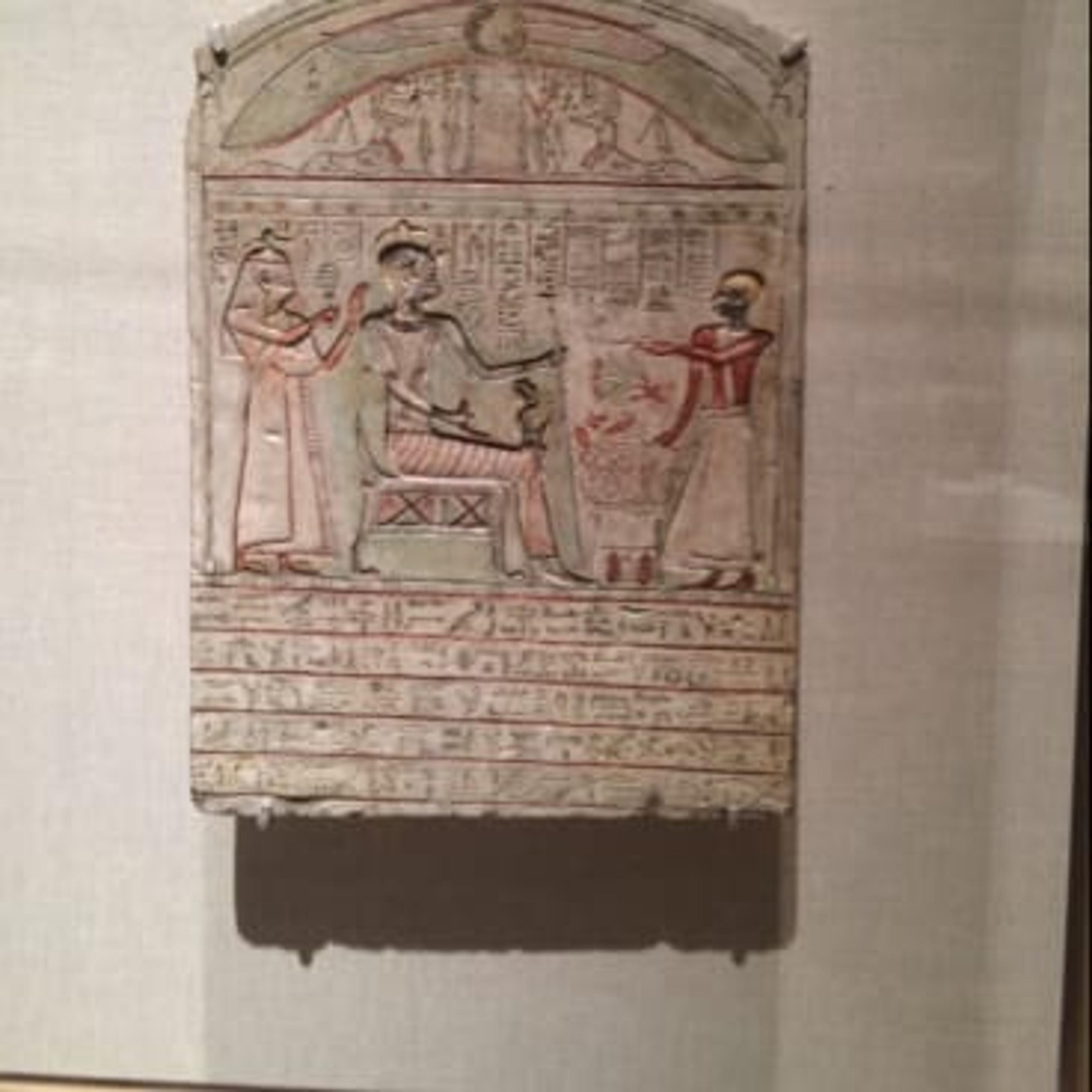 Those pigments are original to the piece. Red and green mineral pigments are longer-lasting. Other colors, like blue, fade more rapidly and are no longer visible to our naked eye.
Have information?
Have information about an artwork? Contact us at